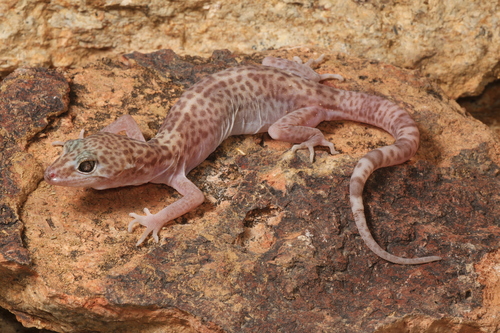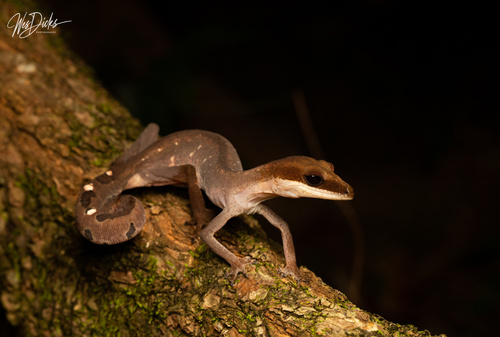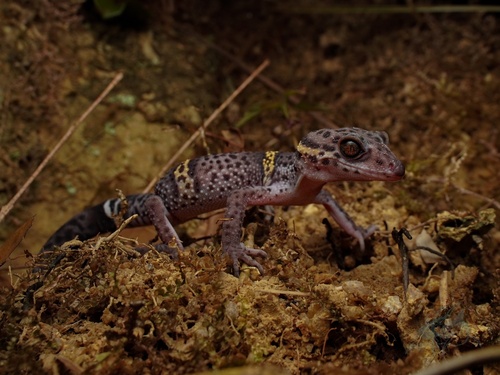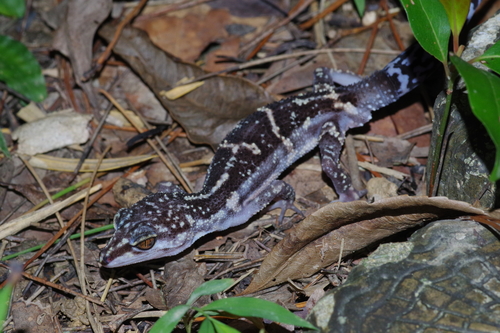
About Eublepharis macularius (Blyth, 1854)
Common Name and Etymology
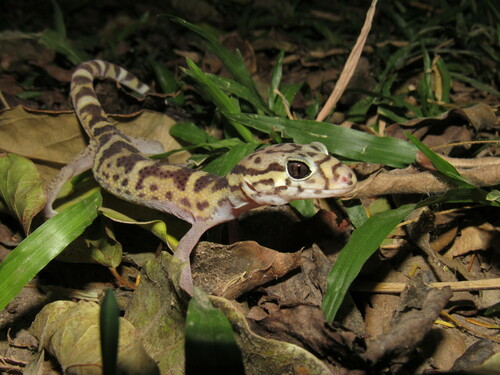
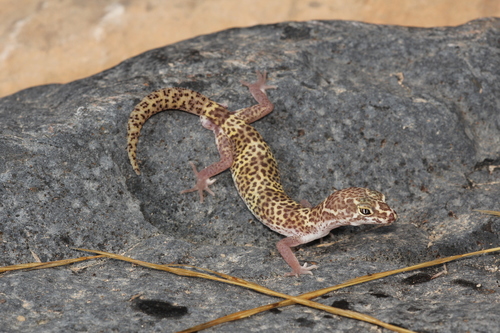
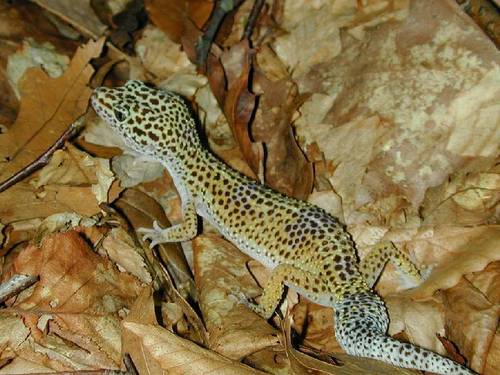
Eublepharis macularius, commonly called the leopard gecko, is a small lizard named for its characteristic spotted coloration.
Hatchling Size and Weight
Newly hatched leopard geckos measure an average of 7 to 10 cm (2.8 to 3.9 in) in length and weigh approximately 2 to 5 grams.
Adult Size and Weight
Adult females grow to around 18 to 20 cm (7.1 to 7.9 in) long and weigh 50 to 70 grams, while adult males reach 20 to 28 cm (7.9 to 11.0 in) in length and weigh 60 to 80 grams.
Toe Structure and Climbing Ability
Unlike many other gecko species, leopard gecko toes lack adhesive lamellae, so they cannot climb smooth vertical walls.
Lifespan
In the wild, leopard geckos have an average lifespan of 4.9 years, but with proper care, captive individuals can live for more than 20 years.
Native Range
The native range of the leopard gecko covers rocky, dry grassland and desert regions of South Asia, including Afghanistan, Pakistan, northwestern India, western Nepal, and parts of Iran.
Habitat Types
Leopard geckos occupy arid and semi-arid areas with sparse vegetation and clay or sandy soils, as well as rocky habitats where crevices serve as shelter.
Substrate Preference
Reportedly, they avoid areas where sand is the primary substrate.
Forest Habitat Use
They may also be found in arid forests of Nepal and Pakistan, where they are known to shelter under loose tree bark.
Brumation Behavior
Winter temperatures in the leopard gecko's range can drop quite low, below 10 °C (50 °F), which forces the animals underground into a state of semi-hibernation called brumation, where they survive on stored fat reserves.
Activity Pattern Classification
Most field biology sources, academic herpetology sources, and some animal husbandry guides classify wild leopard geckos as nocturnal.
Nocturnal Behavior Details
They retreat to burrows and sheltered hiding spots during the day, and become active at dusk when temperatures are favorable.
Attenborough Activity Observation
Naturalist David Attenborough noted in the documentary series Life in Cold Blood that like most geckos, the leopard gecko is nocturnal, and it gets all the heat it needs from rocks that retain warmth for several hours after the sun sets.
Nocturnal Nature Detection Delay
Nepalese biologist Yam Rawat also attributes the species going undetected in Nepal until 2016 to its secretive nocturnal nature.
Alternative Activity Pattern Claims
By contrast, some sources focused on captive leopard gecko husbandry have claimed the species is crepuscular or even cathemeral.
Crepuscular Claim Rationale
This claim has been used to explain why leopard geckos can use UVB exposure to synthesize vitamin D3 in captivity, and to support the practice of providing UVB lighting to captive leopard geckos.
Crepuscular Wild Observation
John Courtney Smith, brand manager for UVB light manufacturer Arcadia Reptile, wrote that the leopard gecko is quite crepuscular in its native range, with many reports of individuals being seen openly basking in full daytime desert sunlight.
Conspecific Interaction Debate
There is also ongoing debate about how much leopard geckos interact with members of their own species in the wild.
Conspecific Interaction Source Differences
Academic sources state that leopard geckos live in loose colonies in the wild, while pet keeping guides often claim the species is solitary and does not usually live alongside other individuals.
Breeding Season
Leopard geckos typically breed during the summer.
Sperm Storage and Clutch Production
Females are able to store sperm throughout the breeding season, and can produce up to three clutches of eggs from just one or two copulations.
Egg Laying Details
Over a breeding season, females can lay approximately six to eight clutches, each containing two eggs; eggs are laid roughly 21 to 28 days after mating.
Egg Incubation Period
Incubation for hatching takes anywhere from 35 to 89 days on average, and typically falls closer to the longer end of this range.
Hatchling Egg Tooth
Newly hatching leopard geckos have an egg tooth, a calcareous tip at the end of the snout that helps them break through the egg shell.
Egg Tooth Loss
This egg tooth falls off within one to two days of hatching.
Hatchling First Shed
A hatchling's first skin shed usually occurs within 24 hours of hatching, and hatchlings cannot eat until after this first shed.
Temperature-Dependent Sex Determination
Leopard geckos exhibit temperature-dependent sex determination.
Incubation Temperature Sex Outcomes
Embryos incubated at mostly cool temperatures (around 26–29 °C / 79–84 °F) or very warm temperatures (around 34–35 °C / 93–95 °F) develop as females, while embryos incubated at intermediate temperatures (around 31–33 °C / 88–91 °F) develop as males.
Sex Determination Timing
Sex is thought to be determined during the first two weeks of incubation.
Temperature Effects on Female Offspring
Females born at higher temperatures differ hormonally and behaviorally from those born at lower temperatures.
Hot Female Characteristics
Females born at warmer temperatures show more aggressive behavior, are called hot females, and are often found to be infertile.