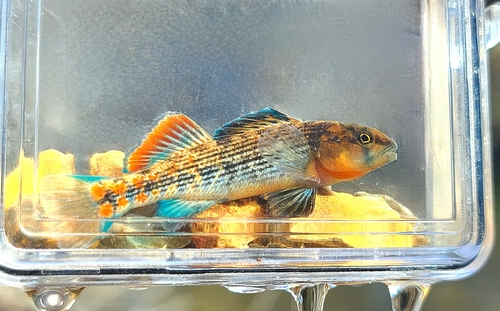
About Etheostoma nigrum Rafinesque, 1820
Size
The johnny darter (Etheostoma nigrum Rafinesque, 1820) can reach a maximum total length of 7.2 centimetres (2.8 in), though most individuals only grow to about 3.9 centimetres (1.5 in).
Weight
Males weigh a little over 2.0 grams, while females weigh approximately 1.6 grams.
Body Coloration Base
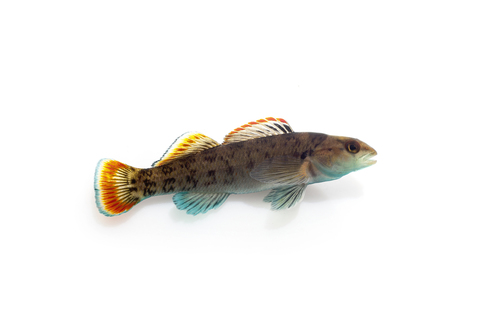
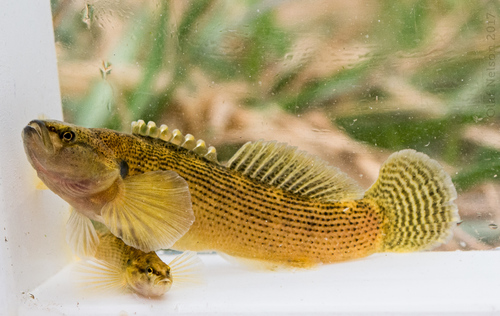
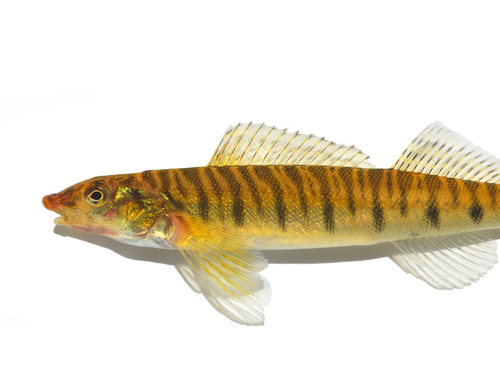
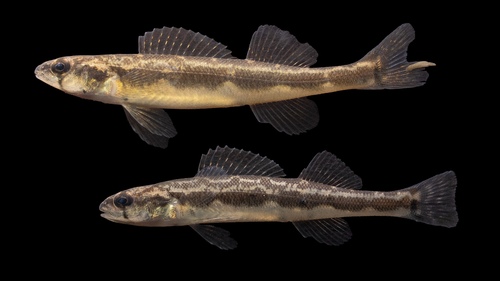
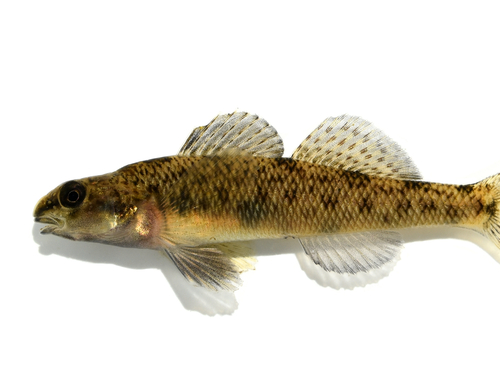
These small, slender fish have brown to yellow scales, paler sides, and whitish bellies. They do not have bright coloration, and typically display brown or black markings over a lighter tan background.
Lateral Markings
These markings most often form a series of black "w" or "x" shapes that run along the lateral lines on their sides.
Scale Distribution
The opercles (the bony gill cover areas) have scales, while the preopercles (the bone at the front of the cheek), napes, and breasts are scaleless.
Dorsal Fin Structure
Johnny darters have two dorsal fins: the first has hard spinous rays, and the second has flexible soft rays.
Fin Placement
The pectoral and pelvic fins are positioned close to each other behind the gills.
Pectoral Fin Features
The large, fan-shaped pectoral fins sit on the lower sides of the fish.
Pelvic And Caudal Fins
The small, round pelvic fins are located on the ventral side of the body, and the rounded tail fin is also positioned on the ventral side.
Geographic Range
The johnny darter’s geographic range extends from Saskatchewan and Colorado east to the Atlantic seaboard, and from Hudson Bay south to the Gulf Coast drainage systems.
Regional Abundance
It is the most common darter species in Minnesota and Ohio.
Habitat Water Preferences
Johnny darters prefer clear water with sandy and gravelly bottoms, and favor slow-moving water, though they can also live in moderately cloudy moving water.
Bottom Dwelling Behavior
They are bottom-dwelling fish that stay on rocks at the bottoms of small ponds and streams, holding with their heads facing into the current.
Habitat Tolerance
Of all darter species, the johnny darter is the most tolerant of a wide range of habitat conditions.
Mouth Morphology
As a benthic species, it has a subterminal mouth: the snout extends only slightly past the mouth, which sits in an inferior position that makes catching and eating food easier.
Juvenile Diet
Its diet varies with age: young johnny darters mostly feed on copepods, small crustaceans, and waterfleas.
Adult Diet
As they grow, they switch to larger waterfleas, various larvae including midges, mayflies, and caddisflies, and occasionally eat sideswimmers.
Predators
Johnny darters are preyed on by larger predatory fish, including burbots, lake trout, smallmouth bass, walleyes, and yellow perch.