About Etheostoma jordani Gilbert, 1891
Common Name and Marking Overview
Etheostoma jordani, commonly called the greenbreast darter, has distinct physical markings.
Flank and Lip Markings
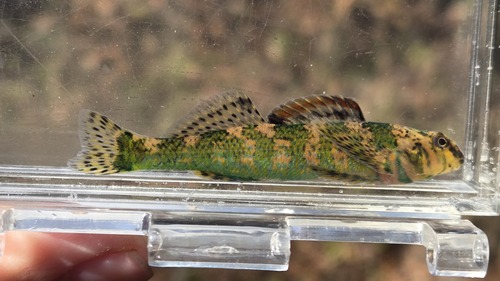
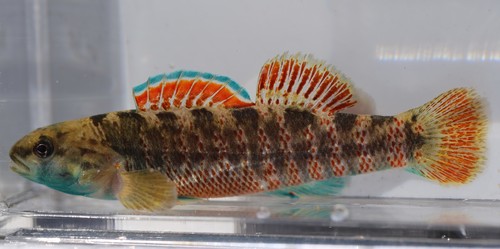
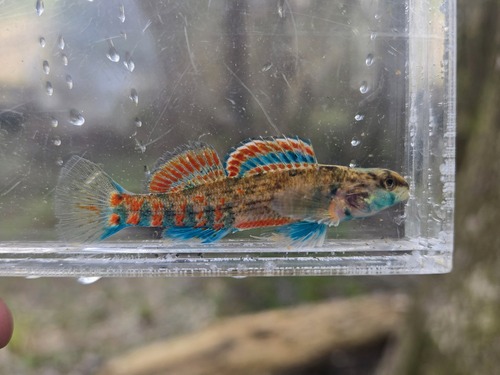
This species has red spots along its flanks, greenish-brown lips, and a turquoise anal fin.
Breeding Male Body Coloration
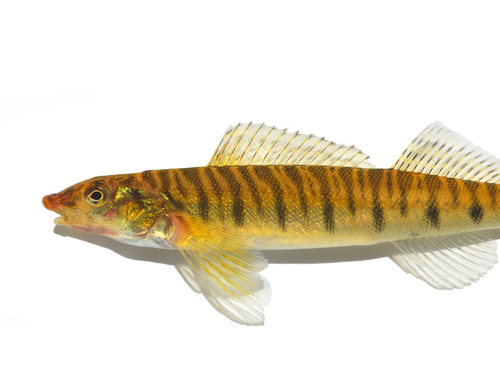
Breeding males are overall olive in color, with an indistinct pattern of 3 to 11 dark vertical bars running along their flanks.
Dorsal Saddle Markings
8 to 9 olive to brown saddles mark their back.
Ventral Region Coloration
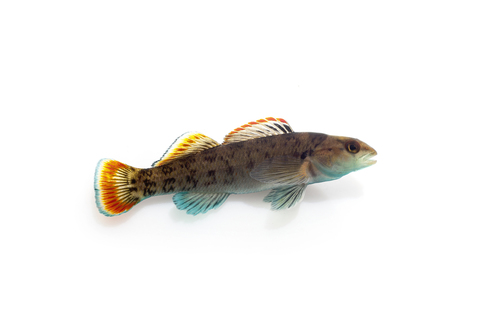
The ventral portion of the head, breast, and gill membranes are colored turquoise.
Spiny Dorsal Fin Markings
The spiny section of the dorsal fin is clear to white along its margin, with a red submarginal band that is most prominent at the head end of the fin.
Caudal Fin Markings
The caudal fin margin has a thin turquoise or black band at its tip, a narrow yellow band in the center, and a wide red to orange band close to the base.
Distribution Range
This darter is only found in the upper Mobile Basin, though it is not present in the Tombigbee River drainage.
Occurrence and Abundance
It occurs primarily above the Fall Line, and is often very common in habitats that suit it.
Adult Habitat
Adult greenbreast darters usually live in riffles of clear creeks and small to medium rivers, where there is moderate to strong current and a gravel or rubble substrate.
Reproductive Behavior
Females lay their eggs in sand and gravel riffles, depositing batches of eggs in multiple separate locations.