About Etheostoma swaini (Jordan, 1884)
Common Name and Taxonomy
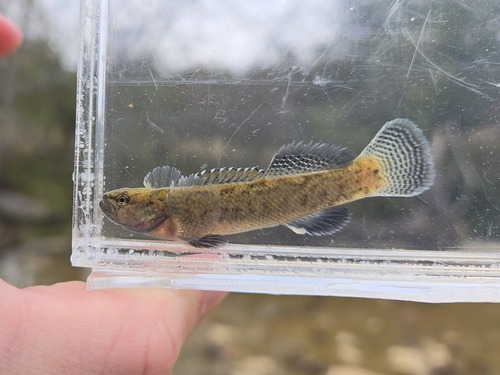
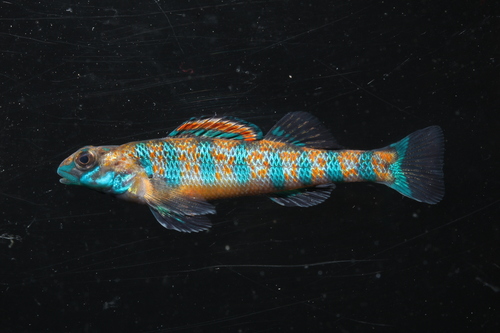
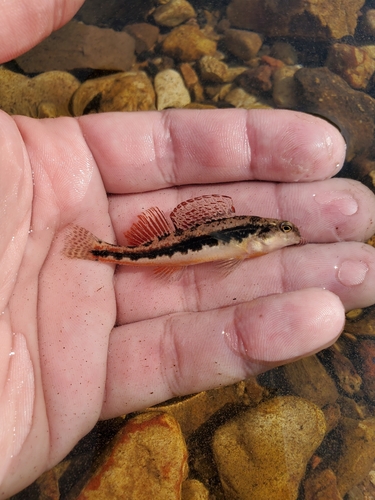
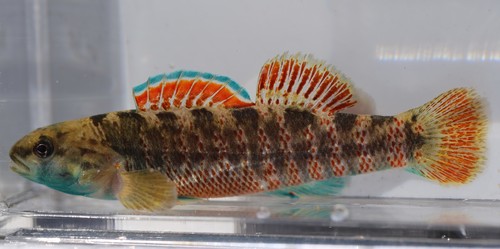
Etheostoma swaini, commonly known as the gulf darter, is a species of freshwater ray-finned darter. It belongs to the subfamily Etheostomatinae, which is part of the Percidae family that also includes perches, ruffes, and pikeperches.
Initial Distribution Listing
This species is found in the U.S. states of Louisiana, Mississippi, Alabama, Florida, Tennessee, and Kentucky.
Appearance and Size
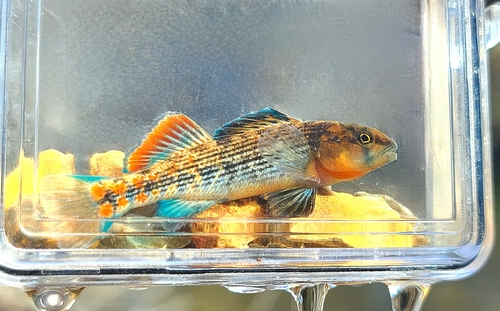
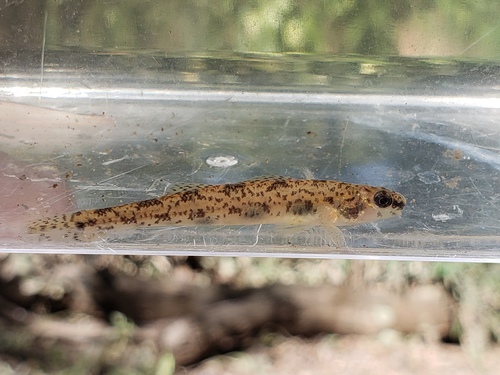
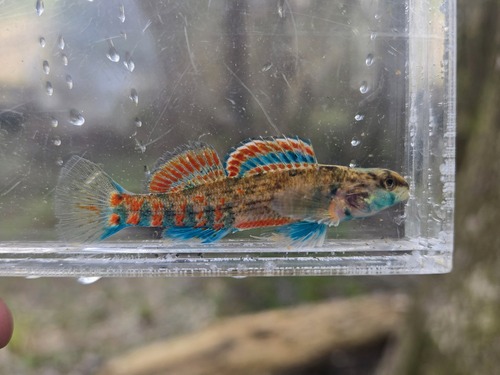
It is a colorful fish; mature males have vertical red-orange and blue-green barring near the tail, and the species grows to a maximum length of around 7.8 centimeters (3.1 in).
Initial Habitat Summary
The gulf darter is typically found in small to medium-sized creeks, very often in extremely shallow water. It lives over sandy bottoms and among aquatic vegetation, particularly Sparganium americanum, and forages for insect larvae and small invertebrates among plants and organic debris.
Conservation Status
The International Union for Conservation of Nature has assessed this species' conservation status as least concern.
Habitat Bottom Substrate Preferences
The gulf darter generally inhabits small to moderate-sized creeks, occurring over sand or sandy mud bottoms, and is often found near aquatic vegetation or a layer of organic debris.
Detailed Range Extent
Its range extends from Lake Pontchartrain, Louisiana east to the Ochlockonee River drainage in Florida, and also includes many eastern tributaries of the Mississippi River from Buffalo Bayou, Mississippi, north to the Obion River system in Tennessee and Kentucky.
Water Depth Preferences
It is frequently encountered in extremely shallow locations, often foraging in water less than 5 centimeters (2.0 in) deep.
Vegetation Habitat Preferences
In most creeks, the gulf darter's microhabitat has moderate to heavy amounts of aquatic vegetation, primarily Sparganium americanum. These fish actively forage in and among vegetation clumps, and use areas of reduced current downstream of these clumps as resting spots.
Larger Creek Habitat
In larger, heavily vegetated creeks, it occupies quiet streamside areas with sand or sand-silt substrates.
Small Creek Habitat
In the smallest creeks, however, the gulf darter may occasionally be found in shallow, swift riffles formed by logs, rocks, or vegetation.
Salinity Tolerance
This species has a low tolerance for brackish water.
Associated Species
In its preferred microhabitat, the gulf darter is usually found alongside the speckled madtom (Noturus leptacanthus) and the blackbanded darter (Percina nigrofasciata), and often shares habitat with larvae of the southern brook lamprey (Ichthyomyzon gagei).
Ecological Comparison With Blackbanded Darter
The blackbanded darter is the species most ecologically similar to the gulf darter, but the extent of any potential competition between the two is unknown. The blackbanded darter forages across a much wider variety of microhabitats, and does not use vegetation or organic debris as extensively as the gulf darter.
Diet Composition
The gulf darter is classified as an insectivore, feeding on small invertebrates including black flies, mayflies, and dragonflies. One study found that larval dipterans are the most important food source for gulf darters of all sizes, with chironomids found in 71–100% of all examined fish stomachs.
Predators
The primary predators of the gulf darter are likely larger freshwater fish, including burbots (Lota lota), stonecats (Noturus flavus), and smallmouth bass (Micropterus dolomieu).
Substrate Holding Trait
Like many other darter species, gulf darters can maintain their position on the substrate in flowing water. This unique trait plays a key role in shaping the species' microhabitat preferences.