About Esacus magnirostris (Vieillot, 1818)
Scientific Naming and Length
The beach stone-curlew, scientifically named Esacus magnirostris (Vieillot, 1818), measures 54 to 56 cm (21 to 22 in) in length.
Weight
Males have a mean weight of 1,032 g (2.275 lb) and females have a mean weight of 1,000 g (2.2 lb), making this species the heaviest living Charadriiformes outside of the gull and skua families.
Physical Appearance
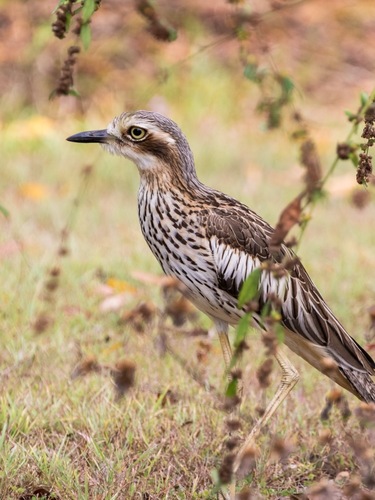
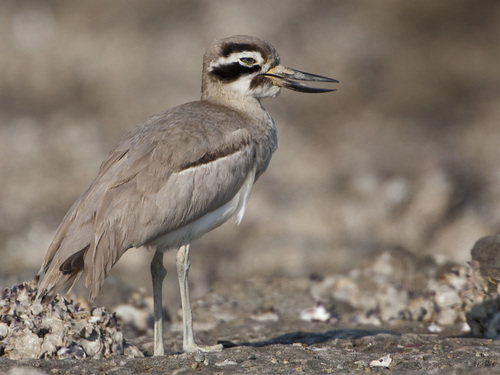
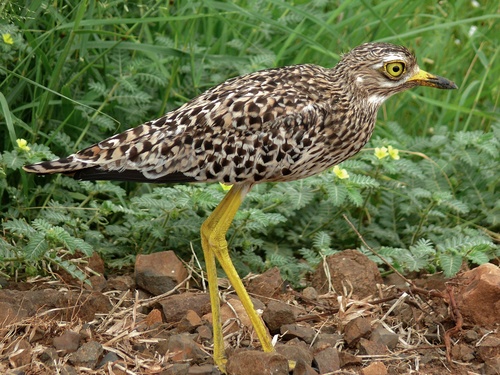
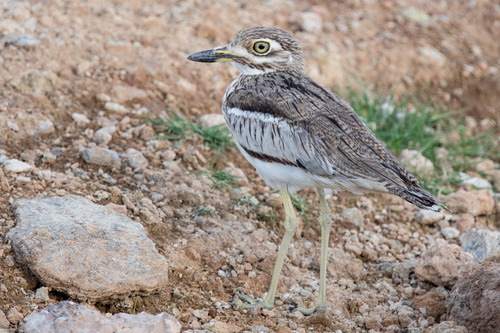
This bird has black and white facial patterning, yellow eyes, and a grey-brown upper body.
Habitat Types
Beach stone-curlews are resident birds that occupy undisturbed open beaches, exposed reefs, mangroves, and tidal sand or mudflats across a large geographic range.
Geographic Range
Their range includes coastal eastern Australia extending south to far eastern Victoria, the northern Australian coast and its nearby islands, New Guinea, New Caledonia, Indonesia, Malaysia, and the Philippines.
Population Abundance
The species is uncommon across most of its range, and rare in areas south of Cairns.
Diet and Foraging
For their ecology, beach stone-curlews forage for invertebrates on low-tide muddy sand, with crabs making up most of their prey.