About Eleutherodactylus pipilans (Taylor, 1940)
Taxonomic History
Eleutherodactylus pipilans was first described by Taylor in 1940.
Adult Size
For adult individuals, males measure 23–29 mm (0.91–1.14 in) and females measure 21–29 mm (0.83–1.14 in) in snout–vent length.
Dorsal Skin Texture
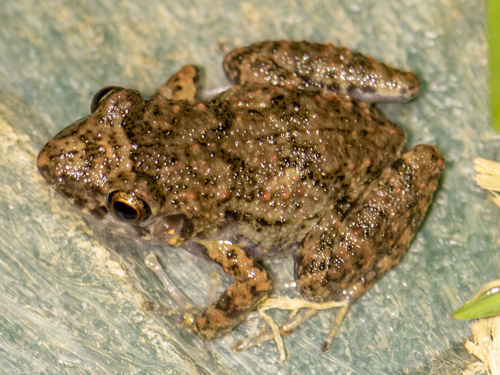
The skin of the dorsum is either smooth or shagreened.
Head Features
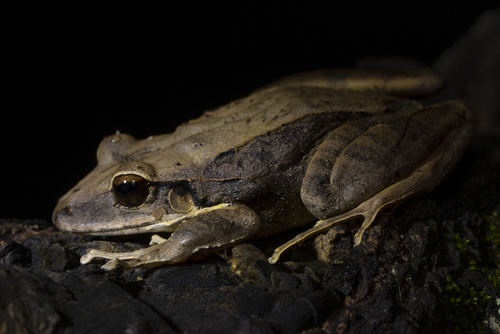
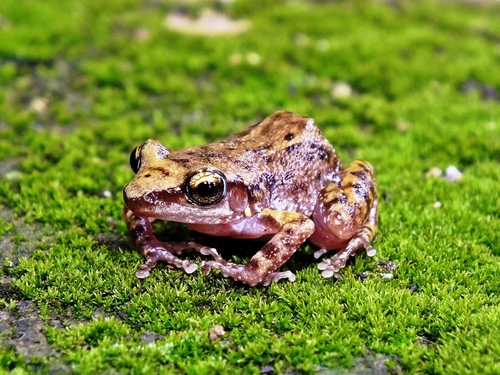
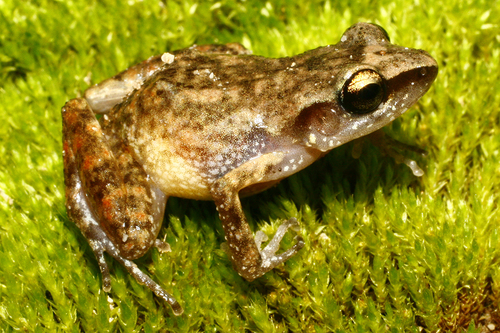
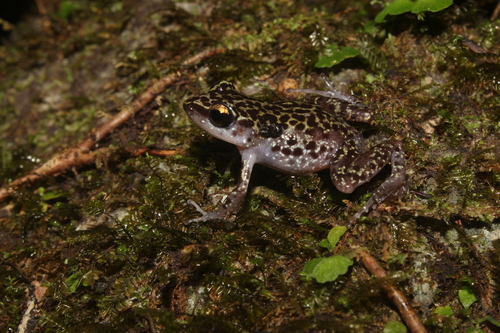
This species has relatively large eyes, with a visible, oval-shaped tympanum.
Limb Proportions
Its arms are long, while its legs are relatively short.
Dorsal Coloration
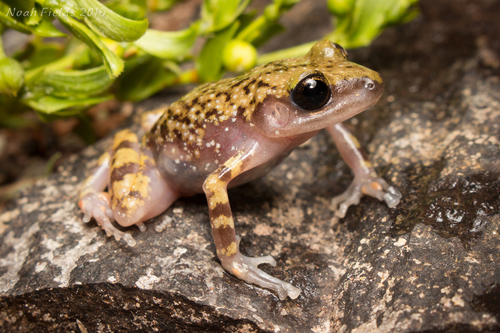
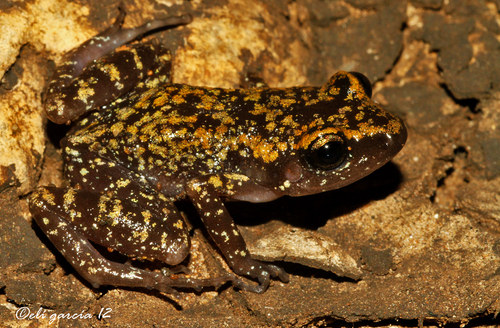
The dorsal background color ranges from dark brown to a slightly lighter brown, marked with yellow, orange, light brown, or greenish blotches or spots.
Limb Markings and Male Secondary Traits
The limbs have visible banding, and males possess vocal slits.
Habitat and Elevation Range
Its natural habitats are tropical seasonal forests located at elevations of 100–800 m (330–2,620 ft) above sea level.
Microhabitat Occurrence
Individuals can be found across a variety of microhabitats: on rocks, on the ground, under rocks and debris, and inside a cave.
Conservation Status and Threats
This species is locally abundant and can tolerate some degree of habitat modification, but it is currently threatened by habitat loss.