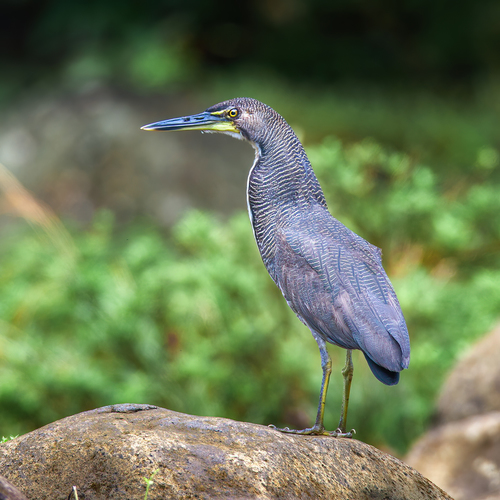
About Egretta tricolor (Statius Muller, 1776)
Size and Measurements
This species, the tricolored heron (scientific name Egretta tricolor), measures 56 to 76 cm (22 to 30 inches) in length, with a typical wingspan of 96 cm (38 inches). Males, which are slightly larger than females, have an average weight of 415 g (14.6 oz), while females average 334 g (11.8 oz).
Body Structure
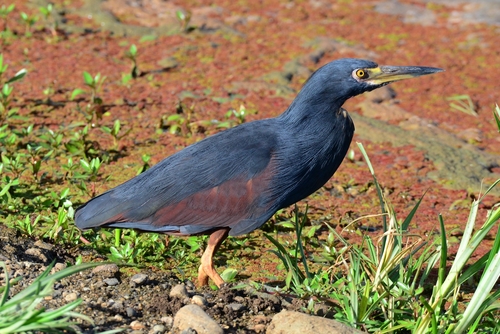
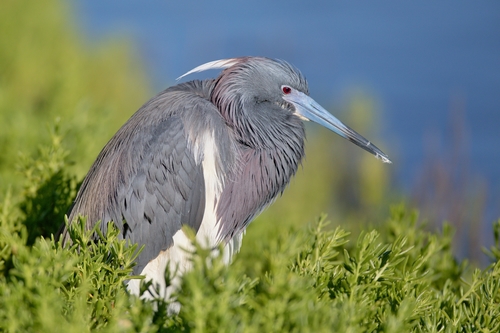
It is a medium-large heron with long legs, a long neck, and a long, pointed bill that is yellowish or greyish with a black tip. In breeding plumage, some individuals develop a distinct bicolored bill that is blue with a black tip.
Leg Coloration
The legs and feet change color from dark yellow in non-breeding birds to pink in breeding adults.
Plumage Stage Variation
Tricolored heron plumage changes dramatically between the juvenile and adult life stages.
Adult Plumage
Adult tricolored herons have blue-grey heads, necks, backs, and upper wings, with a white line running along the neck, and a white belly. When in breeding plumage, they grow long, blue, filamentous plumes on their heads and necks, and buff-colored plumes on their backs.
Breeding Habitat
Tricolored herons breed in swamps and other coastal habitats.
Nesting Behavior
They nest in colonies, frequently alongside other species of heron, usually building stick platforms in trees or shrubs. Clutches typically contain three to seven eggs.
Coastal Distribution Rank
The tricolored heron is the second most coastal heron species in the United States.
Atlantic Range
The species' range extends along the east coast of the United States from the northeast southward, through the Gulf of Mexico and the Caribbean, to northern South America as far south as Brazil.
Pacific Range
In the Pacific region, its range runs from Peru to California, but it is only a non-breeding visitor to the far northern part of this range.
Historical Population Status
Before cattle egrets arrived in North America in the 1950s, the tricolored heron was likely the most numerous heron species on the continent.
Current Population Trend
Although the species' overall population appears to be declining, it is still quite common.
Conservation Listing
The Florida Fish and Wildlife Conservation Commission lists this bird as Threatened.