About Drimys winteri J.R.Forst. & G.Forst.
Nomenclature
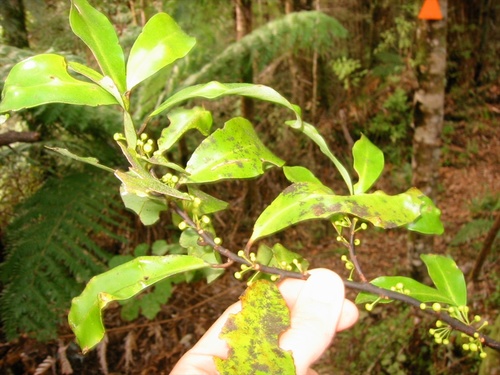
Dr.IMys winteri, scientifically named Drimys winteri J.R.Forst. & G.Forst., has lanceolate leaves that are glossy green on the upper surface and whitish on the lower surface, growing up to 20 centimeters (8 inches) long.
Leaf Characteristics
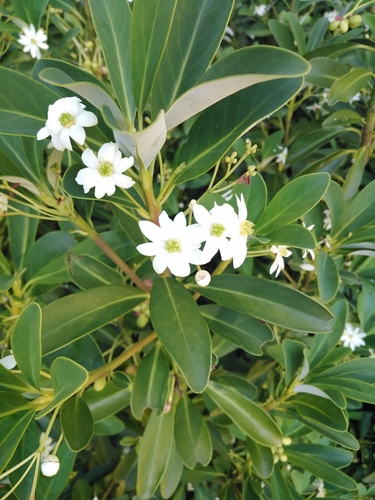
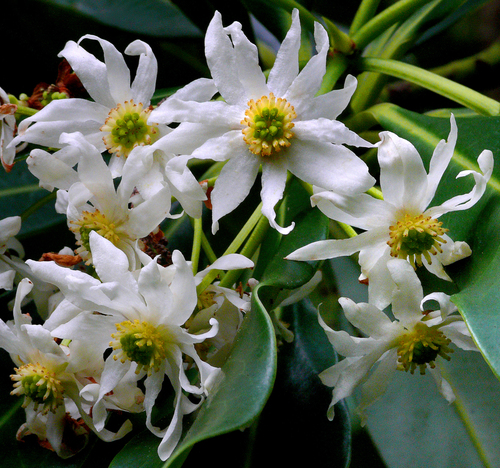
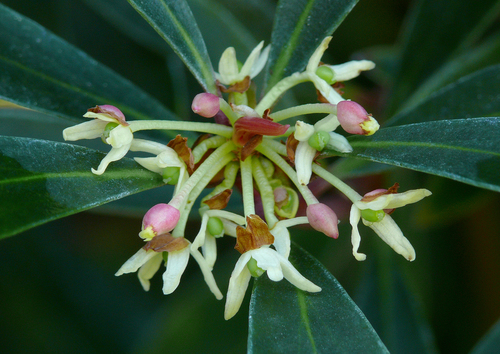
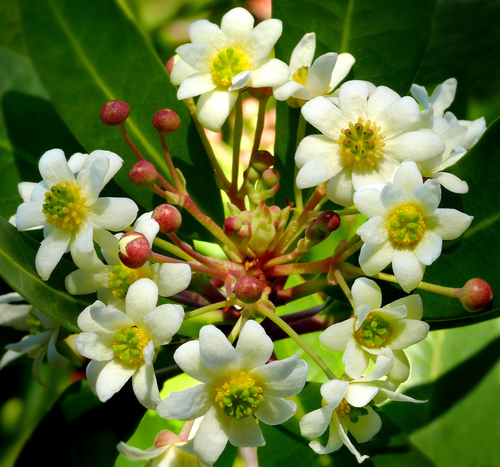
Its flowers are white with yellow centers, and contain a large number of petals and stamens.
Flower Characteristics
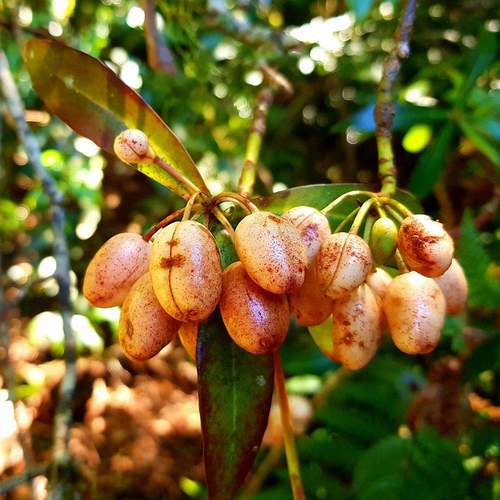
It produces bluish berry fruits.
Fruit Characteristics
The relationship between the tree's height and diameter varies very widely for this species: there is far more variation in D. winteri height-diameter relationships than in species of the genus Nothofagus.
Height-Diameter Variation
Part of this variation can be explained by higher tree density, which correlates with taller tree heights for any given trunk diameter.
Drivers of Height-Diameter Variation
Across its native range, D. winteri is more tolerant of frost than naturally occurring conifers and vessel-bearing angiosperms including Nothofagus.
Frost Tolerance
This observation challenged the long-held conventional view that plants without vessels like D. winteri were poorly adapted to cold biological relicts.
Taxonomic Hypothesis Challenge
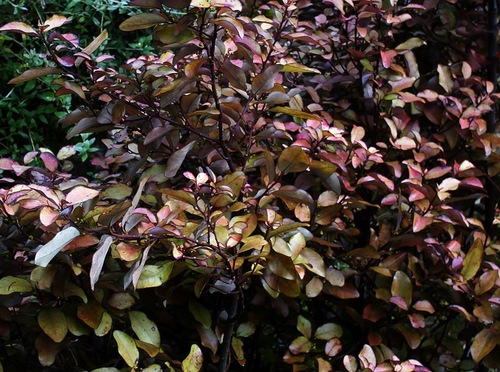
Drimys winteri is cultivated as an ornamental plant in cool, moist climates, valued for its red-brown bark, bright green fragrant leaves, and clusters of creamy white, jasmine-scented flowers.
Ornamental Cultivation
It grows well in southern Great Britain, and flourishes as far north as Anglesey.
Cultivation Range in Britain
Specimens sourced from the southern forests of Tierra del Fuego and planted in the Faroe Islands have proven to be particularly hardy.
Hardy Cultivar Source
This species has received the Royal Horticultural Society's Award of Garden Merit, and has also been planted on the North Pacific Coast of the United States.
Cultivation Awards and US Range
When planted in valleys in northern Chile, the species is considered to have potential for flood mitigation.
Flood Mitigation Potential
Locally known as canelo, this tree produces reddish, heavy wood with a very attractive grain.
Wood Characteristics
The wood is used to make furniture and musical instruments.
Wood Uses
It is not durable when used outdoors, as sustained rainfall damages it.
Outdoor Wood Durability
It is not suitable for bonfires because it gives off spicy-smelling smoke.
Bonfire Suitability
Its bark is gray, thick, and soft, and is used as a replacement for pepper in Argentina and Chile.
Bark Characteristics and Use
The peppery compound found in canelo is polygodial.
Peppery Compound Identity
D. winteri acts as an insect repellent and fumigant.
Insect Repellent Properties
A 2010 study by Zapata & Smagghe tested essential oils extracted from the bark and leaves, and found that both oils are repellent and can be used as a fumigant against the red flour beetle Tribolium castaneum.