About Dolichandra unguis-cati (L.) L.G.Lohmann
Growth Form
Dolichandra unguis-cati is a semipersistent-leaved liana with woody stems that can grow up to 30 metres (98 ft) tall. It uses thin, small aerial roots to climb.
Leaf Characteristics
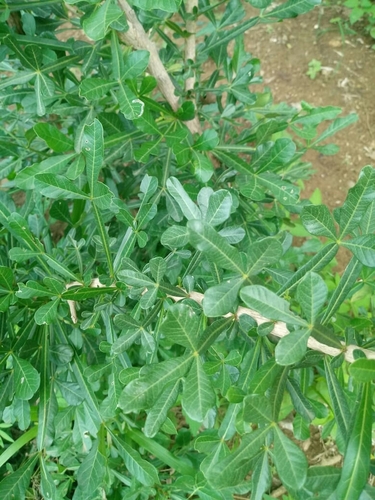
Its leaves are dark green, opposite, and bifoliate, with leaflets measuring 3 to 4 cm (1.2 to 1.6 in) in length.
Root System
Long primary roots grow beneath the soil surface, producing large tubers that are 40–50 cm (16–20 in) long.
Flower Appearance
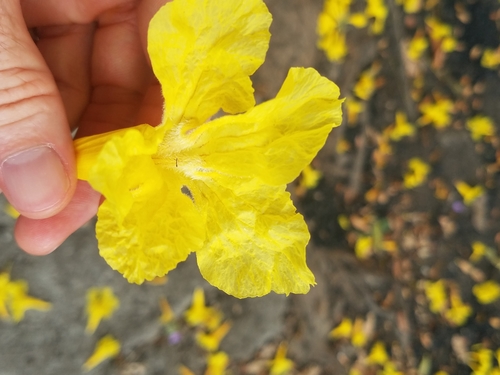
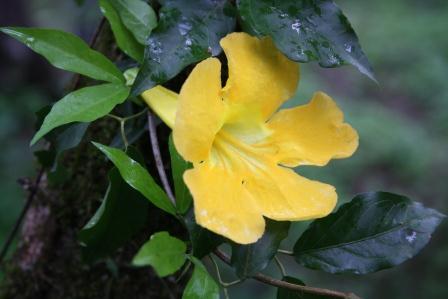
The species produces yellow flowers that are 4 to 5 cm (1.6 to 2.0 in) in diameter; flowers grow either singly or in groups of two or three, and bloom from late spring through to early summer.
Flower Structure
The calyx is narrow trumpet-shaped and 1–2 centimeters long, while the corolla is also tubular, 4 to 10 centimeters long, with five differently sized lobes. The opening diameter of the flower is 1.2 to 2.4 centimeters.
Fruit and Seeds
Fruits take the form of brown, flattened capsules 25 to 95 cm (9.8 to 37.4 in) long, with each capsule holding 100 to 200 seeds.
Native Range
This plant is native to tropical dry forests of Central America, South America (ranging from Mexico to Brazil and northern Argentina), and the Caribbean. In its native range, it grows from sea level to over 600 metres (2,000 ft) above sea level, in areas with annual rainfall between 750 and 2,400 mm (30 to 94 in).
Invasive Status
It was often introduced to regions around the world as an ornamental plant, and can become invasive due to its fast growth. It spreads rapidly both vertically and horizontally, and can impact all vegetation layers of forest ecosystems.
Growing Conditions
It grows best in fertile, well-drained soils, but can survive in most soil types except salty soils. It tolerates low light well, but grows faster in full sun.
Introduced Distribution
It is naturalised in Australia, the southeastern United States, southern Africa, and tropical Asia. It can be found growing in orchards, gardens, roadsides, grasslands, and open urban areas, particularly in temperate to subtropical regions with medium to high rainfall.
Folk Medicine Uses
In folk medicine, Dolichandra unguis-cati has documented use as an antidote for snake bites. It is also used to treat dermatitis, and acts as an antipyretic and anti-inflammatory. It has been used to treat intestinal ailments, venereal disease, rheumatism, dysentery, malaria, and oliguria.
Pharmacological Properties
Laboratory testing of its leaves has revealed antitumoral and antitrypanosomal activities.