About Jacaranda copaia (Aubl.) D.Don
Species Identity and Flowering
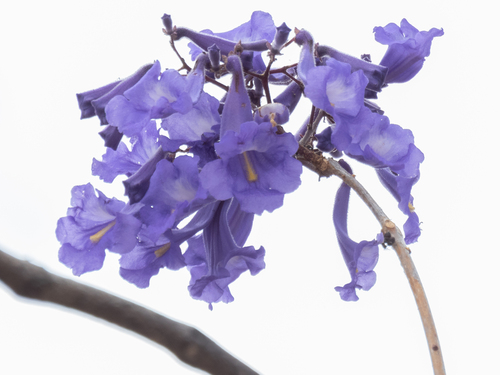
Jacaranda copaia (Aubl.) D.Don is an evergreen or semi-deciduous tree that produces bluish purple flowers from August to November.
Young Tree Appearance
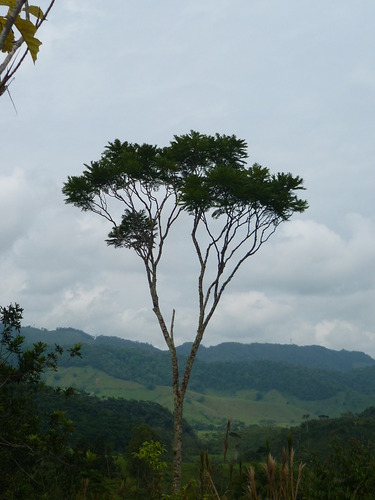
Young trees have a long unbranched trunk, with large leaves growing directly from the top of the trunk, giving them an appearance similar to tree ferns.
Mature Tree Height
When mature, J. copaia reaches a height of 30 to 35 metres (98 to 115 ft), and is normally free of branches for more than 50% of its total height.
Crown Shape
Its upper portion forms a vase-shaped crown of branches and leaves.
Trunk and Bark Characteristics
The trunk reaches approximately 75 centimetres (30 in) in diameter, and is covered in rough, dark gray bark.
Native Distribution
Jacaranda copaia is native to northern South America and also to Central America.
Habitat and Ecological Role
It is common in the Brazilian Amazon, where as a pioneer species it colonizes forest gaps and cleared areas.
Insect Repellent Use
During the dry season, leafy branches of this tree are burned to repel biting insects.
Bark Medicinal Uses
Its bark has been used as a laxative, and to treat dysentery and syphilis.
Leaf Medicinal Uses
Its leaves have been used to treat leishmaniasis, fevers, yaws and ringworm.
Patamona People Traditional Use
The Guyana Patamona use the juice of young leaves to treat persistent sores.
Kurupukari People Traditional Use
Native people in Kurupukari, Guyana, also use parts of this tree to treat ulcers and sores.