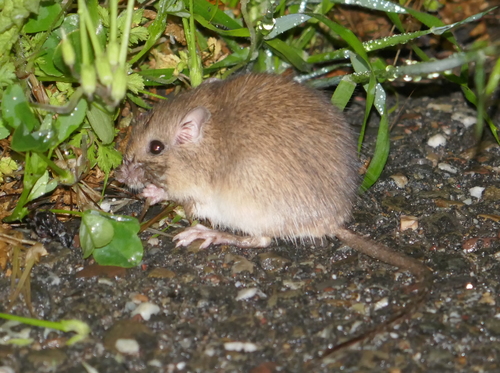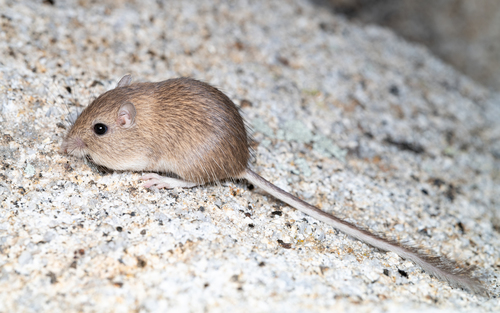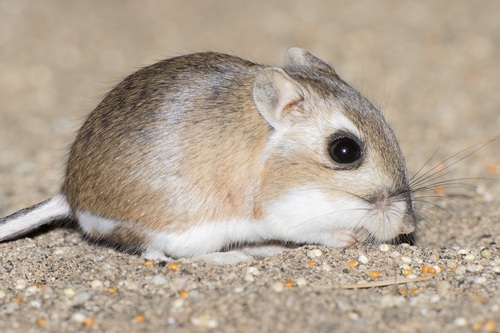
About Dipodomys simulans (Merriam, 1904)
Taxonomy and General Size
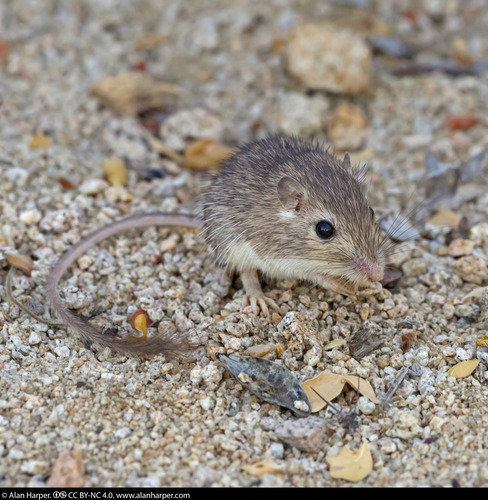
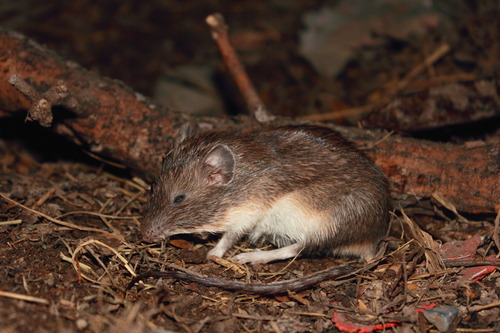
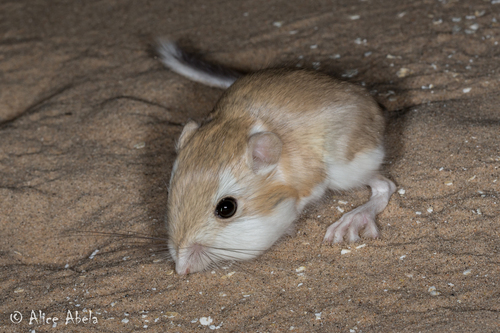
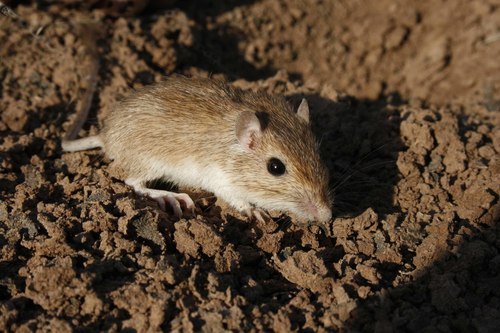
Dipodomys simulans (Merriam, 1904), commonly called the Dulzura kangaroo rat, is a medium-sized kangaroo rat. Its total length ranges from 265 to 319 mm (10.4 to 12.6 in), including a tail that measures 155 to 203 mm (6.1 to 8.0 in).
Pelage Coloration
The upper parts of its body are dark brown, while its underparts are white.
Hind Foot Features
Its hind feet are 43 to 46 mm (1.7 to 1.8 in) long and have five toes, which differs from some related kangaroo rat species that have four toes.
Tail Characteristics
The tail is well-furred and features a dark streak along its underside.
Locomotion and Movement
Like other kangaroo rats, this species moves in a series of hops using only its hind legs, and stabilizes itself with its long tail. It uses its front legs for digging.
Geographic Range
The species is native to southern California in the United States and northwestern Mexico, and it occurs across most of Baja California.
Habitat Types
Its typical habitat includes areas of sandy and gravelly soil in semi-desert, dry grassland, scrub, and coastal chaparral. It can also sometimes be found in pine, oak, and fir forests.
Burrow Structure
The Dulzura kangaroo rat resides in a burrow with multiple entrances, some of which are often located at the base of shrubs.
Activity Pattern
It is nocturnal: it stays in its burrow during the day, frequently blocking the entrances, and only emerges for a few hours at night.
Diet and Food Storage
It feeds primarily on seeds, but also consumes green plant material and insects, with its diet changing based on what is available seasonally. It carries food back to its burrow using cheek pouches.
Social Behavior
This species is solitary, and females defend their territories against intruders.
Breeding Traits
Breeding can occur at any time of year, but it is most common in winter or spring. It produces one litter per year, which usually contains two to four offspring.