About Dipodomys deserti Stephens, 1887
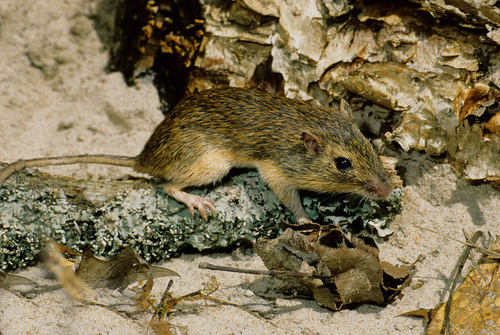
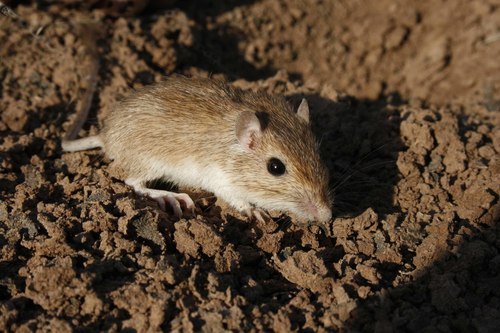
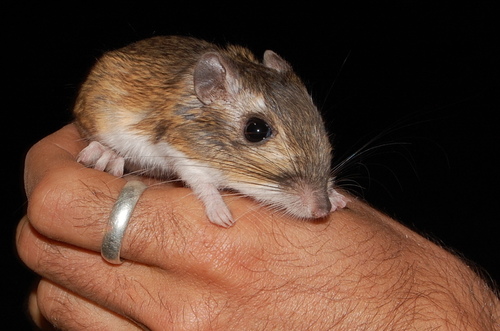
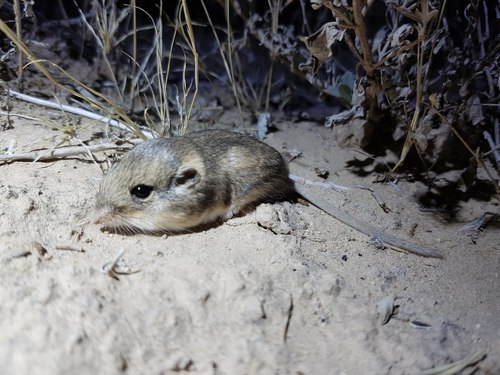
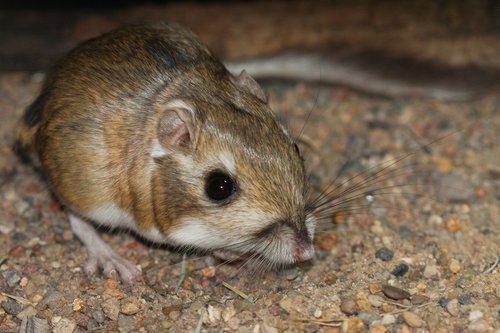
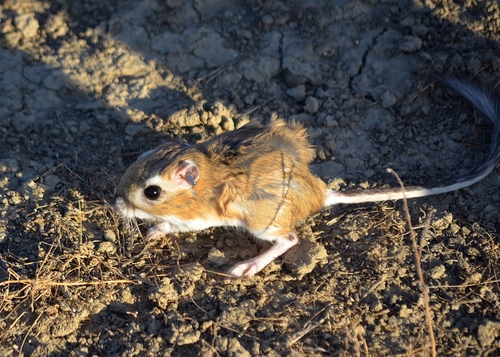
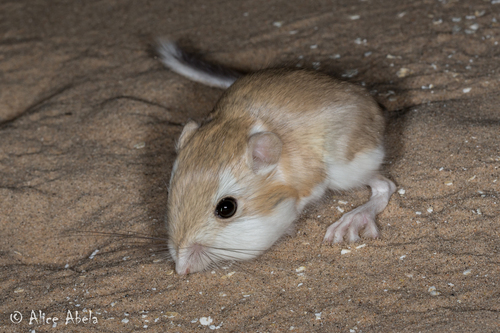
The desert kangaroo rat, with the scientific name Dipodomys deserti Stephens, 1887, is a rodent species in the family Heteromyidae that inhabits desert regions of southwestern North America. It is one of the larger kangaroo rat species, with a total length over 12 inches (300 mm) and a body mass over 3.2 ounces (91 g).
Range
Its range covers arid areas of southwestern North America, including Death Valley, the Great Basin, the Mojave Desert, and parts of the Sonoran Desert. While other kangaroo rat species can live in a variety of soil types, desert kangaroo rats only occupy areas with loose sand, most commonly dune terrain.
Extreme Deserts
The locations the species inhabits include some of the most extreme deserts in the United States, among them Death Valley, which holds the record for the hottest location on the North American continent.
Sandy Habitat
Desert kangaroo rats live in desert areas with sandy soil, where vegetation is typically sparse and made up of creosote bush, various grasses, and cacti. They occupy burrow systems under slight mounds of soil 6 to 9 meters across.
Colony Structure
They sleep in a sealed den during the day when temperatures are extreme. Colonies of this species, which is solitary for most of its life, are made up of 6 to 12 widely spaced burrows.
Diet
Seeds make up the majority of the desert kangaroo rat’s diet. The seeds this species eats tend to be larger than the seeds consumed by other heteromyid rodents that share the same geographic range. When presented with patches that vary in seed size and seed density, which combine to create different levels of overall profitability, desert kangaroo rats tend to select patches with large seeds.
Seed Selection
They also reduce the profitability of a set of patches to roughly similar levels. Their seed selection is correlated with nutritional content: they favor seeds with high carbohydrate content. Unlike some other kangaroo rat species, desert kangaroo rats do not eat green vegetation.
Foraging Movement
Their foraging movement occurs in alternating bursts of activity and stops, concentrated in relatively discrete locations, with an average distance of approximately 7 meters (22 feet) between stops.
Water Balance
Most kangaroo rat species that live in arid environments are well known for their ability to use metabolic water instead of relying on water from the environment. Desert kangaroo rats will drink available water when it is present, but the vast majority of their water needs are met by metabolic byproducts produced from their food.
Water Conservation
The species is adapted to survive on very low quantities of both free water and metabolic water, which is demonstrated by its very long water turnover times that last around 2 to 3 weeks.