About Diomedea antipodensis C.J.R.Robertson & Warham, 1992
Common Name and Total Length
Diomedea antipodensis, commonly called the Antipodean albatross, is a large albatross that reaches 110 cm (43 in) in total length.
Adult and Juvenile Plumage General
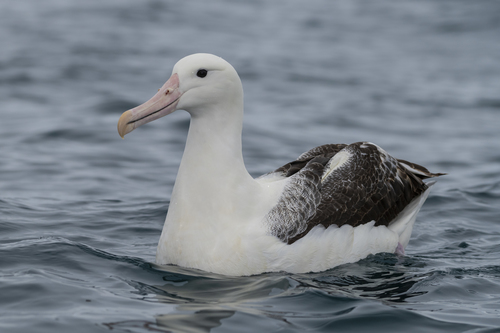
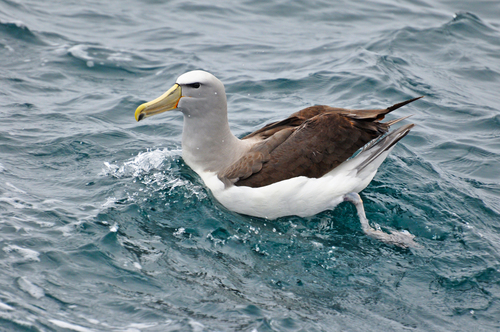
Adults have brown and white breeding plumage, while juvenile birds resemble snowy albatrosses in appearance.
Breeding Female Upperpart Markings
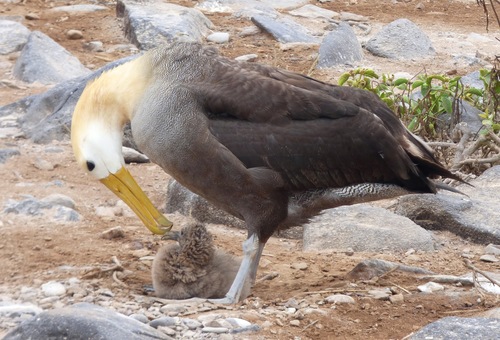
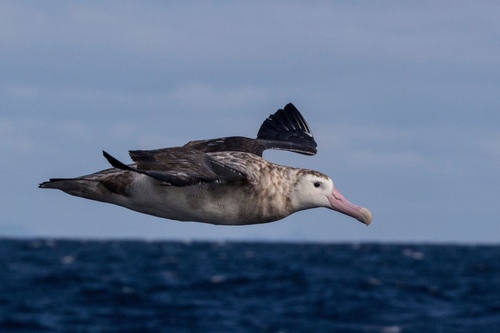
Breeding females have brown upperparts with fine white wavy vermiculations on the back.
Breeding Female Body and Underwing Coloration
Their face, throat, lower breast, and belly are white, their undertail coverts are brown, and their underwings are mostly white with a dark tip.
Bill Markings in Select Individuals
A small number of individuals, especially immature birds and females, have a dusky tip on the lower mandible of the bill, and can even show a dark cutting edge along the upper mandible.
Appearance Similarity to Amsterdam Island Albatross
This appearance matches that of the Amsterdam Island albatross, particularly when the bird is viewed in strong backlighting.
Breeding Male Plumage Comparison
Breeding males are overall whiter than breeding females, but are not as white as snowy albatrosses.
Bill Color and Nominate Female Breast Band
Both sexes have a pink bill. Females of the nominate subspecies have a dark brown breast band.
Subspecies Plumage Differences in Males
Compared to the subspecies D. a. gibsoni, nominate males have a darker cap, darker tail, and darker humeral flexure.
General At-Sea Range
At sea, Antipodean albatrosses range across the South Pacific Ocean, extending from Australia east as far as Chile, and occurring in all waters south of the Tropic of Capricorn.
Subspecies Range Variation
The subspecies D. a. gibsonii generally ranges to the east of Auckland Island, while the nominate subspecies ranges further east all the way to Chile.
Breeding Location
This albatross breeds on the Auckland Islands, Antipodes Islands, and Campbell Island.