About Diodon hystrix Linnaeus, 1758
Taxonomic Identification
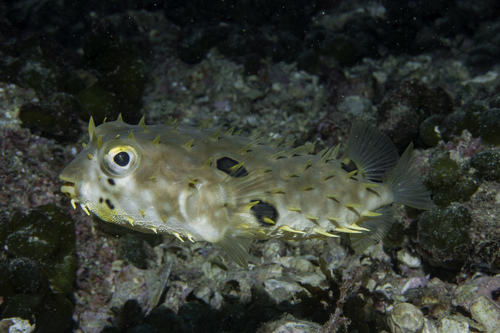
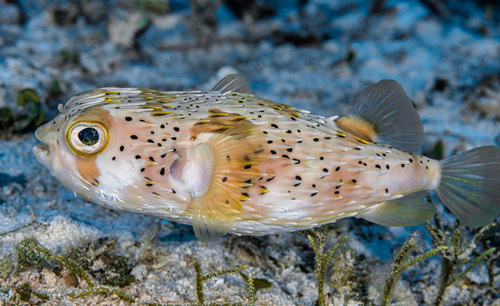
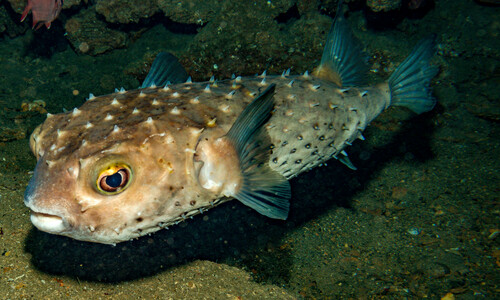
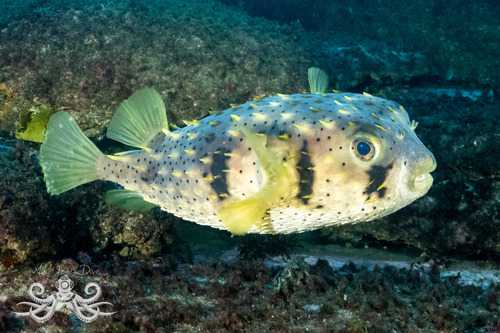
The spot-fin porcupinefish (Diodon hystrix Linnaeus, 1758) is a medium-sized fish.
Size
It reaches a maximum length of 91 cm, and the most common observed size is 40 cm.
Body and Head Shape
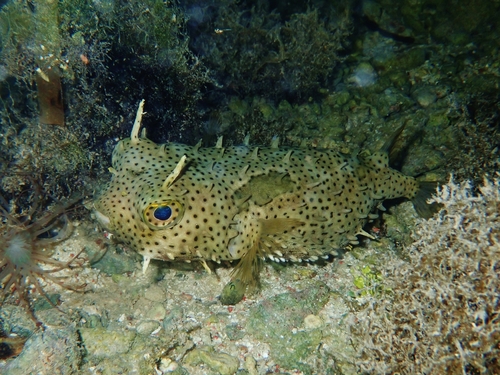
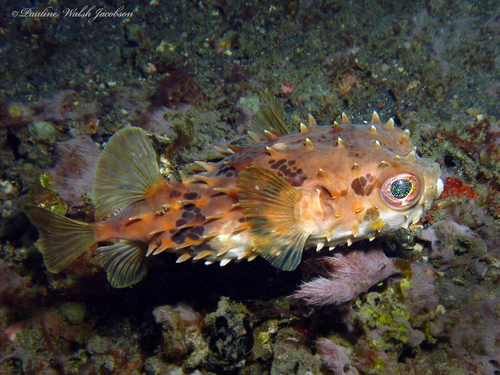
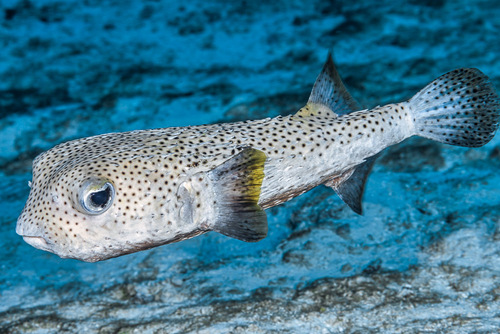
It has an elongated body, a spherical head with large, round protruding eyes, and a large mouth that is rarely closed.
Fin Structure
Its pectoral fins are large, pelvic fins are absent, and its anal and dorsal fins are positioned close to the caudal peduncle. The anal and dorsal fins move at the same time when the fish swims.
Skin and Spines
Its skin is smooth and firm, and its scales have been modified into spines.
Coloration
Its body color ranges from beige to sandy yellow, with dark marbled blotches and many small black dots across its body.
Inflation Defense
When threatened, the porcupinefish can inflate its body by swallowing water; this increased volume deters potential predators, and it can also raise its spines.
Tetrodotoxin Presence
Tetrodotoxin concentrates in specific parts of the porcupinefish's body, including the liver, skin, gonads, and viscera. This toxin acts as an extra defensive adaptation to discourage predators.
Global Distribution
The spot-fin porcupinefish is circumglobal, and lives in tropical and subtropical waters.
Mediterranean Records
It has been recorded two times in the Mediterranean Sea: once off southern Italy in 1963, and once near the Balearic Islands in 2016.
Juvenile Habitat
Juveniles remain pelagic until they grow to around 20 cm long.
Adult Habitat
Adult individuals prefer lagoons, top reefs, and seaward coral or rocky reefs between 1 and 50 meters in depth, and shelter under ledges or inside caves during the day.