About Cyclichthys orbicularis (Bloch, 1785)
Taxonomy and Size
Birdbeak burrfish, scientifically named Cyclichthys orbicularis (Bloch, 1785), is a medium-sized fish that reaches a maximum length of 30 cm (12 in).
Body and Spine Morphology
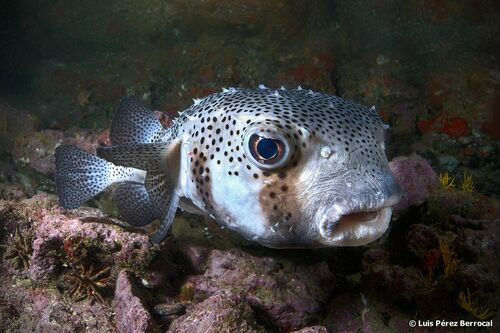
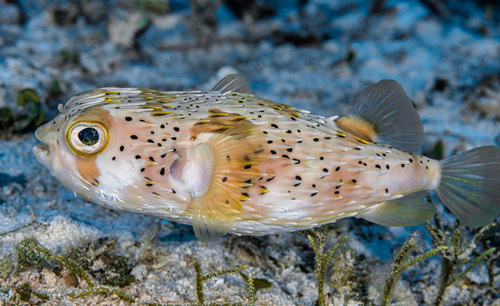
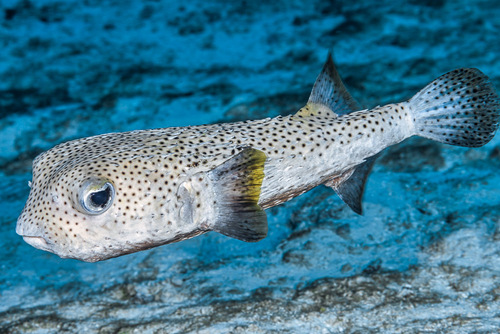
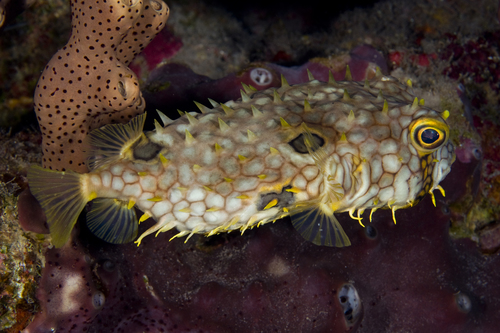
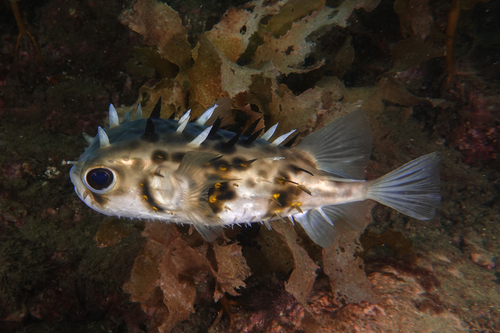
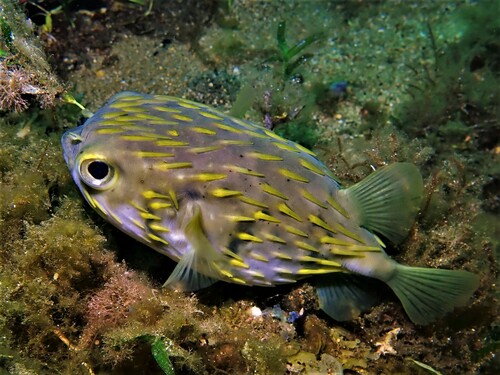
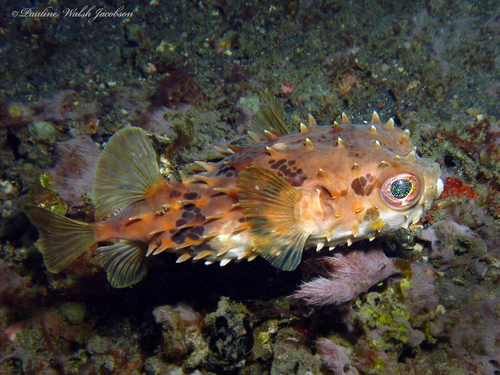
It has a small mouth and a rounded body covered in short spines, each with a triangular base. All spines on the top of its head have three subdermal roots.
Coloration
Its dorsal side is pale brown and its ventral side is white, with round brown spots scattered across its body, particularly toward the tail. Its fins are translucent.
Geographic Distribution
This species is widespread across tropical Indo-West Pacific waters, ranging from the Red Sea to the Philippines. It is also a common visitor to the waters surrounding Cape Town, South Africa.
Depth Range
It typically inhabits coastal shelves, found from the sea surface down to around 150 m (490 ft) deep.
Habitat
It occurs most often in areas with soft sediment-covered sea floors such as sand, but can also be found above reefs.
Inflation Behavior
This species can inflate itself to a spherical shape with erect spines by ingesting water, and moves very little while inflated.
Activity Pattern
It is a nocturnal species, active during night and twilight, and is sometimes trawled in large numbers.