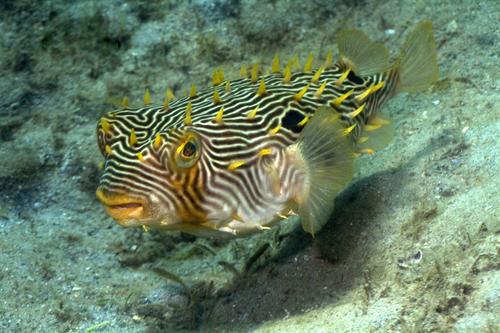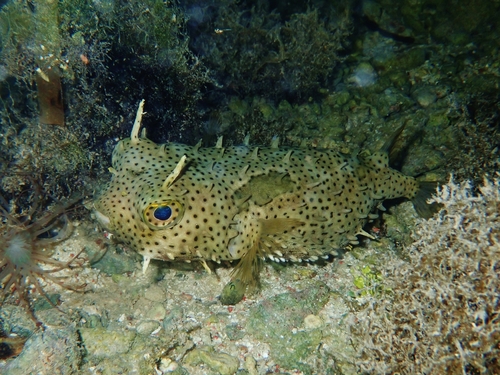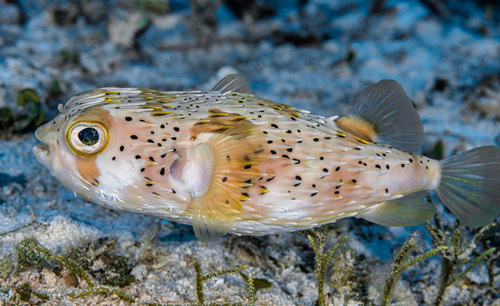
About Diodon holocanthus Linnaeus, 1758
Scientific Name and Baseline Coloration
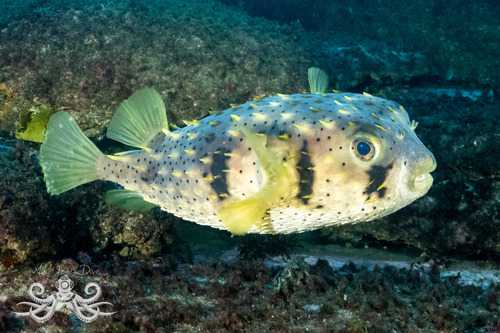
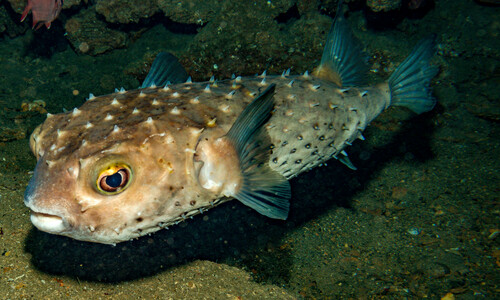
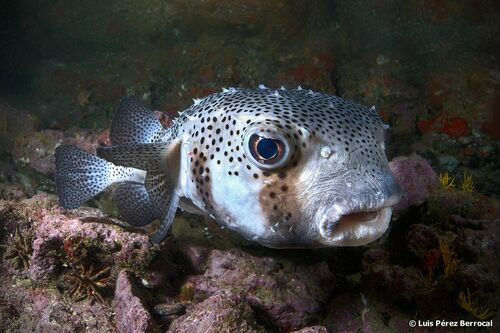
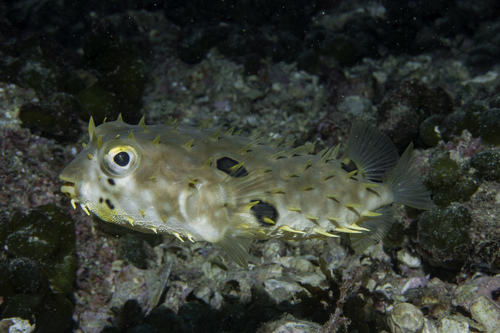
Long-spine porcupinefish, scientifically named Diodon holocanthus Linnaeus, 1758, is pale with large black blotches and smaller black spots; the number of these spots decreases as the fish ages.
Spine Characteristics
It has many long, two-rooted depressible spines, especially on its head.
Jaw Structure
The teeth of its two jaws are fused into a parrot-like "beak".
Adult Size
Adult long-spine porcupinefish can reach 50 cm (20 in) in length.
Similar Species Distinction
The only other fish it is likely to be confused with is the black-blotched porcupinefish Diodon liturosus, but the long-spine porcupinefish has much longer spines than this species.
Global Distribution Range
The long-spine porcupinefish has a circumtropical distribution, found in tropical zones of major seas and oceans.
Atlantic Distribution
In the Atlantic, it occurs from Florida and the Bahamas to Brazil, and in the Eastern Atlantic from 30°N to 23°S, as well as around South Africa.
Indian Ocean Distribution
In the western Indian Ocean, it ranges from the southern Red Sea to Madagascar, Réunion and Mauritius.
Pacific Ocean Distribution
In the Pacific Ocean, it is found from southern Japan to Lord Howe Island, east to the Hawaiian and Easter islands, and also from southern California to Colombia and the Galapagos Islands.
Habitat
Long-spine porcupinefish live over muddy sea bottoms, in estuaries, in lagoons, or on coral and rocky reefs in tropical and subtropical seas around the world.