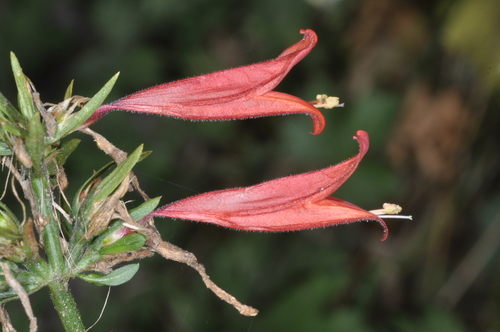
About Dicliptera squarrosa Nees
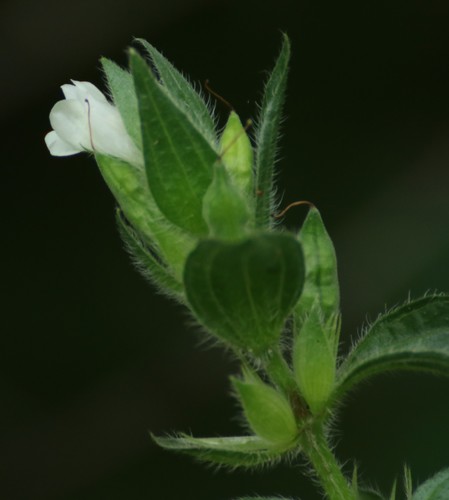
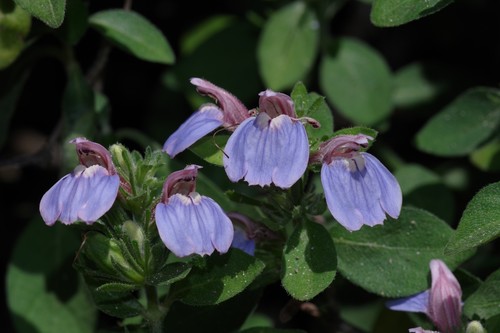
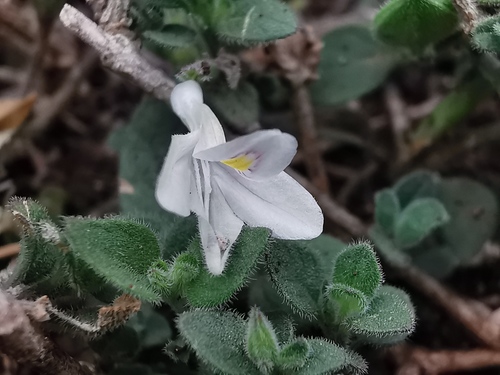
Dicliptera squarrosa Nees is a drought-tolerant subshrub that reaches approximately 60 cm in height and 45 cm in width. It has an upright to drooping growth habit with thin stems. Its leaves are opposite, hairy, oval-shaped, 4 to 8 cm long, and dull or velvety medium green, covered in grey down. The vibrant reddish-orange flowers measure 2 to 4 cm long and are produced in axillary and terminal clusters; flowering occurs throughout summer and into autumn. This species' flowers attract both butterflies and hummingbirds, which is the origin of its common name. It is native to Peru, Bolivia, Paraguay, northern Argentina, Uruguay, and southern, southeastern, and west-central Brazil, including the Brazilian Cerrado ecoregion. It grows primarily in the seasonally dry tropical biome. In Costa Rica, it flowers during the dry summer season at an altitude of 1630 m above sea level. Common called the hummingbird plant, it is a tender herbaceous perennial that grows easily in well-drained soils such as loam and silt when planted in full sun. It tolerates both mild shade and drought, and is winter hardy to USDA Zones 8–10, where it can be protected with a layer of mulch. It tolerates temperatures as low as −17.7 °C (0 °F), and can also be grown as an annual. It may be cultivated in containers or hanging baskets. Stem cuttings can be taken and overwintered indoors.