About Dicamptodon tenebrosus (Baird & Girard, 1852)
Common Name and Classification
Dicamptodon tenebrosus, commonly known as the coastal giant salamander, is the largest terrestrial salamander in North America.
Size
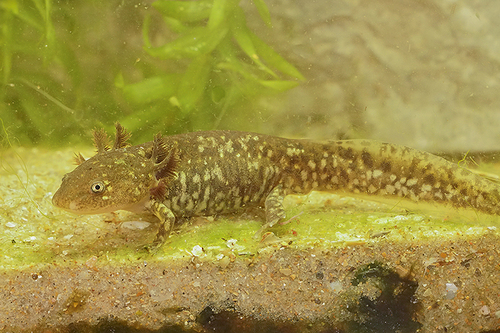
Terrestrial adults of this species can reach a maximum total length of 33 cm (13 in), while paedomorphic forms can grow up to 35.5 cm (14.0 in).
Limb Structure
It has stout limbs, with four toes on each front foot and five toes on each back foot.
Tail Characteristics
Its tail makes up approximately 40 percent of its total body length and is laterally compressed.
Body Pattern and Coloration
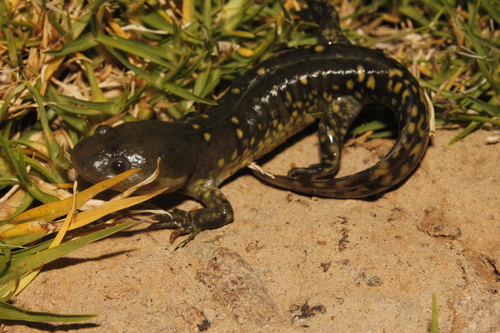
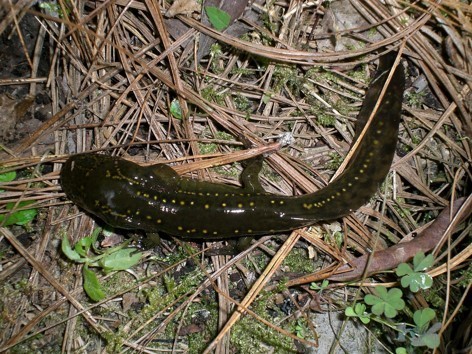
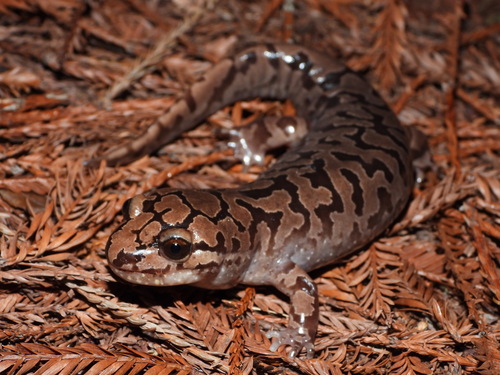
A marbled or reticulate pattern of dark blotches covers its head, back, and sides, set against a light brown or brassy-colored background.
Head and Throat Features
It has a broad head with a shovel-like snout, and a fold of skin across the throat called the gular fold.
Eye Characteristics
Its eyes are medium-sized, with a brass-flecked iris and a large black pupil.
Vocalization Capability
This species is one of the few salamanders that is capable of producing vocalizations.
Geographic Range
The coastal giant salamander is endemic to the Pacific Northwest of North America, where it occurs in Northern California, Oregon, Washington, and southern British Columbia.
Aquatic Habitat
Aquatic life stages of this species inhabit clear, cool to cold, well-oxygenated streams, and may also be found in mountain lakes and ponds.
Terrestrial Adult Habitat
Metamorphosed adult coastal giant salamanders live in humid forests near mountain streams or rocky mountain lake shores, where they typically shelter under rocks and logs.