About Ambystoma ordinarium Taylor, 1940
Taxonomy
Ambystoma ordinarium Taylor, 1940 is a species of salamander.
Larval Coloration
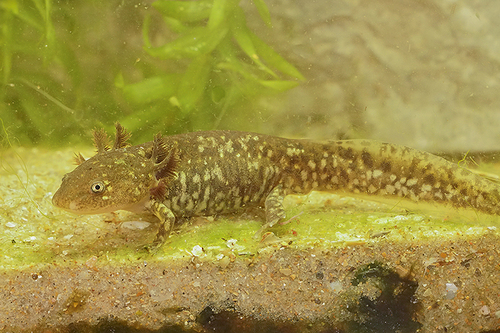
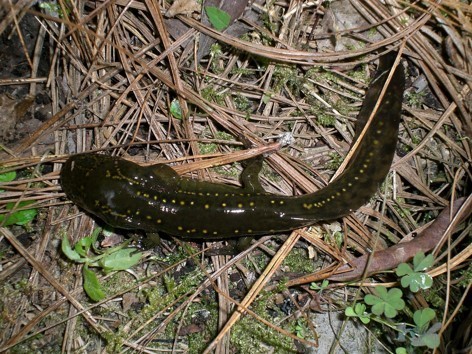
Larvae and neonates have sparse, evenly distributed melanophores and rows of light silver-yellow specks.
Larval Morphology
Larvae have well-developed fins, small but bushy gills, and 16–24 gill rakers, with an average of 18.8, on their third gill arches.
Larval Size
Larvae reach a maximum size of 100 mm snout-to-vent length (SVL) and 191 mm total length.
Sexual Maturity Size
At sexual maturity, these salamanders measure between 70 and 75 mm SVL.
Terrestrial Adult Size
Terrestrial adults reach a maximum size of 86 mm SVL.
Adult Morphology
They have narrow heads, and 16–24 tooth-rakers on their third gill arches.
Adult Coloration
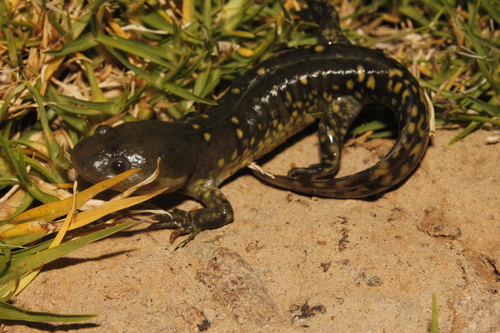
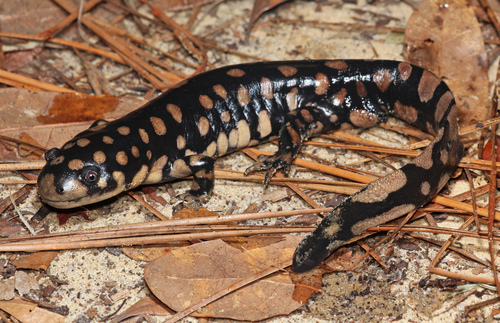
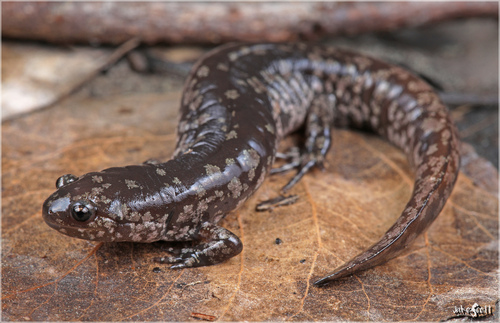
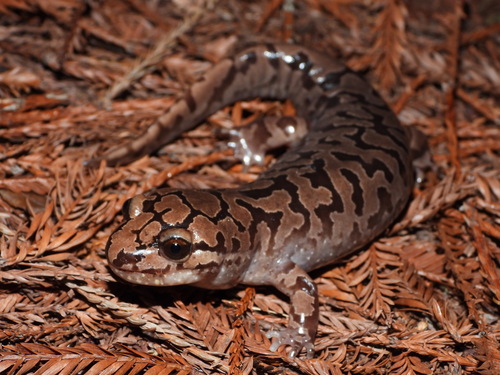
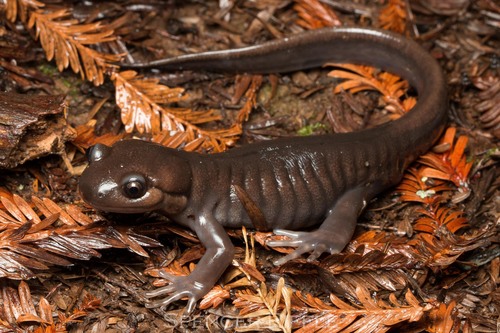
Adults generally have uniform dark or black coloring on their backs, but some individuals may be mottled, and others may retain the larval coloration.
Species Distribution
A. ordinarium is only found at two locations: Puerto Hondo, in a small stream four miles west of El Mirador, and nearby Puerto Garnica, in a second small stream.
Habitat Stream Characteristics
The Puerto Garnica stream has dark, cold waters with a temperature of 12.4 °C.
Habitat Elevation
Both streams are located high in the mountains, at elevations of 9000 and 9400 feet above sea level respectively.
Larval Habitat Use
Larvae and neotenes have been found swimming against the current of the streams, at depths of 5–12 inches.
Terrestrial Adult Habitat Use
Terrestrial adults stay near stream banks, and are often found alongside gilled adults, but can also be found under debris in pine and fir forests up to 30 m away from streams.