About Dendrocopos syriacus (Hemprich & Ehrenberg, 1833)
Species & Size
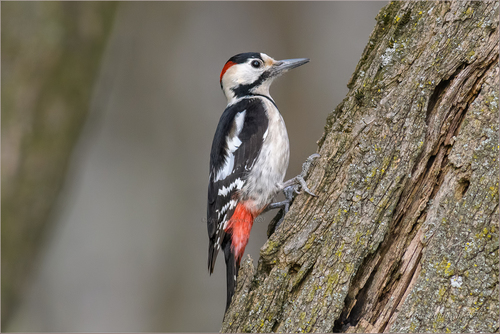
This species of woodpecker, Dendrocopos syriacus, measures 23 cm in total length, and is very similar in appearance to the great spotted woodpecker, Dendrocopos major.
Male Upper Body Plumage
For male individuals, the upper body is glossy black, with a crimson spot on the nape, and white coloration on the forehead, the sides of the face, and the neck.
Wing Structure & Markings
A large white patch sits on the shoulder, and the flight feathers are black with white spots that form three distinct wingbars.
Tail Features & Function
The three outer tail feathers have only a small number of white spots; these spots are visible when the short, stiff tail is spread out, and the tail acts as a support while the bird climbs.
Underparts Plumage
The underparts of the bird are buffish white, and the abdomen and undertail coverts are reddish.
Bill & Leg Coloration
The long bill is slate black, and the legs are greenish grey.
Female Plumage Trait
Female individuals have no crimson coloration on the nape.
Juvenile Plumage Trait
Juvenile birds also lack the crimson nape spot, but have a crimson crown.
Distinction from Lesser Spotted Woodpecker
Dendrocopos syriacus can be distinguished from the smaller lesser spotted woodpecker by its crimson abdomen and white shoulder patches.
Distinction from Great Spotted Woodpecker
It is much more difficult to tell the Syrian woodpecker apart from the great spotted woodpecker. The Syrian woodpecker has a longer bill, more white coloration on the head, and does not have the white tail barring that marks the great spotted woodpecker.
Geographic Range
Dendrocopos syriacus is a resident breeding bird whose range extends from southeastern Europe eastward to Iran. This species' range has expanded further northwest into Europe in recent years.
Habitat Preferences
It lives in open woodlands, agricultural areas with scattered trees and scrub, and parks, and relies on old trees for food and nesting sites.
Behavior Note
Despite its distinct plumage, it is often an inconspicuous species.