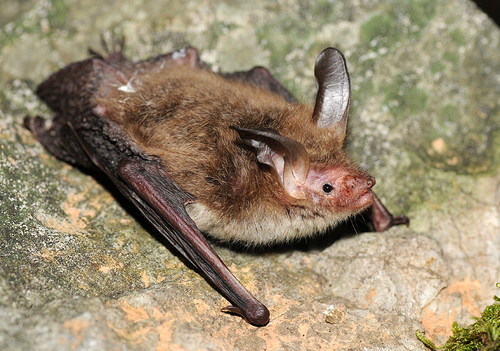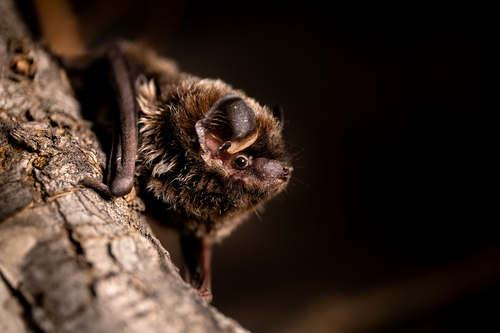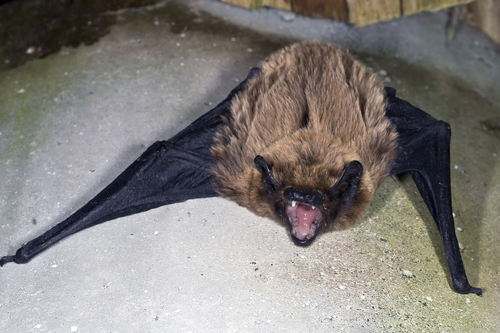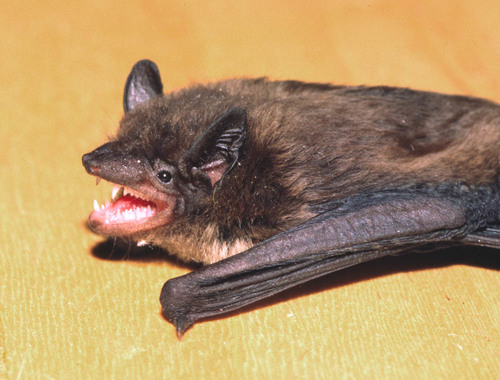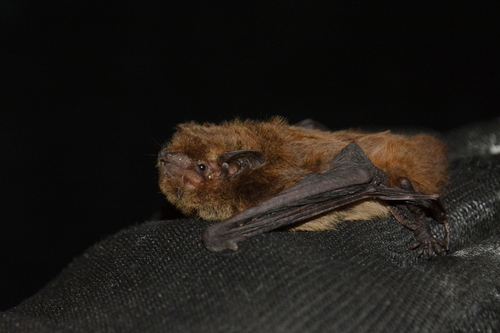
About Pipistrellus nathusii (Keyserling & Blasius, 1839)
Common Name and Size Measurements
This species, commonly called Nathusius' pipistrelle, has a head and body length of 46–55 mm, a wingspan of 220–250 mm, a forearm length of 32–40 mm, and a body weight of approximately 6–15.5 g. Its fifth finger measures longer than 43 mm.
Upper and Underbody Fur Color
The fur on its upper body is medium-dark reddish-brown, often with paler tips, while the fur on its underbody is pale brown.
Trait Comparison to Common Pipistrelle
Compared to the common pipistrelle, its fur is longer, less uniformly colored, and it is overall larger with broader wings. Its face, ears, wings, and tail are all dark.
Geographic Range
Nathusius' pipistrelle ranges from Western Europe east to the Ural Mountains, Turkey, and the Caucasus. It is a highly migratory species: individuals from northern and eastern populations move southwest to overwinter.
Preferred Habitat
It prefers parkland and open woodland habitats, usually located close to water. It is generally more common across Central and Eastern Europe.
Western Europe Occurrence Status
In Western Europe, it is mainly a rare winter visitor, but new breeding colonies have been detected in multiple areas in recent years. It was previously classified as a vagrant in Ireland and Britain, with only a small number of recorded sightings including several from North Sea oil rigs; it is now confirmed to breed at multiple sites in both regions.
Key Threats
Key threats to the species include the loss of hollow trees, and exposure to toxic chemicals used to treat timber in buildings.
Protection Status and Breeding Aids
However, it is a protected species in many countries, and it breeds successfully in human-installed bat boxes.
Hunting Flight Behavior
Nathusius' pipistrelle emerges early to hunt, flying in straight lines with rapid, deep wingbeats at heights between 3 and 15 meters above the ground.
Diet
It feeds on small to medium-sized flying insects, with a particular preference for chironomid midges.
Breeding Colony Locations
Breeding colonies are situated in hollow trees, bat boxes, and occasionally in buildings.
Mating Behavior
Mating occurs between July and early September, when males establish mating territories and gather harems of females.
Spring Nursery Roosts
In spring, females gather in nursery roosts to give birth to two young per individual.