About Cypsiurus parvus (M.H.K.Lichtenstein, 1823)
Common Name and Size
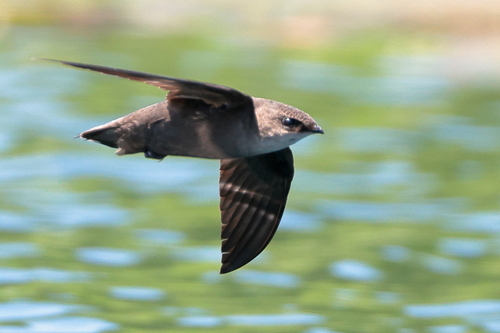
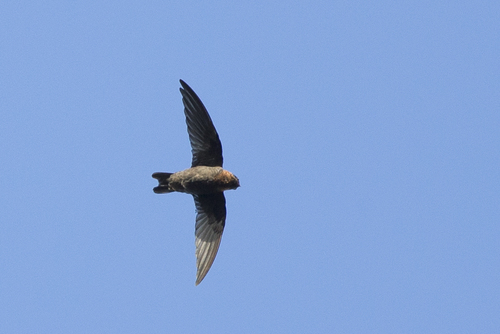
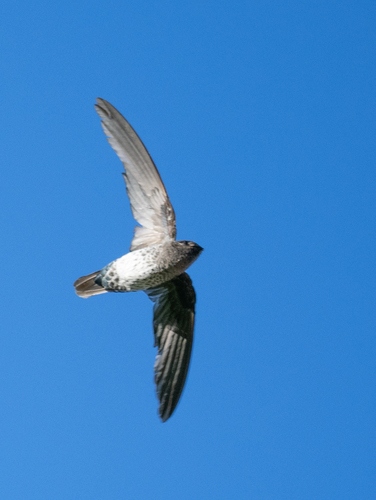
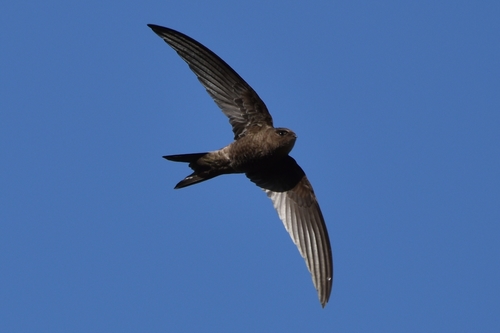
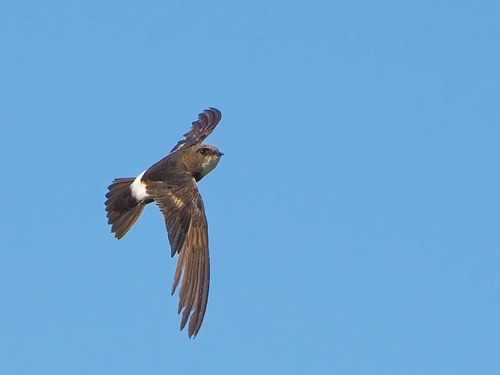
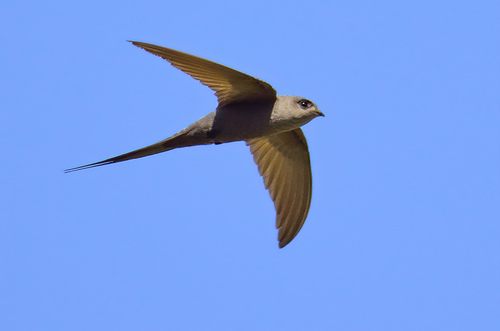
Cypsiurus parvus, commonly known as the African palm swift, is a 16 cm long bird that is mainly pale brown in color.
Wing Structure
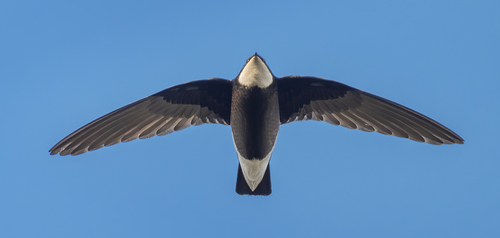
It has long swept-back wings that resemble a crescent or a boomerang.
Body and Tail Shape
Its body is slender, and its tail is long and deeply forked, although the tail is usually held closed.
Vocalization
This species produces a loud, shrill scream as its call.
Sexual Dimorphism and Juvenile Traits
Male and female African palm swifts are similar in appearance, and young birds differ from adults mainly by having shorter tails.
Leg Structure and Use
This species has very short legs, which it only uses to cling to vertical surfaces, as swifts never settle voluntarily on the ground.
Native Range
The African palm swift is native to Angola, Benin, Botswana, Burkina Faso, Burundi, Cameroon, Central African Republic, Chad, Congo, Democratic Republic of the Congo, Equatorial Guinea, Eritrea, Eswatini, Ethiopia, Gabon, Gambia, Ghana, Guinea, Guinea-Bissau, Ivory Coast, Kenya, Liberia, Malawi, Mali, Mauritania, Mayotte, Mozambique, Namibia, Niger, Nigeria, Rwanda, São Tomé and Príncipe, Saudi Arabia, Senegal, Sierra Leone, Somalia, South Africa, South Sudan, Sudan, Tanzania, Togo, Uganda, Yemen, Zambia and Zimbabwe.
Feeding Behavior
African palm swifts spend most of their lives in the air, feeding on insects they catch in their beaks. They often feed near the ground and drink while flying.
Breeding Status
It is a common resident breeder in tropical Africa.
Nesting and Clutch
Its nest, made from down and feathers, is glued to the underside of a palm frond with saliva; the same saliva is also used to secure its usual clutch of two eggs.
Habitat
This is a fast-flying bird of open country, which is strongly associated with oil palms but can also be found in wooded savannah, thornbush and cultivated land.