About Hirundapus giganteus (Temminck, 1825)
Common and Taxonomic Identity
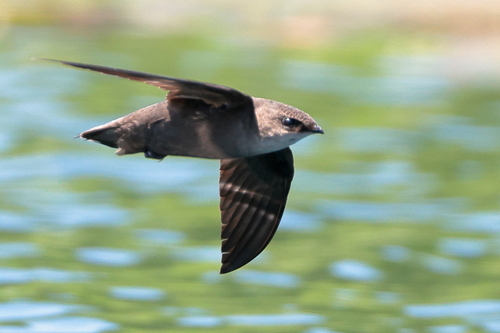
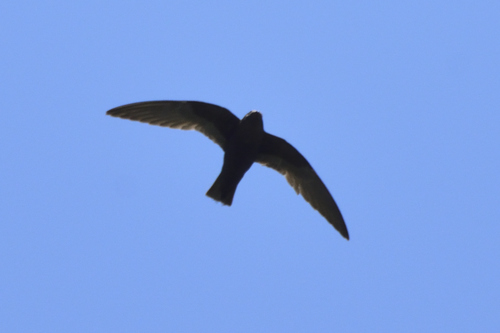
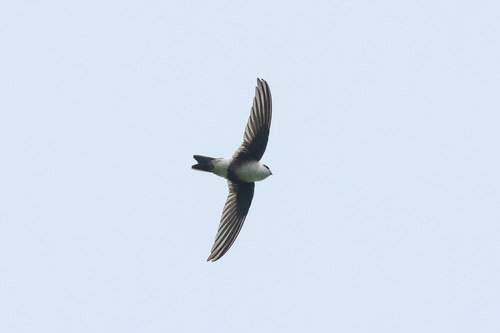
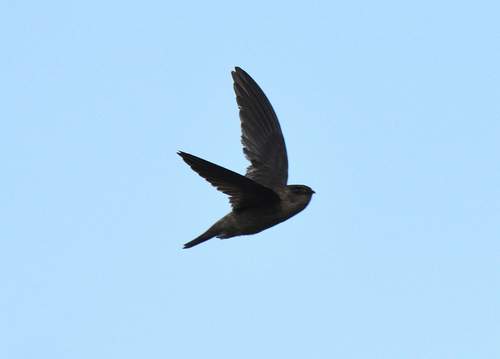
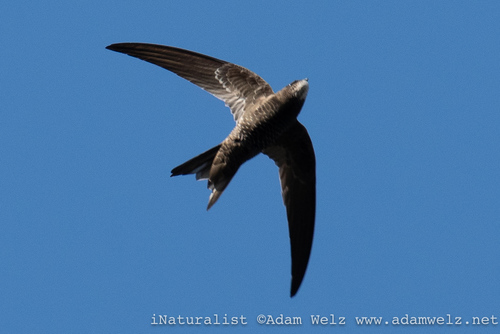
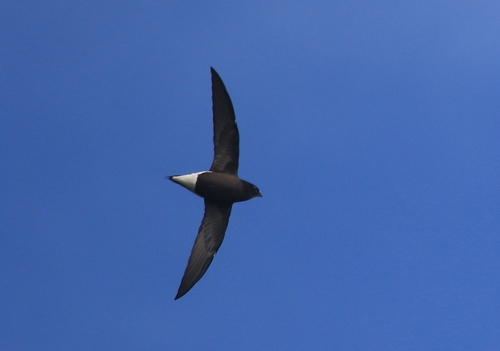
The brown-backed needletail (Hirundapus giganteus), also called the brown needletail, is a large species of swift.
Leg Structure and Usage
These birds have very short legs that they almost exclusively use to cling to vertical surfaces. They never settle on the ground voluntarily, and spend most of their lives in flight, feeding on insects that they catch with their beaks.
Breeding Range
This species is a resident breeder in hill forests of southern India and Southeast Asia, with its range extending to Indonesia's Greater Sunda islands and Palawan in the southern Philippines.
Nesting and Reproduction
Brown-backed needletails build their nests in rock crevices on cliffs, and lay clutches of 3 to 5 eggs.
Flight Speed
Their flight is impressively fast, even when compared to other swift species.
Size and Body Shape
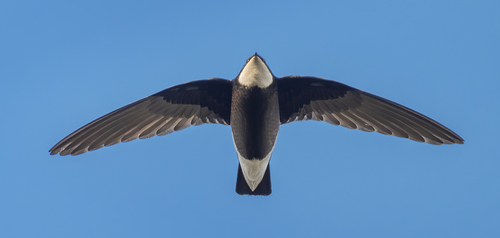
Brown-backed needletails are among the largest swifts in the world. Measuring 23 centimeters, they are larger than both the Alpine swift and the white-throated needletail, and share a similar heavy, barrel-shaped body build with the white-throated needletail.
Plumage
Their plumage is mostly dark brown, with the exception of a white undertail that extends onto their flanks.
Subspecies Classification
There are two recognized subspecies. The subspecies that breeds in southern India is H. g. indicus, commonly called the brown-throated needletail, while the nominate subspecies that breeds in Southeast Asia is H. g. giganteus.
Subspecies Distinguishing Feature
H. g. indicus can be distinguished from the nominate form by its white lores.
Genus Tail Characteristic
Needletailed swifts of the genus Hirundapus get their common name from the spined tips of their tails, which differ from the forked tails of typical swifts in the genus Apus. The brown-backed needletail has more prominent tail spines than other needletail species.