About Cyprinodon nevadensis Eigenmann & Eigenmann, 1889
Taxonomic Classification
Cyprinodon nevadensis is a species of pupfish in the genus Cyprinodon. It is commonly called the Amargosa pupfish, though this name may also refer specifically to one of its subspecies, Cyprinodon nevadensis amargosae.
Subspecies Endemism
All six of its subspecies are, or were, endemic to highly isolated locations in the Mojave Desert of California and Nevada. This species has specifically been recorded in Tecopa Bore, Inyo County, an area connected to the Amargosa River, Saratoga Springs, and the lakes linked to these water systems.
Habitat Type
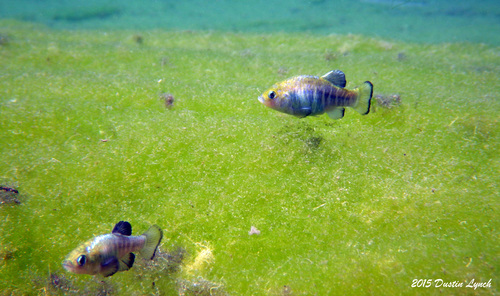
Amargosa pupfish live in freshwater habitats including streams, springs, and spring-fed ponds and lakes.
Size
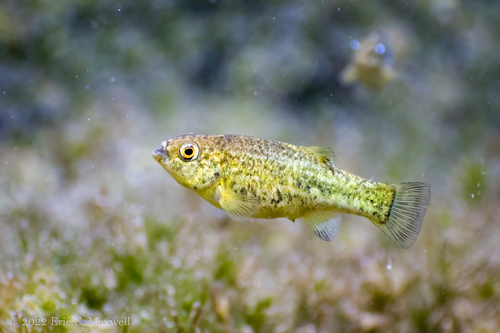
They are small fish; they typically reach 25 to 30 mm in length within several months, and rarely grow larger than 50 mm.
Body Morphology
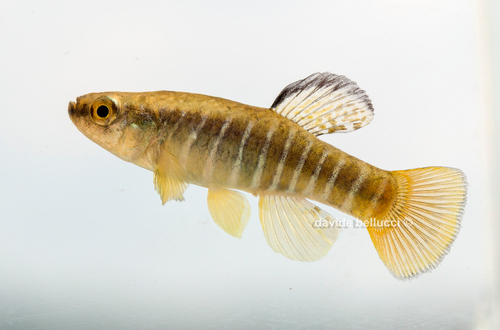
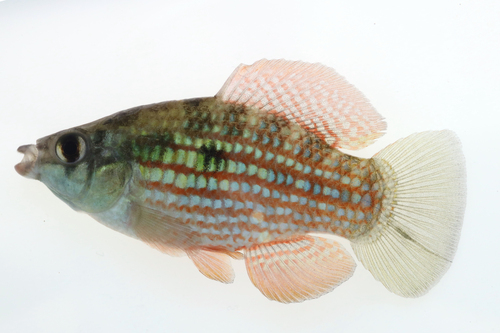
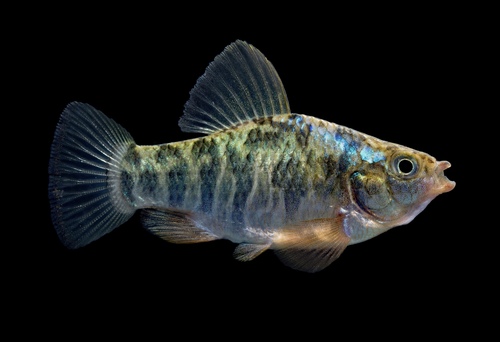
They have deeper, broader bodies, a blunt head, and a small, oblique terminal mouth.
Feeding Type
Amargosa pupfish are omnivores. Their diet is made up of algae and cyanobacteria, and they also consume small invertebrates.
Male Coloration
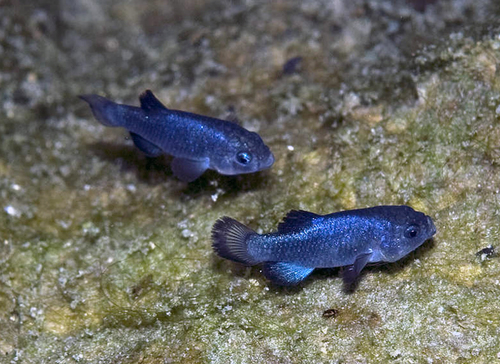
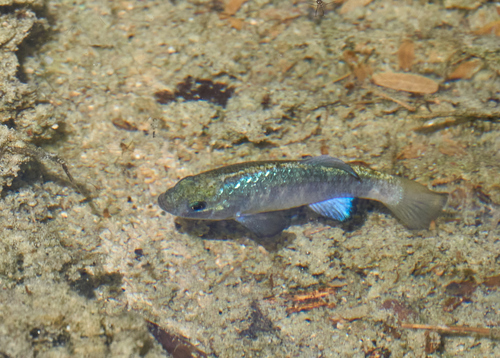
Males are bright blue, with a black band along the edge of the tail fin.
Female Coloration
Females are olive-brown, and develop metallic blue coloration on their shoulders and upper sides during breeding seasons.
Male Breeding Behavior
Males defend breeding territories, and will aggressively chase away other rival males.
Egg Laying Behavior
Females lay their eggs a small number at a time, scattered across multiple different locations.
Egg Guarding Behavior
Males guard the territory where the eggs have been deposited.