About Cynops ensicauda (Hallowell, 1861)
Common Names and Taxonomic Placement
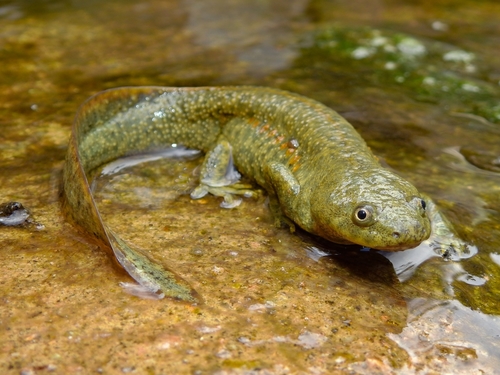
Cynops ensicauda, commonly called the sword-tailed newt, yellow-bellied newt, or Okinawa newt, is a species of true salamander native to the Ryukyu Archipelago of Japan.
Conservation Listing
It has recently been listed on Japan's Red List of Threatened Amphibians.
Toxicity and Ventral Coloration
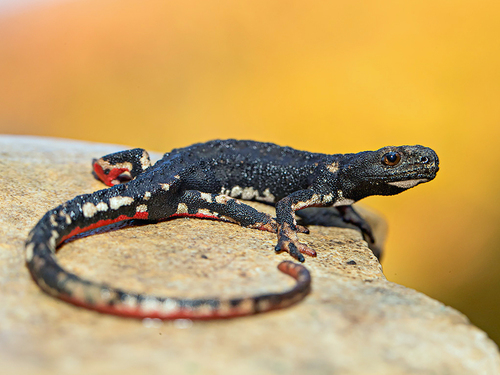
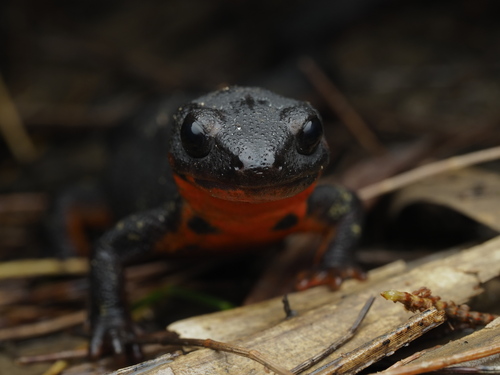
This species is poisonous, and is sometimes called a fire-bellied newt because of the orange color of its underside.
Distinguishing Morphological Traits
It should not be confused with the common Chinese and Japanese Cynops species; it can be distinguished from these two by its larger size, broader heads, and smoother skin.
Dorsal Base Coloration
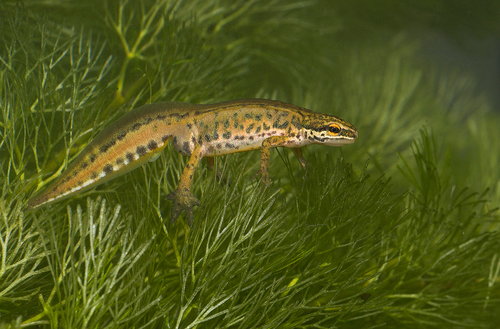
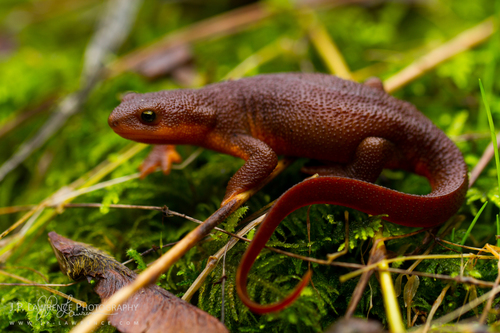
Its base color ranges from brown to black, and it occasionally has an orange stripe running along its back.
Dorsal Spotting
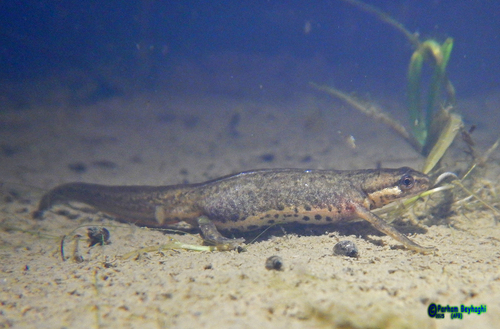
Some individual newts have light spotting or speckling on their dorsal surfaces.
Adult Size Range
Adult males reach up to 12.8 cm (5.0 in) in total length, while adult females can grow to 18 cm (7.1 in), making this species the largest living member of its genus Cynops.
Sexual Dimorphism
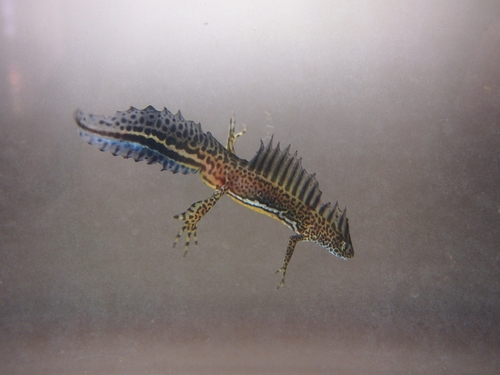
The sword-tailed newt displays clear sexual dimorphism: females have tails that are longer than the rest of their bodies, while males have much shorter tails that sometimes show a whitish sheen during the breeding season.
Geographic Distribution
The sword-tailed newt is found only on the Ryukyu Archipelago, an island chain off southern Japan's coast, plus many smaller surrounding islands.
Habitat Preferences
These newts typically inhabit cool, standing bodies of water, and are often found in human-made features including rice paddies, roadside ditches, and cattle waterholes.
Recognized Subspecies
Two subspecies are currently recognized: C. e. ensicauda and C. e. popei.
Temperature Tolerance
Because its native range has a subtropical climate, the sword-tailed newt is more tolerant of high temperatures than other species in the genus Cynops.
Threats to Survival
This newt has no natural predators, so the main threats leading to its endangered status are deforestation and land development.
Population Decline Data
As of 2010, 75% fewer newts visited breeding grounds than had in 1996.
Breeding Site Characteristics and Territoriality
Most of the species' breeding sites are located in roadside ditches and gutters, and the newts are highly territorial, which makes successful relocation very difficult.