About Cyclura rileyi Stejneger, 1903
Snout-to-Vent Length
When fully grown, the San Salvador rock iguana (Cyclura rileyi Stejneger, 1903) measures 300 to 390 mm (12 to 15 in) in snout-to-vent length (SVL).
Coloration Variability
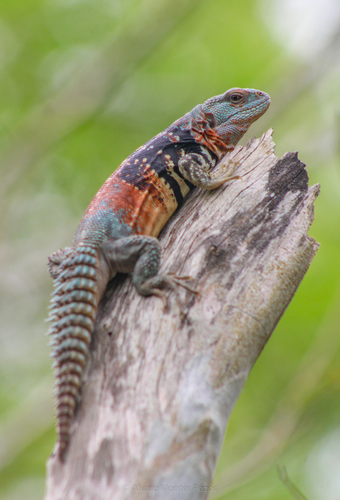
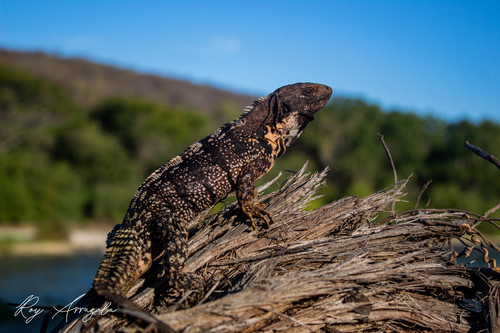
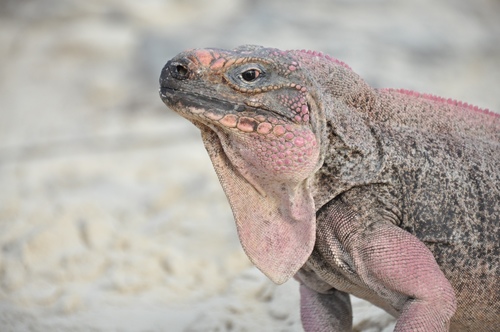
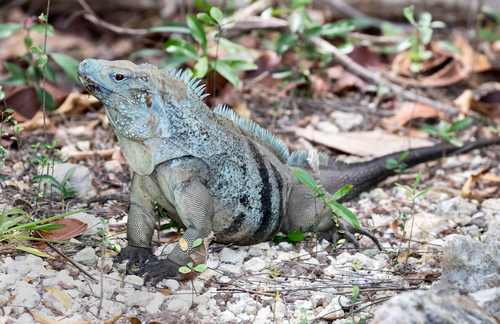
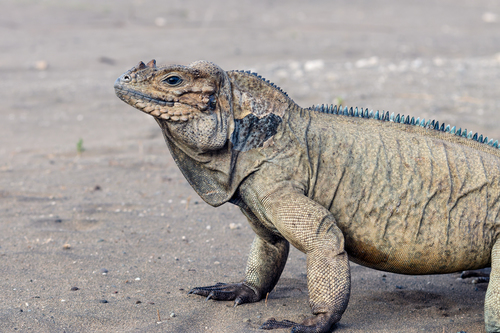
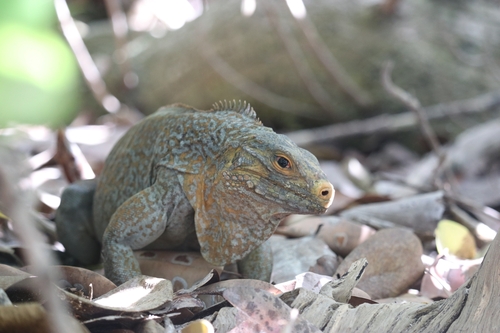
It is a colorful lizard, with coloration that varies between its subspecies and between individual specimens.
Back Color Patterns
The back color of this lizard can range from red, orange, or yellow, to green, brown, or grey, and is usually patterned with darker markings.
Male Color Display
The very brightest colors—red, orange, blue, or yellow—are normally only displayed by males, and become more pronounced when the lizard has a warmer body temperature.
Immature Coloration
Immature iguanas do not have these bright colors; they are either solid brown or grey with faint, slightly darker stripes.
Sexual Dimorphism
Like other species in the genus Cyclura, this species is sexually dimorphic: males are larger than females, have more prominent dorsal crests, and also have larger femoral pores on their thighs, which are used to release pheromones.
Historical Distribution
Historically, Cyclura rileyi inhabited all large islands of the Bahamas.
Current Distribution
At present, it is only found in six populations on small remote cays across three island groups: San Salvador Island, Acklins, and Exuma.
1995 Wild Population Estimate
A 1995 study estimated there were between 426 and 639 individuals left in the wild.
Post-Hurricane Population Trend
This number is likely lower now, because much of the species' habitat was destroyed by Hurricane Floyd in 1999.
Subspecies Geographical Split
Each of the three island groups hosts its own distinct subspecies.
Glacial Period Island Isolation
The three groups lie on separate geological banks, and were not connected to one another during the last glacial period, when global sea levels were 100 m (330 ft) lower than they are today.