About Ctenotus taeniolatus (White, 1790)
Taxonomy and Common Names
Ctenotus taeniolatus (White, 1790), commonly known as the copper-tailed ctenotus or copper-tailed skink, is a species of medium-sized skink.
Distribution
It is common along Australia's eastern seaboard, and also occurs throughout the country more generally.
Habitat
This species (also referred to as striped skink in this description) inhabits open bushland, heathland, rocky areas, and sandy areas.
Size
It grows to a maximum length of 30 cm.
Upper Body Coloration
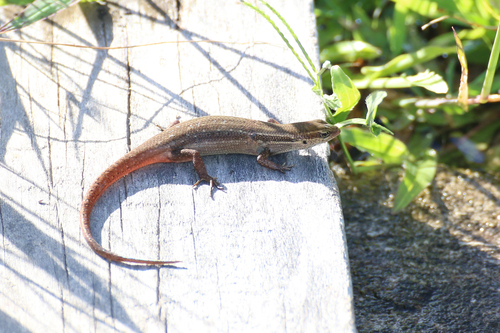
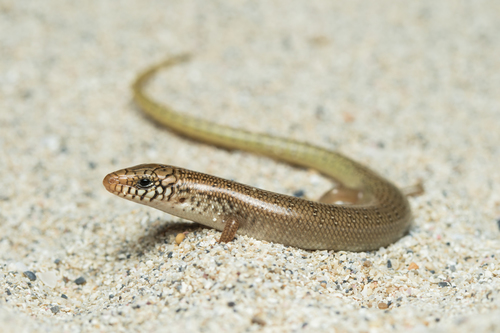
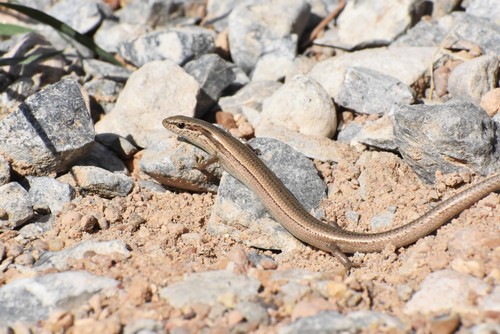
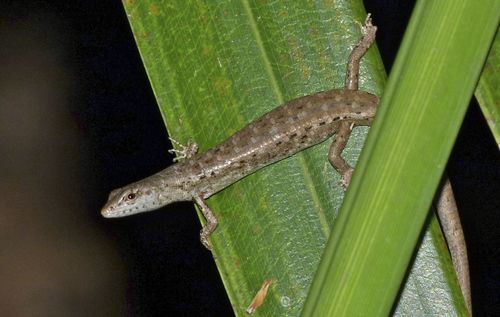
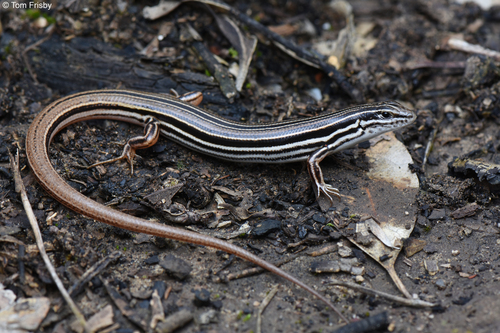
The upper body is olive brown, with dark brown and white stripes running the full length from the head to the tail.
Body Band Patterns
It has a black vertebral band with white edges, and a white dorsolateral band edged in black.
Side Coloration
Its sides are dark brown and marked with white spots.
Diet
Like most skinks, it feeds mainly on small invertebrates such as insects and worms.
Basking and Anti-predator Behavior
It seeks out sunny basking spots that have nearby cover, which allows it to dart away quickly from predators.