About Ctenosaura acanthura (Shaw, 1802)
Common Name Origin
Commonly known as the Mexican spiny-tailed iguana, Ctenosaura acanthura (Shaw, 1802) gets its common name from the distinctive keeled scales covering its long tail.
Size
Males can reach a total length of up to 1.4 meters (4 ft 7 in), while females are slightly shorter at 1 meter (3 ft 3 in).
Body Coloration & Spine Crest
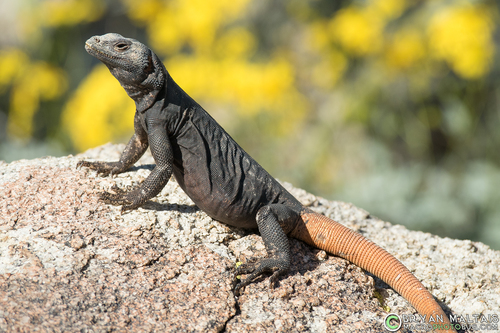
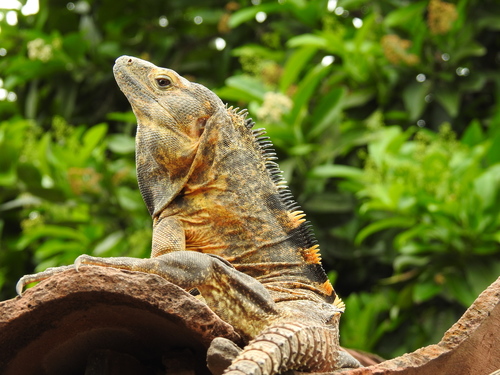
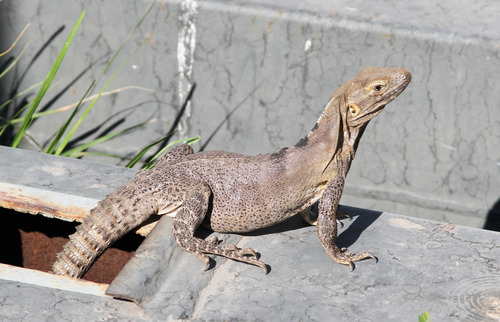
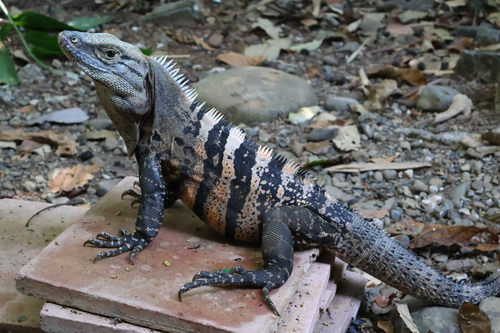
A crest of long spines runs down the center of the animal’s back, and its base body color is black, marked with white or cream-colored patterning.
Similar Species Confusion
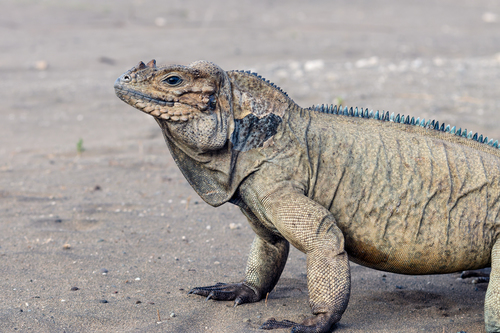
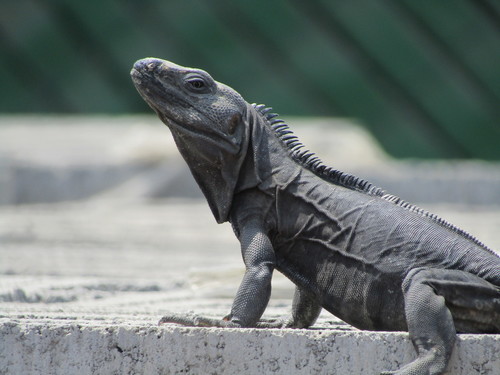
This species is frequently confused with the closely related, similar-looking black iguana, Ctenosaura similis.
Distribution Distinction from Ctenosaura similis
Unlike Ctenosaura similis, C. acanthura is not found in the Mexican states of Tabasco, Campeche, Yucatan, or Quintana Roo, nor in Belize (the Yucatan Peninsula).
Tail Scale Distinction from Ctenosaura similis
C. acanthura can also be distinguished by its very thorny tail whorl scales, which have keels at an angle greater than 30 degrees.
Back Crest Distinction from Ctenosaura similis
The crest of large spines on the back of C. acanthura is interrupted in the pelvic region, creating a break between this back crest and the large spines on the tail; in C. similis, the back crest of large spines is uninterrupted and continuous with the large spines on the tail.
Habitat & Elevation Range
C. acanthura inhabits lowlands on the eastern versant of Mexico, occurring throughout the Veracruz moist forests ecoregion and in western portions of the Petén–Veracruz moist forests, at elevations from sea level up to approximately 1000 meters.
Northern & Central Range Distribution
Its range extends from the Mexican state of Tamaulipas, near the Tropic of Cancer, southward through most of Veracruz, with a small number of records from lower elevation sites in adjacent extreme eastern San Luis Potosi, Hidalgo, Puebla, and Oaxaca.
Southern Range Distribution
Further south, an apparently isolated population lives in central Chiapas’s Rio Grijalva valley, with one record extending the species range into extreme western Guatemala.
Nuevo León Occurrence Doubt
The status of six specimens collected near Sabinas Hidalgo, Nuevo León by Hobart M. Smith in 1934 is questionable: C. acanthura has not been reported from Nuevo León at any time before or after 1934, collector Hobart Smith did not include the species in his later checklist of Nuevo León reptiles, so the presence of C. acanthura in the state is considered doubtful.
Mating Period & Behavior
Mating for C. acanthura generally takes place in spring. Males signal dominance and mating interest through head bobbing, then chase females until they catch and subdue them.
Egg Laying & Incubation
Between eight and ten weeks after mating, females dig a nest and lay clutches containing up to 24 eggs. The eggs hatch after 90 days, and the hatchlings dig themselves out of the sand.
Juvenile Coloration
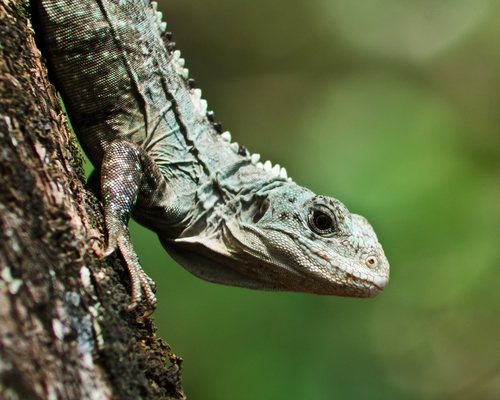
Most juveniles are green with brown markings, though entirely brown hatchlings have also been recorded.