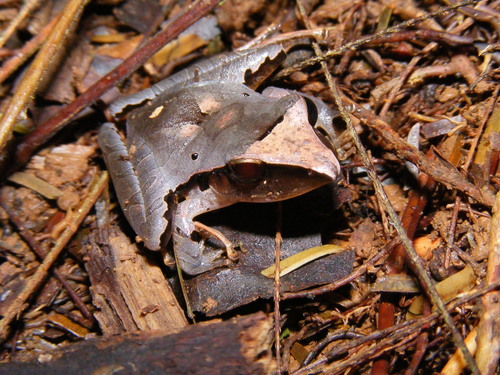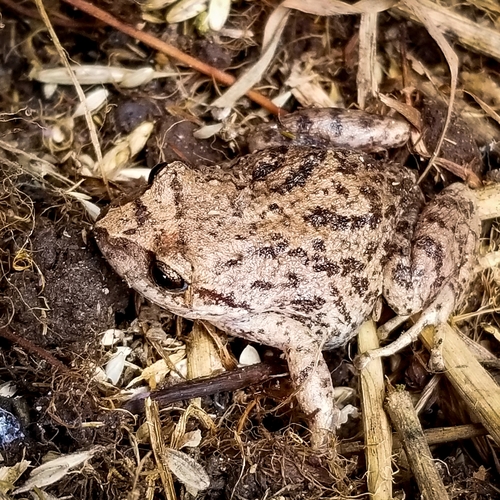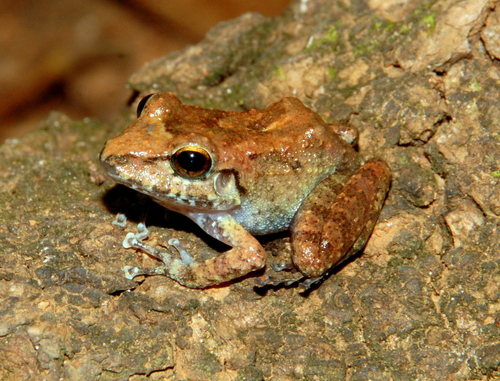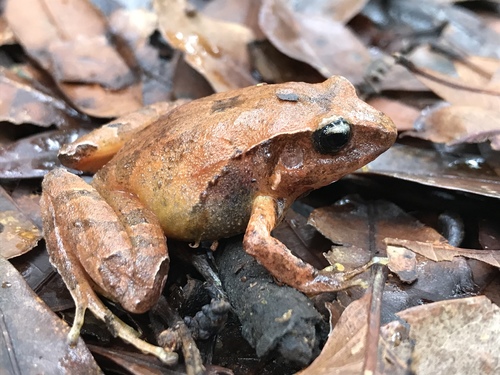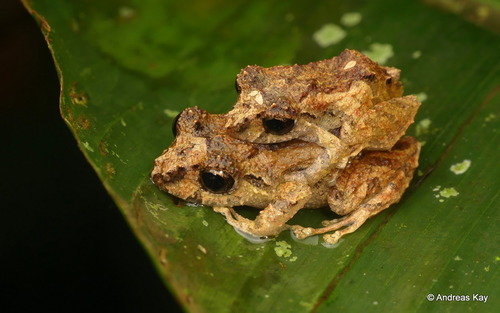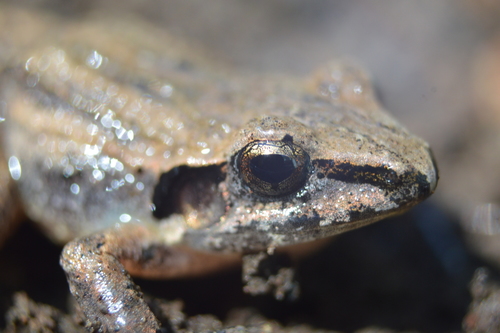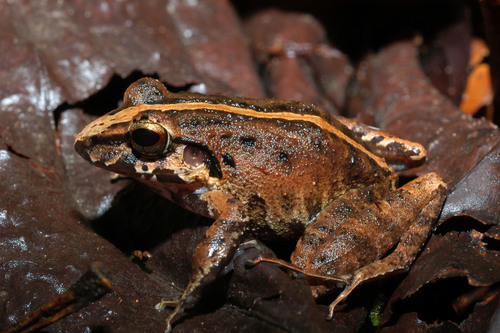
About Craugastor fitzingeri (Schmidt, 1857)
Species Nomenclature & Adult Size
Craugastor fitzingeri (Schmidt, 1857) adult males measure 24–35 mm (0.9–1.4 in) in snout–vent length, while adult females measure 35–53 mm (1.4–2.1 in).
Snout & Tympanum Morphology
In dorsal view, the snout has a subacuminate shape. The tympanum is prominent.
Limb Structure
Both fingers and toes have discs, and the toes are moderately webbed.
Dorsal Skin Texture
Skin is typically covered in warts and ridges.
Dorsal Base Coloration
Dorsal color ranges from gray-brown to brown to orange-brown.
Dorsal Markings
Some individuals have a wide, light middorsal stripe. Most individuals only have some blackish spots and an unclear, darker dorsal pattern.
Throat Coloration
The throat is typically gray, with a white line running down its center.
Belly Coloration
The belly is pale white or yellow.
Male Advertisement Call
The male advertisement call of this species is a variable series of harsh chirps or clacks.
Habitat Elevation Range
Craugastor fitzingeri lives in humid lowland and montane forests below 1,520 m (4,990 ft).
Disturbed Habitat Tolerance
It is often found in disturbed forests or forest edges, but it does not live in secondary forest within the Colombian portion of its range.
Dry & Wet Season Habitat Use
In lowland dry forest regions, it is restricted to riparian gallery forest during the dry season, and can range more widely during the wet season.
Diurnal Activity & Microhabitat
During the day, these frogs stay on the forest floor, usually hidden in leaf litter, though they can also be active.
Nocturnal Microhabitat
At night, they often climb onto logs or into low vegetation.
Male Calling Behavior
Males typically call at dusk from elevated positions on low herbs, in bushes, and similar sites.
Population Status
This species can be locally abundant, but some populations have decreased.
Threat Assessment
No major threats to this species have been identified.
Protected Area Overlap
Its range overlaps with multiple protected areas.