About Cottus carolinae (Gill, 1861)
Taxonomy and General Habitat
The banded sculpin, with the scientific name Cottus carolinae (Gill, 1861), is a freshwater fish that lives mostly in small to moderate-sized streams with swift current.
Age-Based Habitat Segregation
Young and juvenile banded sculpins are mainly found in pools, riffles, and other shallow habitats, while adults tend to prefer deeper water.
Diet and Feeding
This species primarily eats insects and insect larvae, but its large mouth lets it consume prey nearly as large as itself, including other sculpins.
Anti-Predator Camouflage
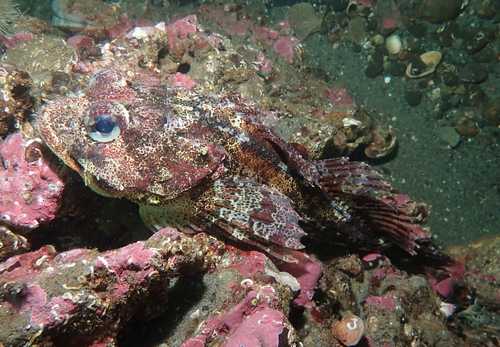
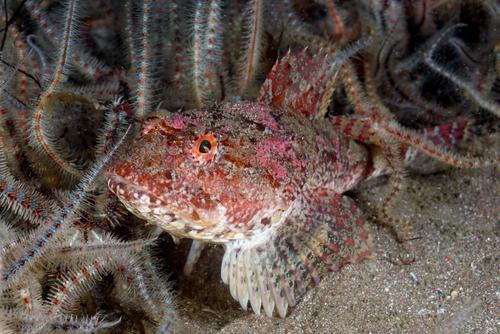
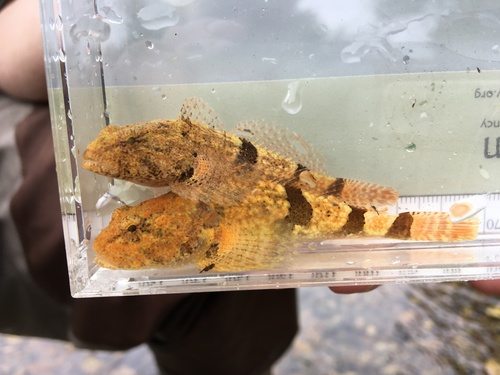
To avoid being preyed on by other fish, the banded sculpin’s color and pattern usually match its surrounding environment.
Coloration and Size
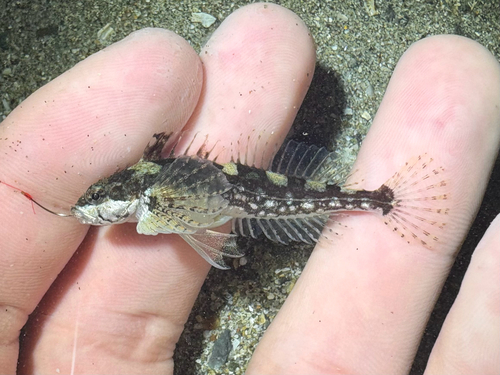
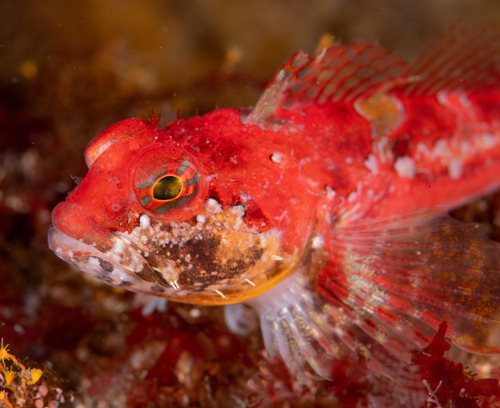
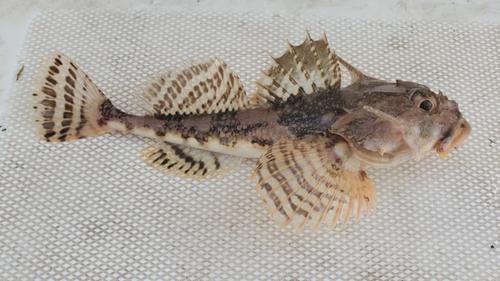
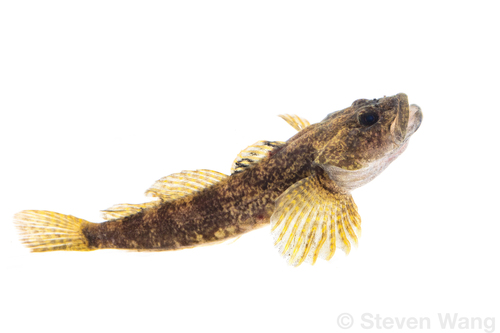
Most banded sculpins are mottled brown with dark vertical banding, and typically grow to around three inches in length.
Body Morphology
They have a broad head that quickly narrows into a slim body, giving them the appearance of a mature tadpole.
Use as Bioindicator
Cottus carolinae is useful as a representative species for studying the effects of mining on fish communities, because its population density has been found to be negatively correlated with higher metal concentrations from mining.
Localized Threat from Siltation
In other areas around the Cumberland Basin, as a benthic fish, the banded sculpin is threatened by increased siltation caused by local farming.
Conservation Status
While the species faces these threats, it is not yet listed as an endangered species.
Geographic Distribution
Cottus carolinae is a freshwater species found only within the United States. This wide-ranging species occurs in eastern North America west of the Appalachians and south of the Ohio River Valley. Its range extends as far south as the mountain streams of Alabama, but the species prefers the cooler streams of the mid to northern United States.
General Habitat Preferences
The banded sculpin usually lives in cool, running streams and rivers. It is a benthic species that prefers stream beds made of sand, bedrock, stones, or boulders.
Size-Specific Habitat Segregation
The species shows size-specific habitat segregation: most adults live in stream and river pools, while young-of-the-year individuals inhabit riffles.
Stream Depth and Current Parameters
Most streams occupied by the banded sculpin are less than two meters deep, with a current velocity between 0.1 and 0.7 meters per second, with a standard deviation of ±0.2 meters per second.
Cave Occurrence
The species is sometimes found in caves, but these individuals generally resemble aboveground populations and may only be occasional visitors.
Cave-Adapted Individual Record
One apparently cave-adapted individual that lacked pigmentation but had normal-sized eyes has been reported from a cave in West Virginia.
Taxonomic Reclassification of Cave Populations
Other, better-documented cave-adapted populations from Missouri, which show adaptations in both pigmentation and eyes, were formerly included in this species, but were reclassified as the separate species grotto sculpin (Cottus specus) in 2013.
Habitat Intolerance and Range Reduction
The banded sculpin is intolerant to habitat changes, and its range has been reduced by the effects of pollution.
Primary Pollutant Threat
The largest pollutant threat to Cottus carolinae habitat is siltation of rivers and streams.
Mining-Related Population Impacts
Additionally, water contaminants such as mining-derived metals in parts of Missouri have posed a severe enough threat to local populations that their numbers have decreased in those areas.