About Hemilepidotus hemilepidotus (Tilesius, 1811)
Size
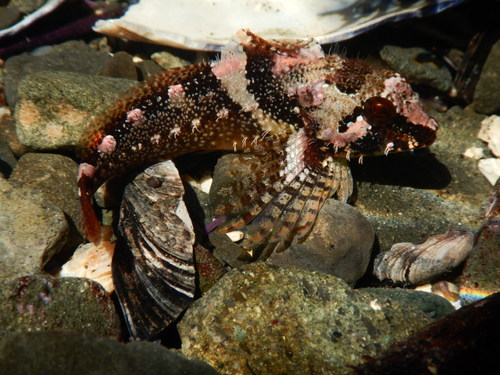
Hemilepidotus hemilepidotus, commonly called the red Irish lord, reaches an average length of about 30 cm (12 in), with a maximum recorded length of 51 cm (20 in) and a maximum recorded weight of 1,100 g (39 oz).
General Body Structure
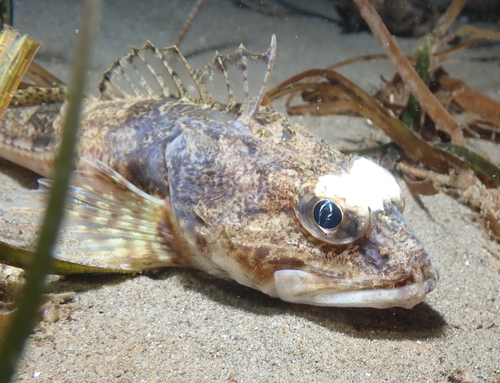
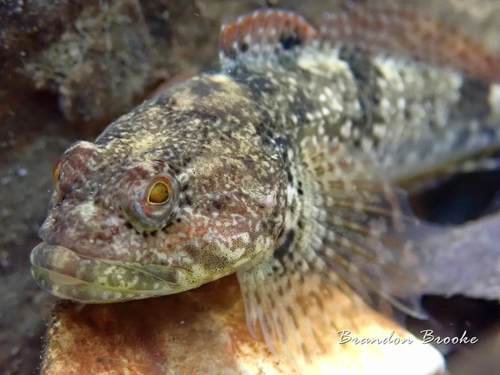
Like most sculpins, it is only partially scaled, has a broad head, large eyes, and a slimmer body. This species is characterized by a dorsal fin split into three notches, with an average of 10 to 12 dorsal spines and 18–20 soft dorsal rays.
Scale Distribution
It has several distinct bands of scales along its body: the dorsal band is roughly 4–5 scales wide, and a second band below the lateral line is about 10 scales wide. No scales are present on its underside.
Cirri and Skeletal Features
It has 4–8 barbels on its frontal cirri and 4–8 barbels on its nasal cirri, and lacks fleshy flaps on its nostrils. It has 35 vertebrae.
Base Coloration
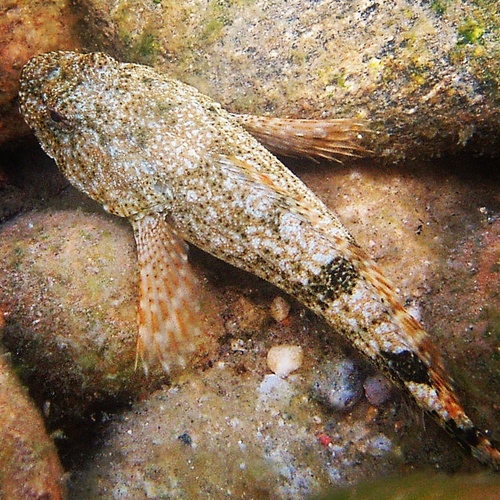
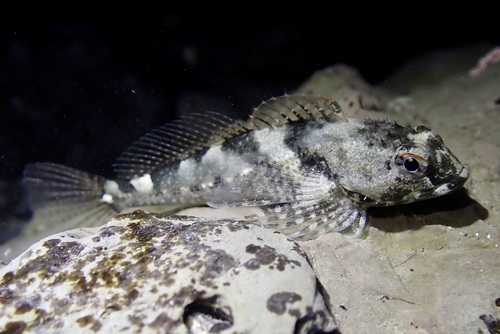
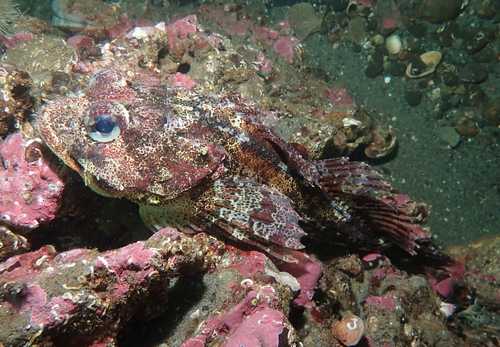
The red Irish lord gets its common name from its characteristic red base coloration, which can also include mottled brown, white, and black markings. It is typically darker on its upper side and paler, ranging to almost white, on its underside.
Body Marking Patterns
Spots and mottling are more prominent in larger fish, and are always visible on individuals longer than 6 cm (2.4 in). The pectoral and anal fins have mottled patterning.
Fin Coloration
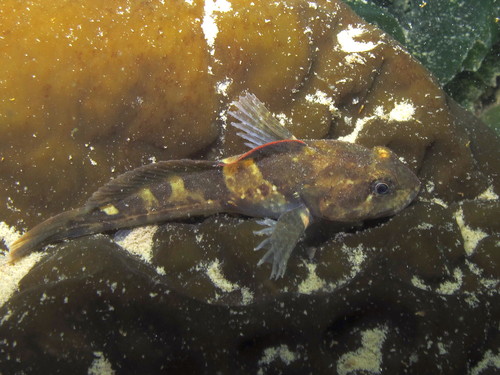
The pelvic fins are pale, but are spotted or dark in large mature males. This species can change its color to blend in with surrounding habitats.
Similar Species Distinction
It can be distinguished from similar related species: the similar brown Irish lord has a dorsal scale band 6–8 scales wide, instead of 4–5, while the yellow Irish lord has more slender cirri.
Distribution Latitude
The red Irish lord inhabits temperate demersal marine environments between 66°N and 34°N.
Geographic Range
It is found mostly in the coastal waters of the Northern Pacific Ocean, ranging from the Bering Sea in Russia, through Alaska, down the U.S. West Coast as far as Monterey Bay, California, though it is rare this far south.
Depth Range
As a sculpin, it is a benthic, bottom-dwelling fish that mostly lives in shallow waters, but can survive at greater depths. It prefers coastal rocky habitats in reefs and shallow intertidal zone areas, ranging from the intertidal up to around 50 m (160 ft) in depth, but can be found as deep as 450 m (1,500 ft).
Feeding Behavior
Its camouflaged coloration and hunting style let it hide on the sea floor among sand, rocks, and other marine life while it waits to ambush prey.
Human Interaction
It is not harmful to humans.
Migratory Status
The red Irish lord is a non-migratory species.
Life Cycle Stages
Its life cycle has five developmental stages: egg, larvae, pre-juvenile, juvenile, and adult.
Reproductive Behavior
While maternal guarding of young is most common in this species, males build and guard nests that females then lay eggs into. Eggs are laid in a single mass between October and January, and the guarding individual retreats when low tide occurs.
Juvenile Habitat
Juveniles usually stay in tide pools for a period of time after developing.