About Corytophanes cristatus (Merrem, 1820)
Common Name and Body Structure
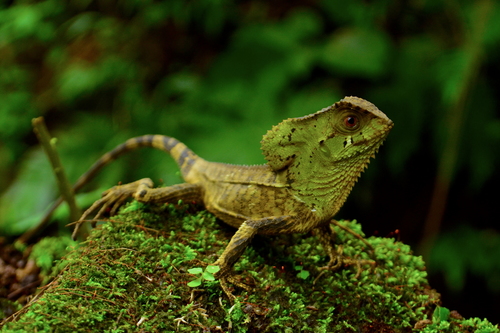
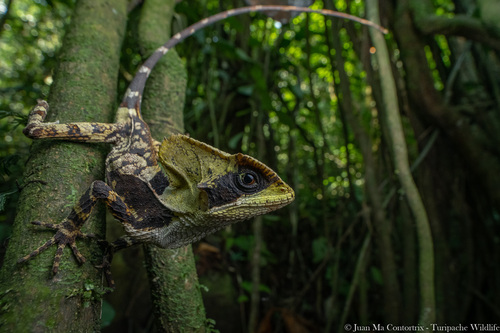
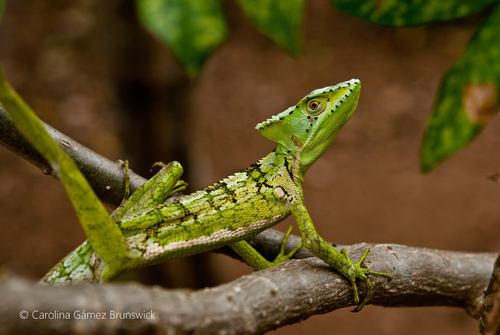
Commonly called the smooth helmeted iguana, this species is a medium-sized lizard with long, slender legs and very long toes.
Base Coloration
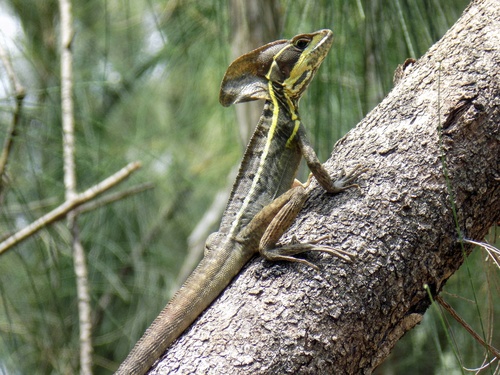
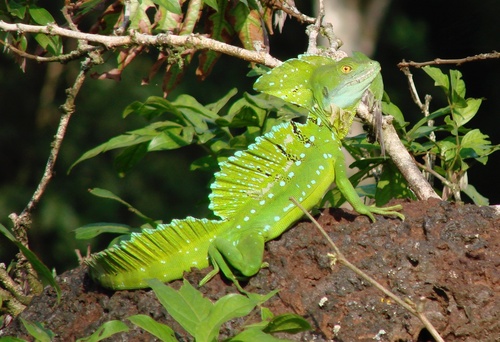
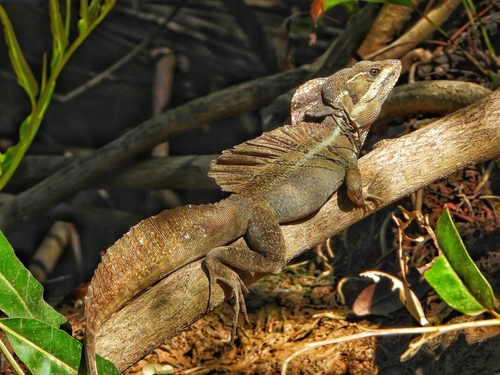
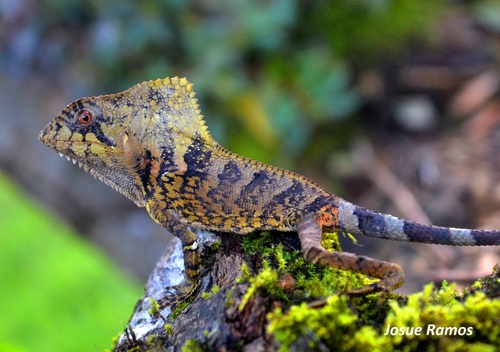
Its body can be grey, olive, brown, black, or reddish-brown, marked with irregular blotches.
Camouflage Ability
It can change its skin color for camouflage.
Head and Back Crest Features
As its name suggests, the smooth helmeted iguana has a prominent crest on its head that tapers into a saw-tooth ridge running down its back. This crest is present in both males and females of the species, though male crests are larger than those of females.
Adult Size
When fully mature, Corytophanes cristatus measures approximately 9–12 cm (4–5 in) in snout-to-vent length (SVL).
Thermoregulation Trait
It is a non-heliotherm species, which means it does not rely on the sun to raise its body temperature. Instead, it maintains a body temperature of around 26 °C (79 °F), which is close to the temperature of the forest floor habitat it lives in.
Anti-predator Behavior
It is very wary of predators, and will freeze when danger approaches even when the threat is as far as 15 m (49 ft) away.
Geographic Range
The geographic range of C. cristatus extends from Chiapas in southern Mexico to north-western Colombia.
Forest Habitat Type
Across this range, it primarily lives in primary and secondary mesic rainforest.
Micro-habitat Use
It is predominantly tree-dwelling, but also hunts on the forest floor, where it uses leaf litter as a micro-habitat.
Reproductive Egg Laying
For reproduction, adult females of this species lay five to six eggs in a dug depression on the forest floor.
Proposed Crest Function
Researchers speculate that the head crest may be used to excavate these nests.