About Combretum apiculatum Sond.
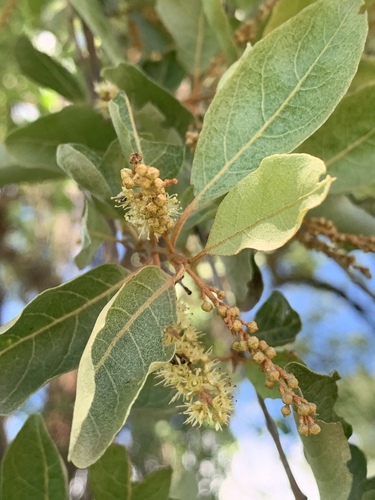
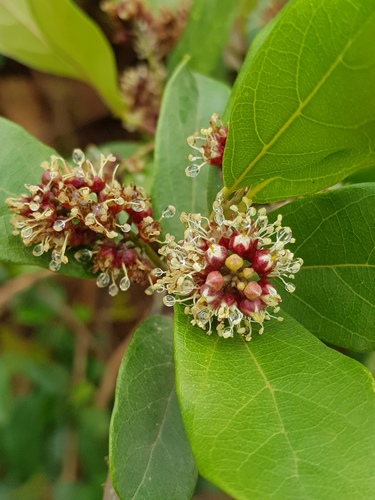
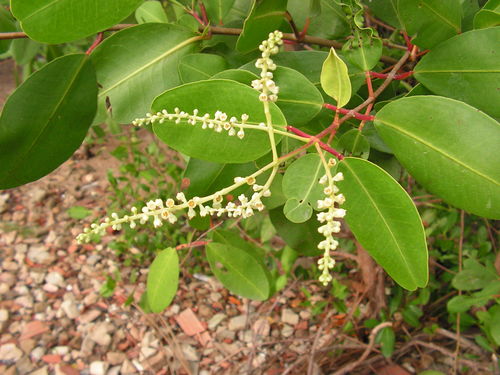
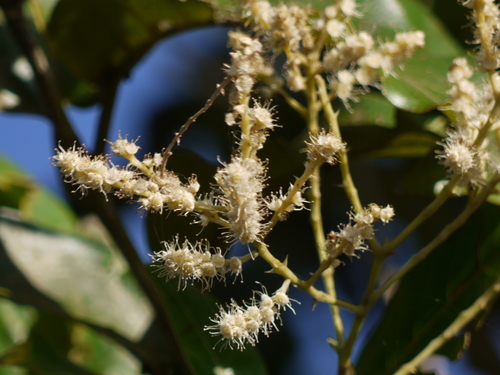
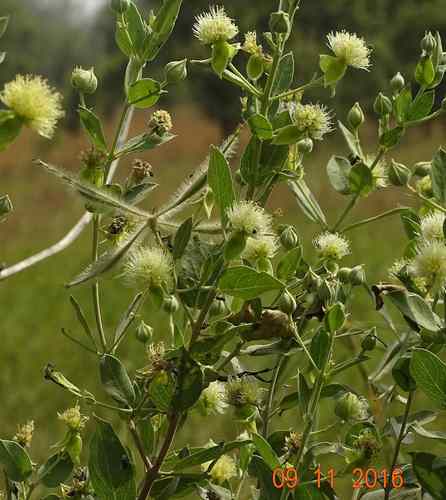
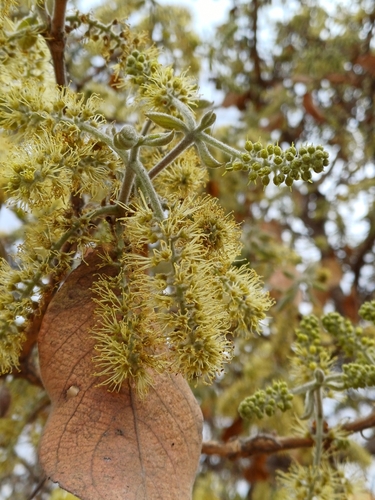
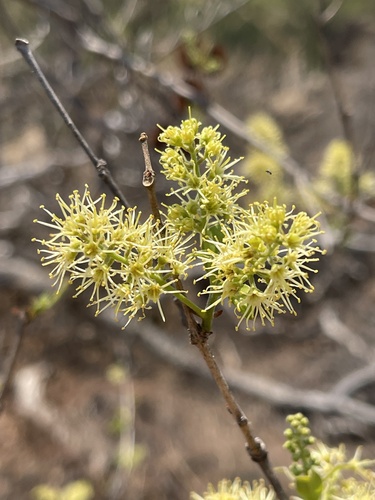
Combretum apiculatum Sond. is typically a semi-deciduous tree growing up to 10 meters tall, though it may sometimes grow as a shorter shrub. Its bark is rough, gray-black, and fissured, while smaller branches may have a woolly texture. Its leaves are arranged oppositely, growing up to 11 to 13 centimeters long. Leaves may be hairless or hairy, and their tips taper abruptly to a twisted point. Foliage of this species turns reddish or golden in autumn. Spike inflorescences emerge between the leaves, reaching up to 7 centimeters long. These inflorescences bear yellow or green flowers with tiny sepals and petals, with styles and stamens around half a centimeter long. The flowers produce a strong scent. The plant's reddish, winged fruit is 2 to 3 centimeters long.
This species occurs in South Africa, Eswatini, Botswana, Mozambique, Namibia, Zimbabwe, southern Angola, Zambia, Malawi, southeastern DRC, Tanzania, and southern Kenya. It grows in a variety of ecosystems across southern Africa, and is the dominant tree in many savanna areas, including lowveld and mopane savanna regions. It is commonly found growing alongside other woody plant species, including common hook thorn (Acacia afra), sicklebush (Dichrostachys cinerea), large sourplum (Ximenia afra), livelong (Lannea discolor), white seringa (Kirkia acuminata), and marula (Sclerocarya afra).
The heartwood of Combretum apiculatum is dense (1.15), fine-grained, strong, and dark brown to black, and it is sometimes used for firewood or charcoal production. The wood is hard and termite-resistant. This tree responds well to coppicing, growing back with abundant foliage after cutting. Its bark has been used in leather tanning. Medicinally, the species is used to treat conjunctivitis and stomach ailments. It contains multiple antioxidant compounds, including cardamonin, pinocembrin, quercetin, and kaempferol. It is suitable for planting as a garden tree, as it is tolerant of frost and drought and provides shade.