About Coleonyx variegatus (Baird, 1858)
Coleonyx variegatus, commonly known as the western banded gecko, is a terrestrial lizard.
Adult Size
Adults measure 4 to 6 inches (10 to 15 cm) in total length including the tail, and the body excluding the tail rarely exceeds 3 inches long.
Hatchling Size
Newly hatched hatchlings measure around 1 inch (2.5 cm).
Body Coloration
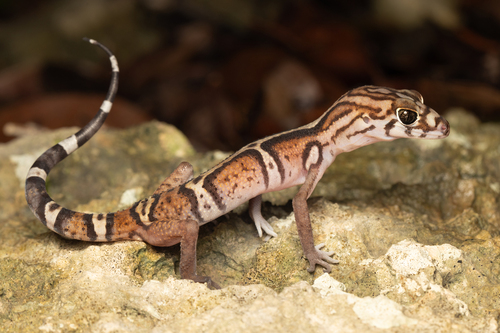
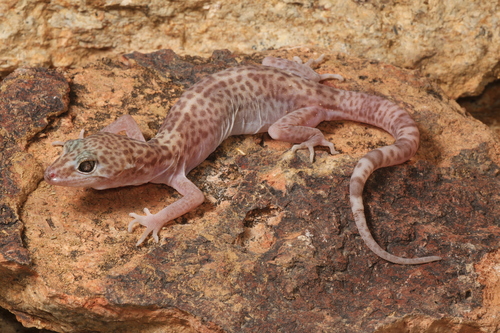
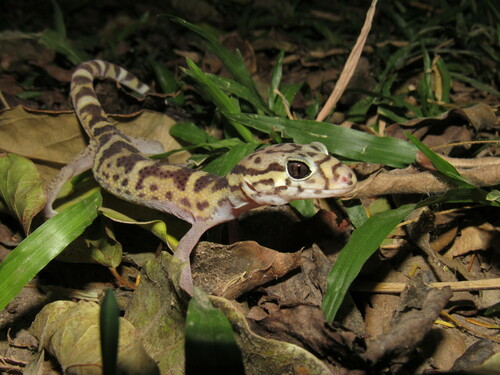
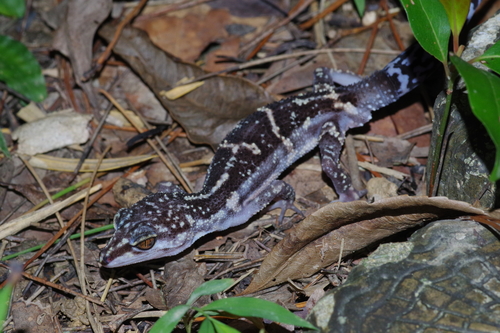
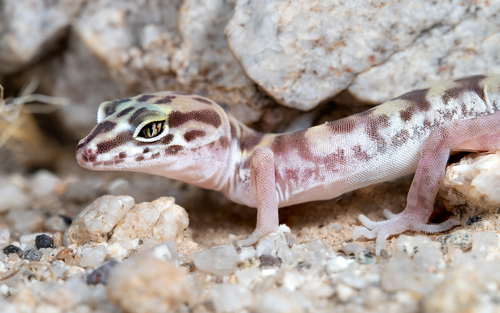
Its body is sandy-colored with dark crossbands broken into patches.
Skin Texture
Tiny scales give its skin a distinctly silky texture.
Eye and Eyelid Features
Unlike most typical geckos, it has prominent eyes with movable eyelids.
Male Distinguishing Features
Males of this species have noticeable spurs on both sides of the body at the base of the tail.
United States Distribution
In the United States, this species occurs in Arizona, southern California, southwestern New Mexico, Nevada, and Utah; within California, it lives in the Mojave and Sonoran deserts.
Mexico Distribution
In Mexico, it is found in northwestern Baja California and Sonora.
Habitat Range Overview
The western banded gecko occupies a wide range of habitats.
Specific Habitat Types
These include creosote bush and sagebrush desert, pinyon-juniper woodland, and catclaw-cedar-grama grass associations in the eastern portion of its range, and chaparral areas in the western portion.
Elevational Range
Its elevational range extends from below sea level to approximately 1,520 m (4,990 ft) above sea level.
Preferred Habitats and Substrates
It most commonly lives in open arid deserts and grasslands, and can be found on substrates ranging from rocky sheltered areas to sandy dunes and arroyos.
Breeding Season
Western banded geckos breed in April and May.
Egg Laying Pattern
From May through September, females lay one to three clutches of eggs, with each clutch containing exactly two eggs.
Egg Incubation Period
Eggs hatch approximately 45 days after being laid.