About Cochlearius cochlearius (Linnaeus, 1766)
Taxonomy and Size
The boat-billed heron, scientific name Cochlearius cochlearius (Linnaeus, 1766), reaches an adult length of around 54 cm (21 in).
Adult Plumage
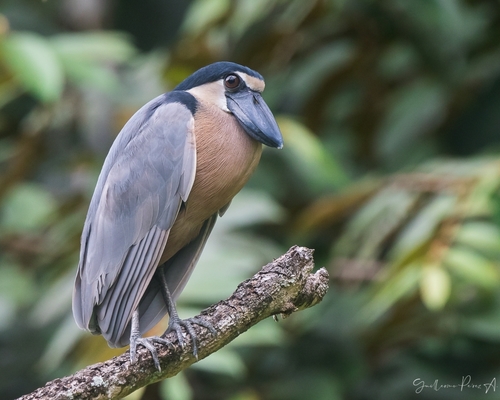
Adult boat-billed herons have pale grey to white plumage, chestnut-colored abdomens, and black flanks.
Bill Structure
They have a large, broad, scoop-shaped bill that is mainly black; this distinct bill shape gives the species its common name.
Adult Crest
Adults also have a crest, which is thought to play a role in mate attraction, as crests are larger in males.
Sexual Dimorphism
The two sexes look generally similar, with the main differences being that females are slightly smaller, grayer overall, and have shorter crests than males.
Nestling Appearance
Newly hatched nestlings have green-yellow skin, with gray down covering their upperparts. Their upper bill is black, and their legs are green-yellow.
Juvenile Appearance
Juvenile boat-billed herons are darker in color than adults and do not have a crest.
Geographic Range
Boat-billed herons have a distribution ranging from Mexico south to Peru, Brazil, and northeastern Argentina.
Habitat
They are non-migratory, and typically inhabit seasonal lagoons and estuaries, nesting in mangroves.
Diet Composition
Their diet includes small mammals, amphibians, annelids, molluscs, insects, crabs, shrimp from the genera Penaeus and Macrobrachium, and multiple types of small fish: the sleeper goby Dormitator latifrons, plus mullet, snook, and catfish.
Foraging Locations
They forage in vegetated streams, shallow water, and lagoons. When foraging in streams, they stand on low-hanging branches and mangrove roots positioned over the water.
Pond Foraging Behavior
In ponds, they either walk slowly through water up to 10 cm (4 in) deep, or forage close to the water's edge.
Prey Capture Method
To capture prey, they lunge at fish or scoop the water surface; their unique bill shape is adapted for this capture method. They have also been observed using two other feeding strategies: standing and slowly stalking prey, or disturbing the water and chasing prey.
Foraging Timing
Boat-billed herons forage at night, and have been recorded leaving their roost 30 minutes after sundown to feed. Observations show they do not feed when a light source is present, including daylight, moonlight, or artificial light.
Prey Detection Hypothesis
One study has hypothesized that to forage in dark, shallow, muddy water, their bills have touch sensitivity that helps them detect prey by feel.