About Clupea harengus Linnaeus, 1758
Taxonomic Information
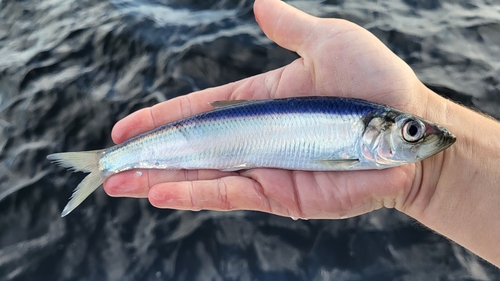
Scientific name: Clupea harengus Linnaeus, 1758, common name Atlantic herring.
Body Shape
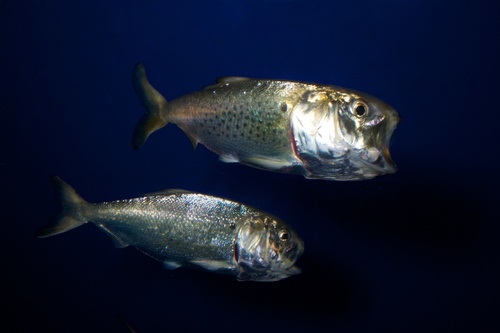
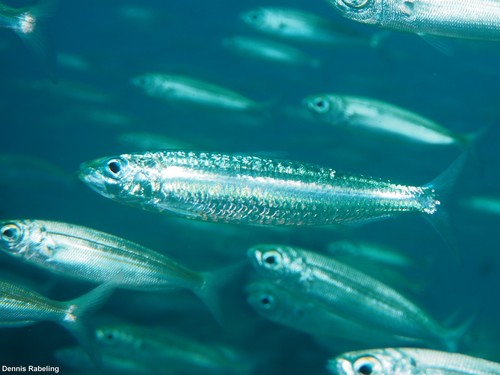
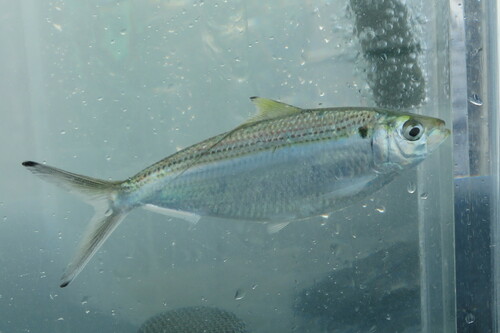
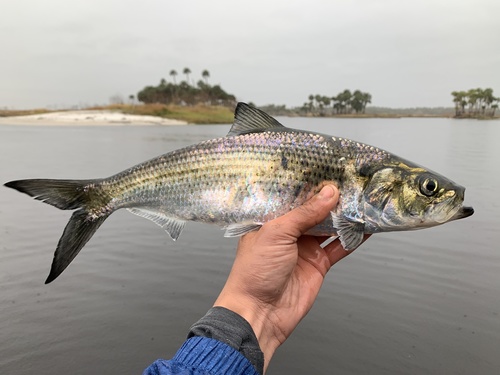
Atlantic herring have a fusiform body.
Feeding Mechanism
Gill rakers in their mouths filter incoming water, trapping zooplankton and phytoplankton.
Fragility Characteristics
Atlantic herring are generally fragile.
Gill and Scale Traits
They have large and delicate gill surfaces, and contact with foreign matter can strip away their large scales.
Estuary Habitat Response
They have retreated from many estuaries worldwide due to excess water pollution, although herring have returned to some estuaries that have been cleaned up.
Water Quality Indicator
The presence of their larvae indicates cleaner and more oxygenated waters.
Ocean Range
Atlantic herring can be found on both sides of the Atlantic Ocean.
Distribution Areas
They shoal and school across North Atlantic waters including the Gulf of Maine, the Gulf of St Lawrence, the Bay of Fundy, the Labrador Sea, the Davis Straits, the Beaufort Sea, the Denmark Strait, the Norwegian Sea, the North Sea, the Skagerrak, the English Channel, the Celtic Sea, the Irish Sea, the Bay of Biscay and Sea of the Hebrides.
Arctic Association Status
Although Atlantic herring are found in the northern waters surrounding the Arctic, they are not considered to be an Arctic species.
Sexual Maturity Age
Herrings reach sexual maturity when they are 3 to 5 years old.
Life Expectancy
The life expectancy once mature is 12 to 16 years.
Spawning Component Variation
Atlantic herring may have different spawning components within a single stock which spawn during different seasons.
Spawning Locations
They spawn in estuaries, coastal waters or in offshore banks.
External Fertilization Process
Fertilization is external, as in most other fish: the female releases between 20,000 and 40,000 eggs and the males simultaneously release masses of milt so that they mix freely in the sea.
Egg Characteristics
Once fertilized, the 1 to 1.4 mm diameter eggs sink to the sea bed where their sticky surface adheres to gravel or weed.
Egg Maturation Timeline
They mature in 1–3 weeks; in 14–19 °C water it takes 6–8 days, in 7.5 °C it takes 17 days.
Egg Maturation Temperature Requirement
They will mature only if the water temperature stays below 19 °C.
Larval Morphology
The hatched larvae are 3 to 4 mm long and transparent except for the eyes which have some pigmentation.
Global Ecological Importance
Herring-like fish are the most important fish group on the planet.
Population Status
They are also the most populous fish.
Trophic Role as Consumers
They are the dominant converter of zooplankton into fish, consuming copepods, arrow worms chaetognatha, pelagic amphipods hyperiidae, mysids and krill in the pelagic zone.
Trophic Role as Prey
Conversely, they are a central prey item or forage fish for higher trophic levels.
Dominance Hypothesis
The reasons for this success are still enigmatic; one speculation attributes their dominance to the huge, extremely fast cruising schools they inhabit.
Predator List
Orca, cod, dolphins, porpoises, sharks, rockfish, seabirds, whales, squid, sea lions, seals, tuna, salmon, and fishermen are among the predators of these fishes.
Detailed Prey List
Herring's pelagic prey includes copepods (e.g. Centropagidae, Calanus spp., Acartia spp., Temora spp.), amphipods like Hyperia spp., larval snails, diatoms eaten by larvae below 20 millimetres, peridinians, molluscan larvae, fish eggs, krill like Meganyctiphanes norvegica, mysids, small fishes, menhaden larvae, pteropods, annelids, tintinnids eaten by larvae below 45 millimetres, Haplosphaera, Pseudocalanus.