About Clematis aristata R.Br. ex Ker Gawl.
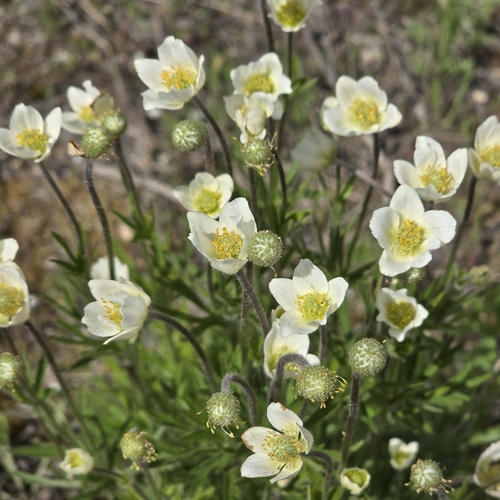
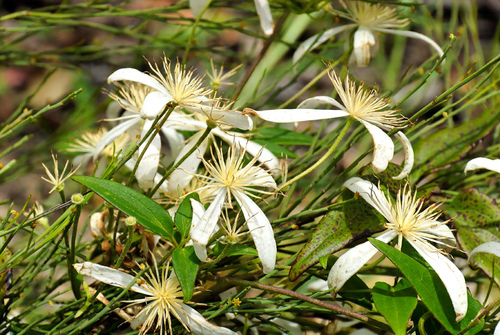
Clematis aristata, commonly called Australian clematis, wild clematis, goat's beard, or old man's beard, is a climbing shrub in the buttercup family Ranunculaceae. It grows in eastern Australia, specifically in dry and wet forests across Queensland, New South Wales, Victoria, and Tasmania. From spring to early summer, it produces large, showy displays of attractive star-shaped flowers. These flowers typically grow in short panicles, with each flower reaching up to 70 millimeters in diameter and bearing four narrow white or cream tepals. This species is dioecious: fertile male and female reproductive structures develop on separate individual plants. This makes Clematis aristata an obligate outcrosser, and pollen movement between plants is most likely carried out by insects. On female plants, each mature seed head (called an infructescence) is an aeterio made up of multiple achenes. Every individual seed has a 2–4.5 centimeter long plumose awn, which helps the seed disperse via wind. Mature leaves of Clematis aristata are most often ternate, with leaflets growing up to 80 millimeters long. The leaf petioles can twine around surrounding objects to provide climbing support for the plant. Juvenile leaves are simple, usually tinged purple, with whitish streaks running along the main veins. Several varieties of this species were previously formally described, but none are formally recognized today. These previously recognized varieties include var. blanda, which had small flowers and twice-divided leaflets and occurred from Victoria to Tasmania; var. dennisae, which had red flower filaments and was found in eastern Victoria; and var. longiseta, which had yellowish hairy flowers and was native to Queensland. Cytological analysis has confirmed that Clematis aristata is diploid, with a somatic chromosome number of 2n=16. Its chromosome set consists of five pairs of metacentric chromosomes, one pair of subtelocentric chromosomes, and two pairs of telocentric chromosomes that carry distal heterochromatic satellites. Clematis aristata is a popular hardy garden plant. It grows best in semi-shaded or fully shaded locations and cool, deep soils, and tolerates heavy pruning well. As a vigorous climber, it can become problematic by smothering other plants when grown in gardens. It can be propagated both from fresh seed and from cuttings of semi-hardened stems.