About Cicer arietinum L.
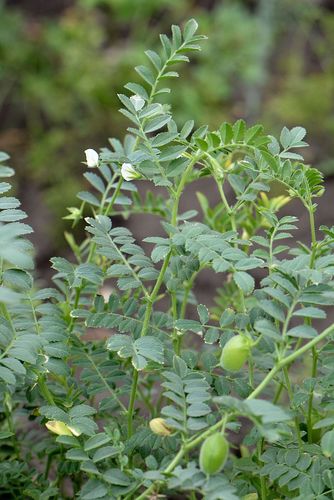
Cicer arietinum L., commonly known as chickpea, grows 20–50 cm (8–20 in) high, with small feathery leaves arranged on either side of its stem. It produces white flowers marked with blue, violet, or pink veins. Chickpeas are a type of pulse, and each of its seedpods contains two or three peas. Agricultural yield of chickpeas is often shaped by genetic and phenotypic variability, which has recently been affected by artificial selection. Uptake of macronutrients like inorganic phosphorus or nitrogen is essential for the development of Cicer arietinum, also commonly called the perennial chickpea. Heat cultivation and macronutrient coupling are two relatively understudied methods used to increase the yield and size of chickpeas. Recent research shows that combining heat treatment with the two vital macronutrients, phosphorus and nitrogen, is the most critical factor for increasing the overall yield of Cicer arietinum. Perennial chickpeas are a fundamental source of nutrition for animal feed, as they provide high energy and protein for livestock. Unlike other food crops, perennial chickpeas can alter their nutritional content in response to heat cultivation. Treating chickpeas with a constant heat source increases their protein content almost three times over. As a result, heat cultivation impacts both the protein content of the chickpea itself and the ecosystem it supports. Increasing the height and size of chickpea plants relies on macronutrient fertilization with different doses of inorganic phosphorus and nitrogen. The amount of phosphorus a chickpea seed encounters during its lifecycle has a positive correlation with the height of the fully mature plant. Increasing levels of inorganic phosphorus, at all tested doses, incrementally increases the height of the chickpea plant. Seasonal changes in soil phosphorus content, and periods of drought that are a native characteristic of the dry Middle Eastern region where chickpeas are most commonly cultivated, both have a strong effect on the plant's growth. Plant yield is also affected by the combination of phosphorus nutrition and water supply, which can result in a 12% increase in crop yield. Nitrogen nutrition is another factor that affects the yield of Cicer arietinum, though the optimal application levels differ from those used for other perennial crops. High doses of nitrogen inhibit chickpea yield. Drought stress is a likely factor that inhibits nitrogen uptake and subsequent fixation in the roots of Cicer arietinum. The growth of perennial chickpeas depends on the balance between nitrogen fixation and assimilation. Drought stress, sowing date, and mineral nitrogen supply all influence the plant's yield and size. Trials have found that Cicer arietinum differs from other plant species in its ability to assimilate mineral nitrogen from soil during drought stress. Additional minerals and micronutrients improve the availability of nitrogen and phosphorus for plant absorption. Inorganic phosphate ions are generally attracted to charged minerals such as iron and aluminium oxides.