About Newtonia hildebrandtii (Vatke) Torre
Height and growth form
Newtonia hildebrandtii is a medium-sized tree that reaches a height of approximately 25 m (80 ft).
Trunk and branchlet characteristics
Its trunk is typically rough, and young small branchlets and twigs are puberulous, meaning they are densely covered with very short soft hairs.
Leaf structure and length
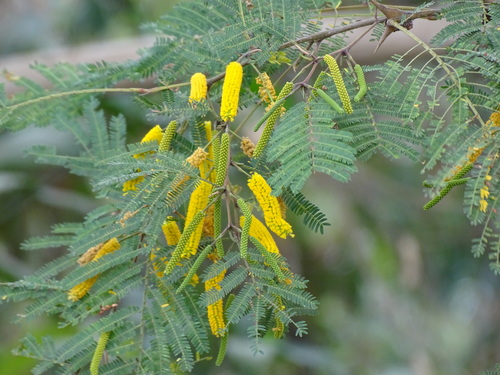
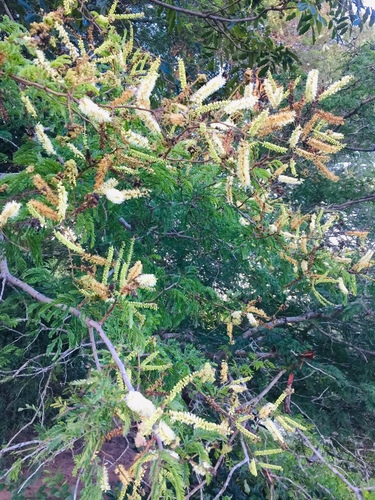
The leaves are bipinnate and grow up to 8 cm (3 in) long. Each leaf bears four to seven pairs of pinnae, and each pinna in turn has six to nineteen pairs of leaflets. A gland is usually present between each pair of pinnae.
Leaflet morphology
Leaflets are linear or oblong, reaching a maximum size of 11 by 3 mm (0.43 by 0.12 in), and their undersides often have raised lateral nerves.
Inflorescence and flower features
The inflorescence is a spike up to 8 cm (3 in) long, made up of whitish or creamy flowers.
Fruit characteristics
After flowering, the tree produces flattened pods that can grow up to 30 cm (12 in) long.
Geographic range
This tree occurs in eastern Africa, with a range that extends from Kenya and Tanzania, through Malawi, Zimbabwe and Zambia, to Mozambique, Eswatini and KwaZulu-Natal in South Africa.
Habitat and elevation
It generally grows in riverside forests, and can also be found in sandy areas with a high water table at altitudes up to around 1,100 m (3,600 ft); Southern African Sand Forest is one such habitat it occupies.
Timber uses
The timber of Newtonia hildebrandtii is used for building construction, for manufacturing poles and implements, and for carving.
Wood and charcoal properties
The wood burns well and produces good-quality charcoal.
Traditional medicinal uses
Products from the tree are also used in traditional medicine: a root extract is used to treat worms, and a bark extract has demonstrated antimicrobial activity against a range of pathogens.