About Chrysuronia versicolor (Vieillot, 1818)
Size and Bill Features
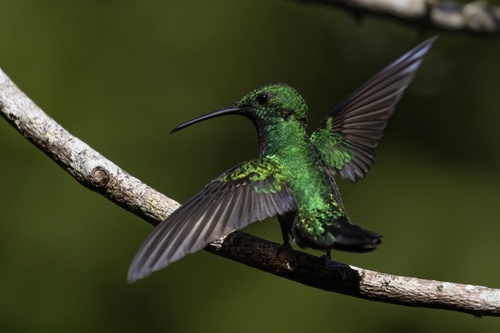
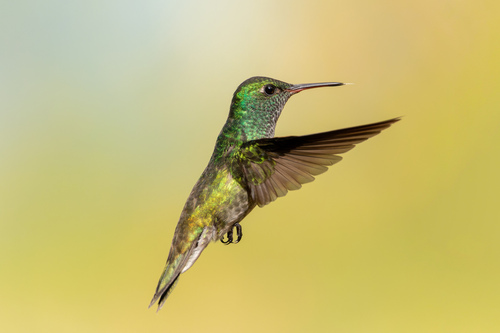
This species, Chrysuronia versicolor, has a total length of 8–10 cm (3.1–3.9 in). Its relatively long, slightly decurved bill is black, with a flesh-colored (occasionally orange) base on the lower mandible.
Tail and Body Plumage
The tail is coppery-green with a dark subterminal band. Upperparts and flanks are coppery-green, while the central underparts and crissum (the undertail coverts surrounding the cloaca) are white.
Variable Head and Throat Coloration
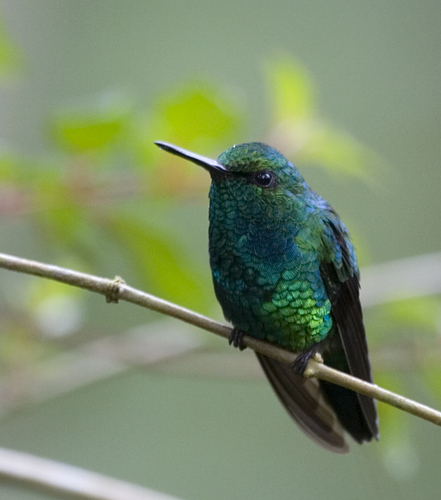
The color of the throat, sides of the face, and crown varies greatly between individuals and between subspecies. Throat color ranges from entirely greenish or turquoise (with white edges on the throat in females) in the inland nominate subspecies, nitidifrons, and kubtcheki, to blue in rondoniae, and white (essentially continuing the white of the central underparts) in coastal nominate, hollandi, and millerii.
Subspecies Facial and Crown Variation
Most subspecies have green sides of the face and green crown, but these are typically turquoise-blue or azure blue in hollandi and rondoniae.
Core Distribution Range
Chrysuronia versicolor occurs in northern Bolivia, eastern Paraguay, far northeastern Argentina, and eastern, southern, and central Brazil. It is absent from the arid Caatinga and most of the Amazon Basin, though it extends locally into this region in the southeast and along major rivers, such as the Amazon River and Rio Negro.
Disjunct Northern Population
A separate, possibly disjunct population (with exact distribution limits incompletely known in this part of Brazil) occurs in far northwestern Brazil, southern Venezuela, western Guyana, and eastern Colombia.
Habitat Preferences
It inhabits a wide range of semi-open habitats that include some trees, and can even be found in urban areas. It generally avoids the interior of humid primary forest; in regions where humid primary forest is the dominant habitat, it mainly occurs in relatively open sections or along forest borders, such as areas near major rivers.
Conservation Status
It is widespread, generally fairly common (more localized in the Amazon Basin) and possibly benefits from widespread deforestation in tropical South America.