About Nesophlox evelynae (Bourcier, 1847)
The Bahama woodstar, scientifically named Nesophlox evelynae (Bourcier, 1847), is a small hummingbird.
Size
Adults reach a total length of 8 to 9.5 cm (3.1 to 3.7 in), and weigh between 2.4 and 3 g (0.085 to 0.106 oz).
Shared Physical Traits
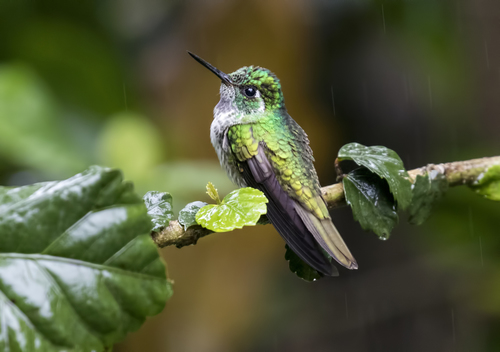
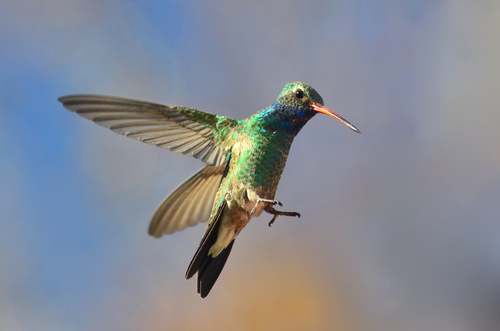
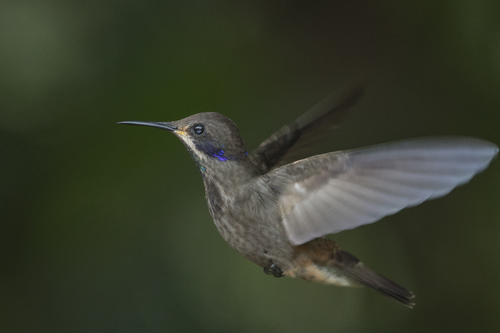
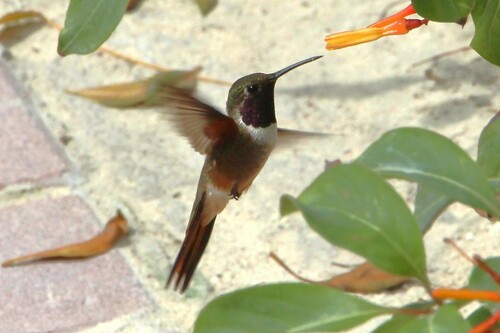
Both sexes have green and gold backs, olive-buff underparts, brown wings, and blackish-purple tails. They also share black, slightly curved bills and black feet.
Sex-Linked Flank and Tail Differences
Flank coloration differs by sex: males have flanks that fade to white, while females have flanks that fade to cinnamon. Tail shape also differs: males have a forked tail, while females have a more rounded tail with wider feathers.
Male and Female Throat Markings
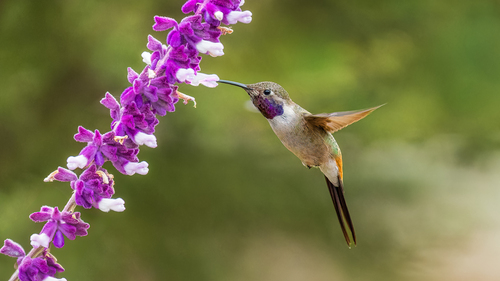
Males have a bright purple iridescent gorget edged with a white stripe, which becomes dull after breeding season ends. Females lack both the purple throat and the white stripe found in males.
Core Distribution Range
The Bahama woodstar is distributed across the Lucayan Archipelago, including the Turks and Caicos Islands, and does not occur on the Inaguan islands.
Sightings Outside Core Range
It has been recorded multiple times in Florida, United States. In April 2013, an individual was observed for three days at a feeder in Lancaster County, Pennsylvania.
Interspecies Competition Impact
The species is less abundant on Grand Bahama, Abaco, and Andros Islands, which host the introduced Cuban emerald, a hummingbird that acts aggressively and competitively toward the Bahama woodstar.
Habitat Preferences
It occupies a wide range of habitats including gardens, scrubland, secondary growth, dry lowland, the edges of tropical evergreen forests, and pine forests.
Movement and Social Behavior
It is a non-migratory, year-round resident of these habitats. While it may share ranges with other woodstars, it is not a social species and often acts aggressively toward other birds.
Nectar Feeding Habits
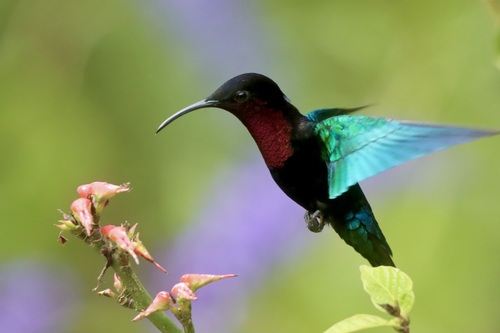
Bahama woodstars feed mainly by taking nectar from local plants; Ernodea serratifolia is one documented food plant on the Abaco Islands. They visit flowers to feed during the morning and evening.
Flower Feeding Damage
Lacerations are often visible on the tubular corollas of these flowers, created when Bahama woodstars and other hummingbird species access the nectar inside.
Insect Prey
They may also feed on insects.