About Chrysemys dorsalis Agassiz, 1857
Common Name and Genus Placement
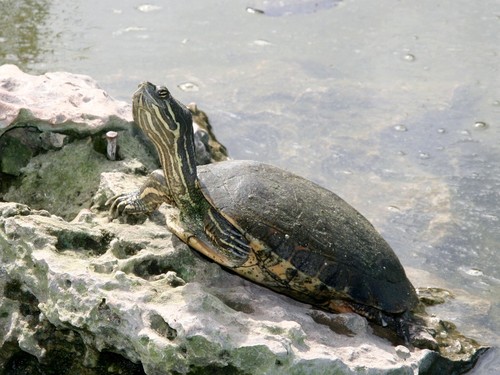
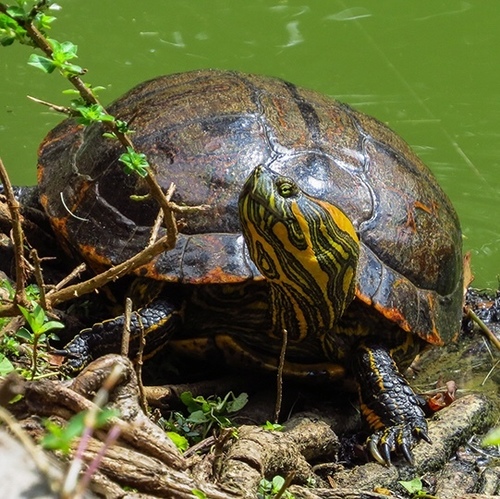
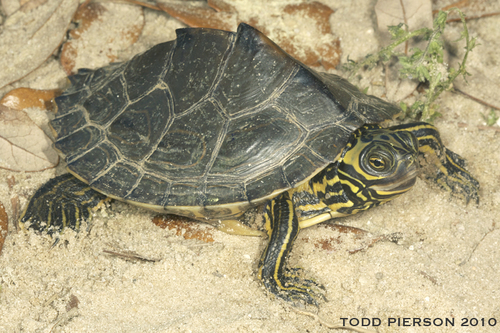
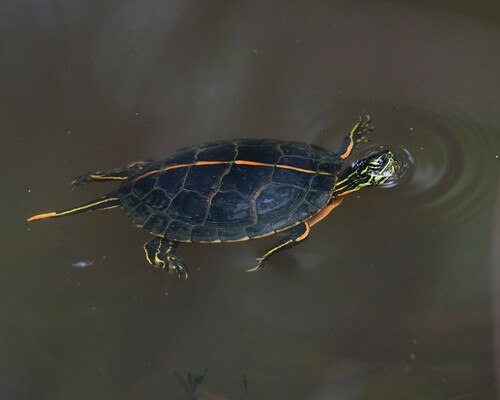
Chrysemys dorsalis Agassiz, 1857, commonly called the southern painted turtle, is the smallest species in the genus Chrysemys.
Adult Size
It is smaller than any subspecies of C. picta, and reaches an adult length of roughly 10–14 cm (4–6 in).
Shell and Body Markings
This turtle has a prominent red stripe running along the top of its body, and its lower shell is tan with no spots or almost none.
Northern Distribution Boundary
The distribution of the southern painted turtle extends south from extreme southern Illinois and Missouri, generally following the Mississippi River Valley.
Western Range Extension
In Arkansas, the species' range branches west toward Texas, where it occurs in far northeast Texas, specifically the Caddo Lake region, as well as in extreme southeastern Oklahoma's McCurtain County.
Southern Distribution Limit
It can be found across most of Louisiana, where it reaches the Gulf of Mexico in freshwater habitats.
Eastern Distribution Range
To the east, its range includes western Tennessee, northern Mississippi, and most of Alabama, including the Gulf Coast city of Mobile.
Isolated Central Texas Population
An isolated population reported from central Texas is currently thought to be non-native.
Age-Related Diet Variation
The diet of this species changes as it ages. Juveniles have a diet that is only 13% vegetation, while adult diets are 88% vegetation.
Prey Preference Pattern
This pattern suggests the species prefers small larvae and other animal prey, but juveniles are only able to obtain significant amounts of this prey when they are young.
Interspecific Feeding Habit Similarity
This age-related reversal of feeding habits is also seen in the false map turtle, which shares part of the southern painted turtle's range.
Specific Diet Components
The most common plants consumed by adult southern painted turtles are duckweed and algae, and their most common prey items are dragonfly larvae and crayfish.