About Emys orbicularis (Linnaeus, 1758)
Scientific Name and Size Classification
The European pond turtle, scientifically named Emys orbicularis (Linnaeus, 1758), is a medium-sized turtle.
Carapace Length Range
Straight carapace length ranges from 12 to 38 cm (4.7 to 15.0 in), with considerable variation across the species' geographic range.
Coloration and Body Markings
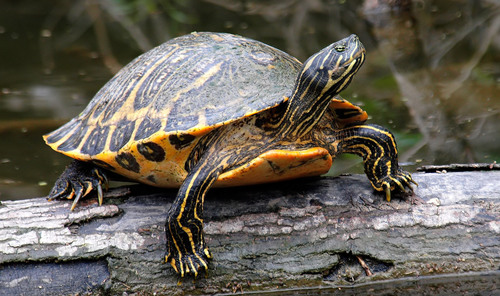
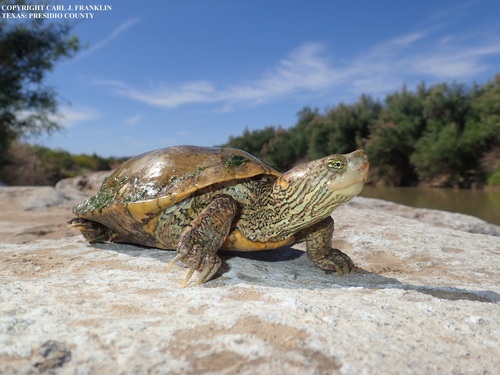
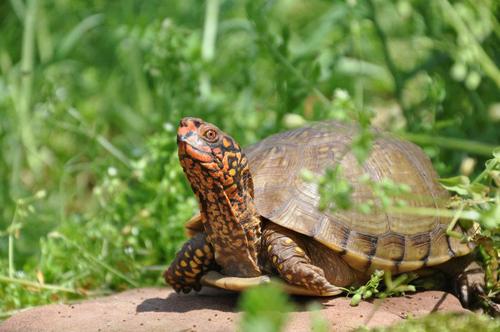
Its carapace is dark brown to blackish with a faint green tinge, the head and legs bear yellow spots, and the plastron is yellowish.
Development Influencing Factors
Temperature and thermal conditions are key factors influencing the development of E. orbicularis.
Temperature Effects on Growth
Reportedly, different temperatures across regions lead to varying growth rates for the species, including differences in both body size and clutch size.
Sexual Dimorphism Size Difference
E. orbicularis displays clear sexual dimorphism: adult males are always smaller than adult females.
Male Plastron Structure
Males have smaller plastra that give them wider mobility compared to females.
Female Morphological Adaptations
For females, differences in diet and foraging habits may be correlated with adaptive changes to their skull and head morphology.
Global Distribution Range
This species occurs in southern, central, and eastern Europe, West Asia, and parts of Mediterranean North Africa.
Population Status in France
In France, only six remaining large populations exist, and these populations are currently declining; the European pond turtle is the most endangered reptile in the country.
Population History in Switzerland
In Switzerland, the species went extinct at the start of the twentieth century, and was reintroduced there in 2010.
Early Post-Glacial Distribution
During the early post-glacial period, the European pond turtle had a far wider distribution, reaching as far north as southern Sweden and Great Britain.
Proposed Great Britain Reintroduction
A reintroduction to Great Britain has been proposed by Staffordshire-based organization Celtic Reptile & Amphibian, which specializes in the care, research, and rehabilitation of native European and British herpetofauna.
Trial Reintroduction in East Anglia
A trial reintroduction has already been launched to restore the species to its original Holocene range in the East Anglian Fens, Brecks and Broads.
2004 Estonia Discovery
In 2004, the European pond turtle was discovered in the Setomaa region of Estonia.
Sardinia Population History
Fossil evidence confirms that E. orbicularis and Testudo hermanni both lived on Sardinia during the Pleistocene, but molecular data indicates the modern existing populations of both species on the island were introduced in recent times.
Preferred Habitat Types
E. orbicularis prefers to inhabit wetlands surrounded by abundant, lush wooded landscape, and also feeds in upland environments.
Terrestrial Movement Capability
It is generally considered only semi-aquatic, similar to American box turtles, because its terrestrial movements can cover 1 km (0.62 mi), and it is occasionally found traveling up to 4 km (2.5 mi) from a water source.