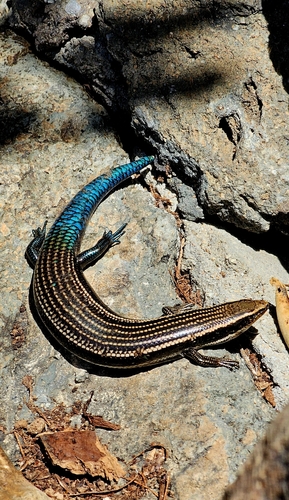
About Chalcides bedriagai (Bosca, 1880)
Species Comparison
Bedriaga's skink (Chalcides bedriagai) resembles a smaller version of the ocellated skink (Chalcides ocellatus).
Body and Limb Morphology
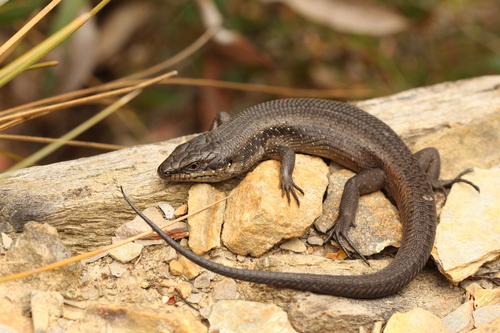
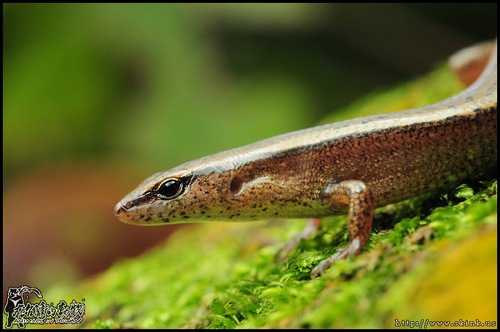
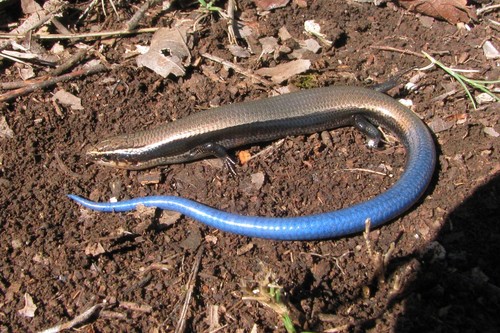
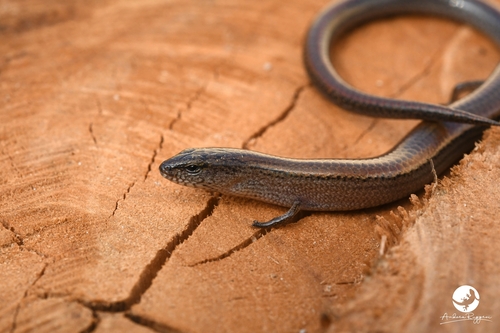
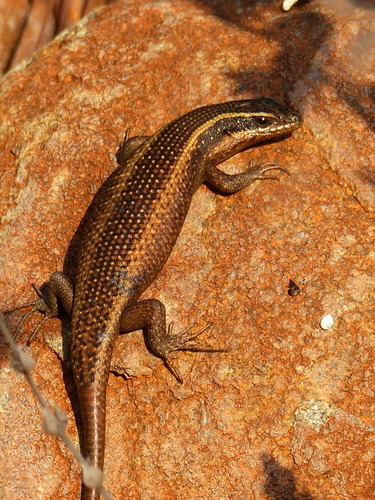
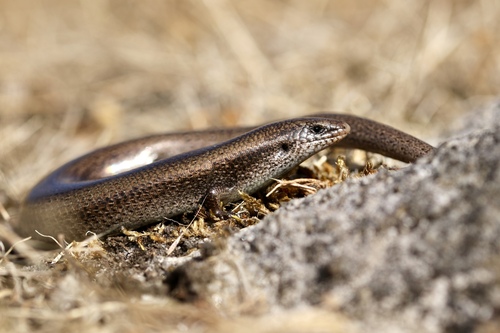
It has a small head, an elongated cylindrical body, and short limbs with five digits on each foot.
Size
It reaches a total length of up to 17 cm (7 in), and at least half of this total length is made up by its fairly broad tail.
Sexual Size Dimorphism
Females are typically larger than males.
Tail Condition
In both sexes, the tail may sometimes be broken off or actively regenerating.
Scale Count
There are between 24 and 28 scales around the mid-section of the skink's body.
Adult Coloration
Its base color is pale brown, yellowish-brown, or grey, marked with many small black-edged eyespots, and it usually has a paler lateral line running along each side of its body.
Juvenile Coloration
Juvenile individuals have a darker overall color.
Native Range
This skink species is native to Spain and Portugal.
Continental Distribution
It is mostly absent from northern Spain, and has a rather patchy distribution across the rest of the Iberian Peninsula.
Island Distribution
It can also be found on the Mediterranean islands of Islas del Mar Menor and Isla de Nueva Tabarca, as well as the Atlantic islands of Cies Islands, Pessegueiro Island, Ons Island, and Islote de Sancti Petri.
Primary Habitat
Its typical habitat is sandy heathland with scrubby vegetation, or sandy areas that support denser vegetation.
Additional Habitat and Altitude Range
It also occurs in open woodland, woodland clearings, scrubland, and rocky hillside slopes, up to an altitude of around 1,750 metres (5,740 ft) above sea level.
Habitat Adaptability
It is able to adapt to living in moderately degraded habitats.