About Chaetodon multicinctus Garrett, 1863
Scientific Name and Maximum Length
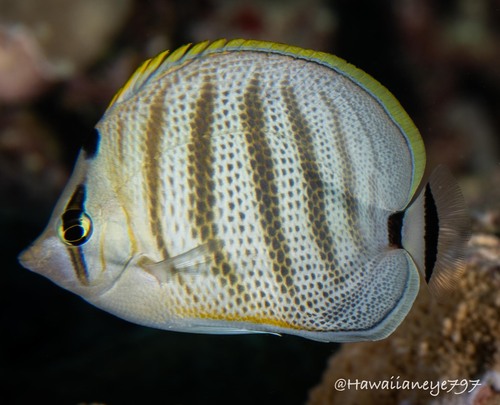
Pebbled butterflyfish, scientifically named Chaetodon multicinctus Garrett, 1863, grow to a maximum length of 12 centimetres (4.7 in).
Body Base Color and Shading
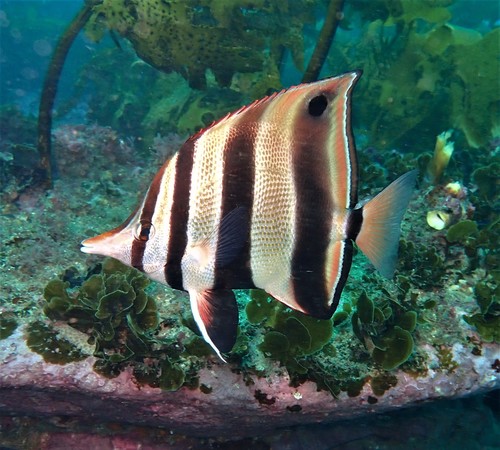
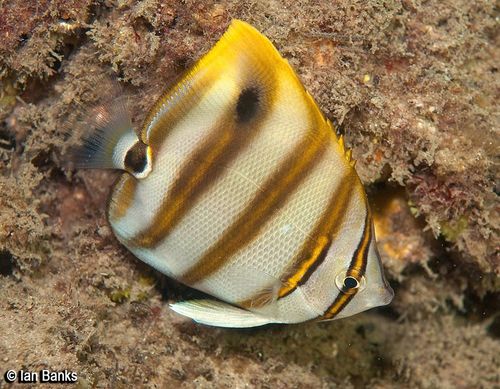
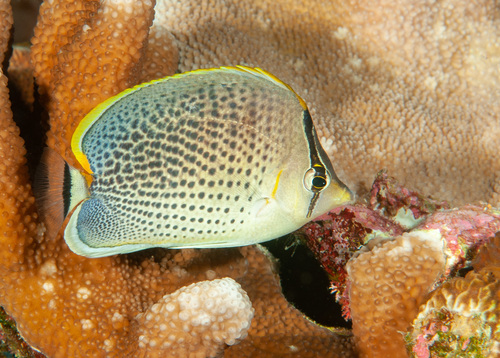
Their body is white with spotting, and may also have green or yellow shading.
Body Side Banding
Five light brown bands run across the sides of the body.
Ventral Side Marking
A dark line on the ventral side starts at the anal fins and gradually lightens to yellow as it extends toward the pelvic fins.
Similar Species Distinction
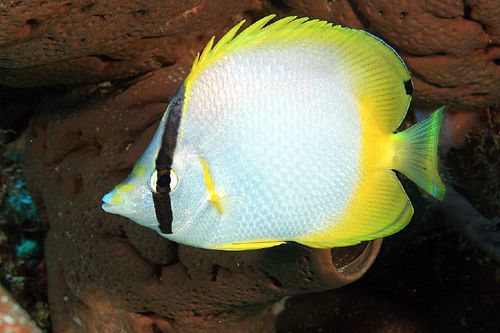
This species is often confused with the crochet butterflyfish (Chaetodon guentheri) and the speckled butterflyfish (Chaetodon citrinellus), but can be told apart by its vertical bands.
Dorsal and Anal Fin Marking
A black lengthwise line runs along the dorsal and anal fins, positioned roughly one-third of the fin’s total height inward from the outer margin.
Fin Coloration
The pelvic fins are white, the pectoral fins are transparent, the caudal fin has a black crescent at its center and a dark ring at its base.
Breeding Behavior
Pebbled butterflyfish form pairs, particularly for breeding, and they lay eggs.
Mating and Territoriality
This species is monogamous, aggressively territorial, and mated pairs defend a shared feeding territory.
Diet Composition
Their diet is fairly specialized, consisting of coral polyps, polychaete worms, and small shrimps.
Geographic Distribution
Pebbled butterflyfish are found across the eastern central Pacific Ocean, specifically in waters around the Hawaiian Islands and Johnston Atoll.
Habitat Preferences
They live close to coral reefs and over rocky areas.