About Caluromys derbianus (Waterhouse, 1841)
Genus Size Status
Derby's woolly opossum is the largest species in the genus Caluromys.
Size Measurements
It has a total length of 60 to 70 centimetres (24 to 28 in) and weighs between 200 and 400 grams (7.1 to 14.1 oz).
Key Distinguishing Features
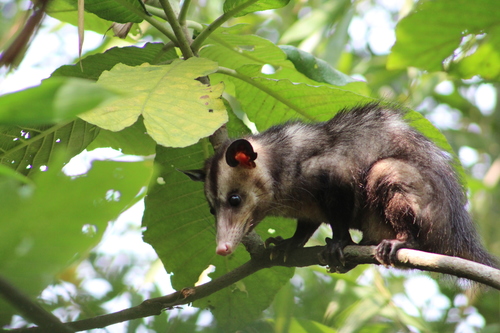
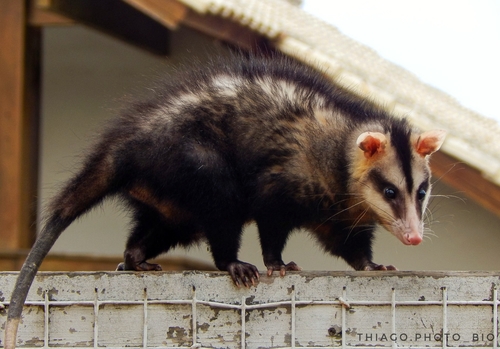
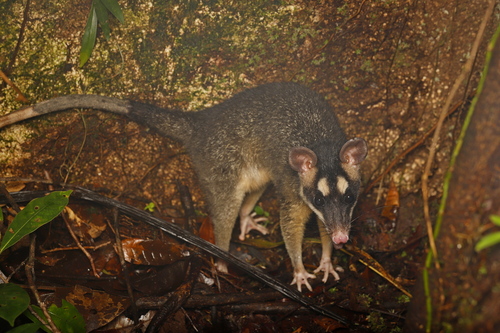
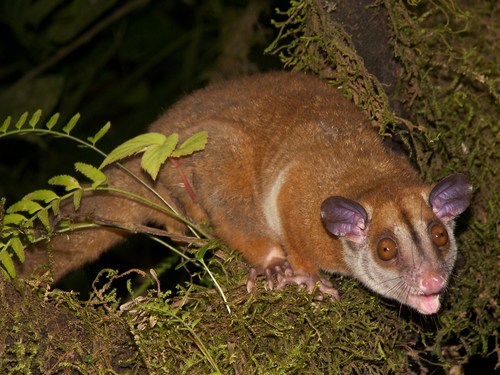
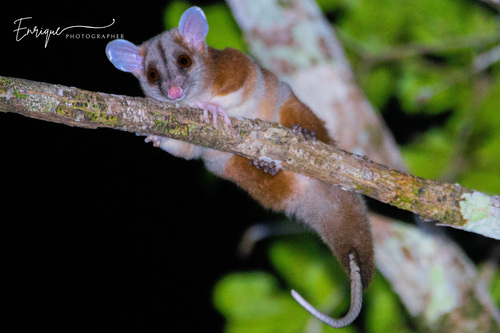
Its distinguishing features include white to pink ears, lightly coloured limbs, a brown coat that is lighter than the coat of the brown-eared woolly opossum, and a white-buff to golden-brown underside.
Prehensile Tail Proportion
Its prehensile tail, which can be used to grab objects, makes up 58 to 67 percent of the animal's total length.
Facial Markings
A dark stripe runs along the midline of the nose from the nose up to the crown.
Coat Variation
Coat colour varies by geographic location.
Tail Morphology
Similar to the bare-tailed woolly opossum, the tail is partially naked.
Pouch Presence
Like other species in the genus Caluromys, Derby's woolly opossum has a pouch.
Ear and Hindfoot Measurements
Its ears measure about 4 centimetres (1.6 in) and its hindfeet measure 3.5 centimetres (1.4 in).
Claw Arrangement
Claws are present on all five digits of the forefeet, and on two digits of each hindfoot.
Dental Formula
Its dental formula is 5.1.3.4 / 4.1.3.4.
Eye Glow Characteristic
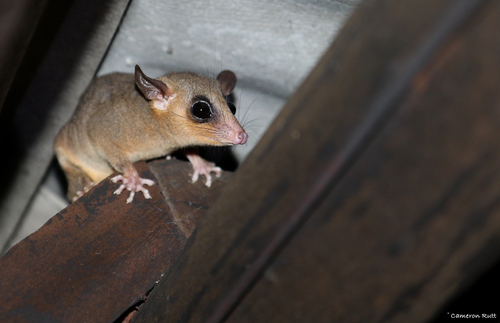
When exposed to light, the eyes of Derby's woolly opossum glow red.
Habitat Type and Altitude
Derby's woolly opossum inhabits deciduous and moist evergreen forests up to an altitude of 2,600 metres (8,500 ft).
Geographic Range
Its range extends from Veracruz in southern Mexico, southward into South America to western Ecuador and the Cauca River valley in Colombia.
IUCN Conservation Status
The IUCN Red List classifies this species as least concern, as its population is presumed to be large.
Historical Hunting Use
Historically, this species was hunted for its fur.
Current Population Threats
Populations in Ecuador and Mexico are currently threatened by deforestation.
Activity Pattern and Social Structure
Derby's woolly opossum is nocturnal (active mainly at night) and solitary.
Daytime Nesting Behavior
It spends most of the day in nests made of dead leaves, located in tree cavities in the upper reaches of trees.
Activity Level Modifiers
Research shows that its activity levels can increase when food is scarce, and decrease when exposed to light.
Climbing Adaptations
It is an efficient climber, and its prehensile tail helps it grasp branches.
Locomotion Agility
It moves with remarkable agility among vines and branches.
Defensive Behaviors
When disturbed, it may attack defensively by biting, and it can produce squeals when distressed.
Known Predators
Ocelots are known predators of Derby's woolly opossum.
Sexual Maturity Age
Both male and female Derby's woolly opossums reach sexual maturity at 7 to 9 months of age.
Estrus Cycle Length
The estrus cycle is nearly 28 days long.
Breeding Timing Variation
Breeding time varies by geographic location: breeding occurs during the dry season in Panama (late January or early February), and likely occurs year-round in Nicaragua.
Mating Behavior
Males have been observed pursuing females before copulation.
Litter Size Range
Litter size ranges from one to six.
Lifespan Data
The lifespan of Derby's woolly opossum in the wild is not confirmed; one individual held at New York Zoological Park lived for five years and three months.