About Calumma brevicorne (Günther, 1879)
Scientific Naming and Body Morphology
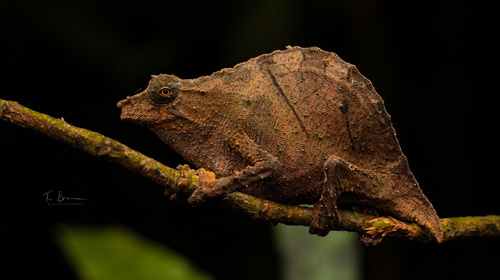
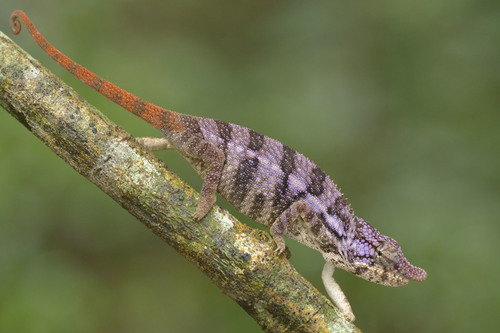
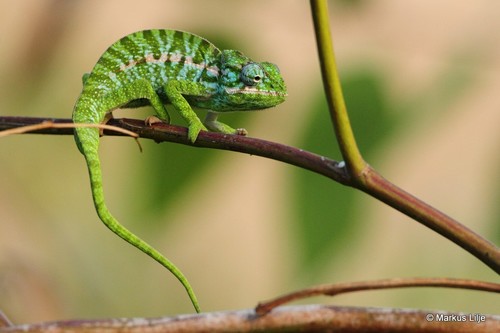
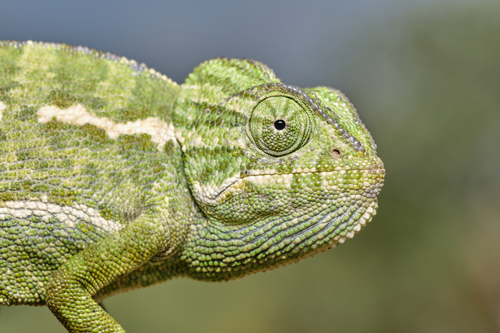
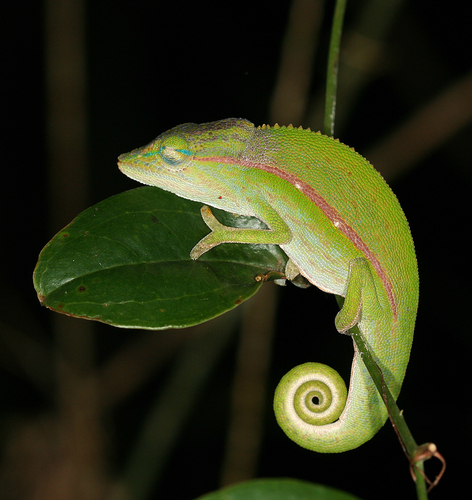
The short-horned chameleon, scientifically named Calumma brevicorne (Günther, 1879), has a compressed body, spindly limbs, grasping feet, and a prehensile tail that help it move through branches and twigs in its arboreal habitat.
Distinctive Physical Features
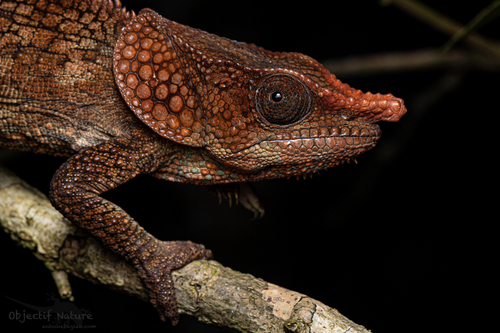
Its most distinctive features are large, ear-like occipital lobes, and a short bony rostral appendage that sticks out from the snout of males.
Threat Response Behavior
When threatened, this chameleon raises its ear-like flaps to look larger and attacks with an open mouth.
Coloration and Sexual Dimorphism
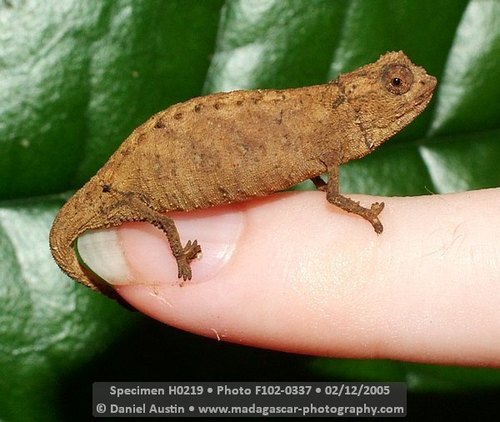
It is generally grayish in color, though variation exists between sexes and across its range; males are slightly larger and have lighter colored heads, and some specimens are greener with blue legs.
Conservation Status
The short-horned chameleon is listed as Least Concern by the IUCN.
Population Density
A population density of 2.4 chameleons per hectare has been recorded in forests around Andasibe-Mantadia National Park and Analamazaotra Special Reserve.
Endemic Range
C. brevicorne is endemic to Madagascar.
Geographic Distribution
It has a broad latitudinal range across eastern Madagascar, stretching from the Anosy Mountains in the south to the Tsaratanana Massif in the north, and has also been confirmed to occur on the Analavory Plateau in the northwest.
Elevation Range
It is found within a narrow elevation band between 810 and 1,000 m.
Range Data Limitations
Most existing records of this species need to be re-evaluated, so its full geographic range information remains incomplete.
Verified Extent of Occurrence
Even so, the few verified records are scattered across an area of at least 38,000 km².
Forest Habitat Preferences
This species inhabits mid-altitude humid forest, and is more commonly found in open vegetation associated with forest edges and disturbed areas.
Habitat Modification Tolerance
It tolerates some level of habitat modification, and has been found in tree-containing agricultural land, roadside vegetation, and trees near buildings.
Diet
Very little is known about the species' wild ecology, but captive individuals are known to feed on a wide variety of insects.
Reproduction
Females have been observed laying 10 to 30 eggs around 40 days after mating.
Egg Predation Threat
The eggs of Calumma brevicorne have been reported to be vulnerable to predation by the invasive black rat Rattus rattus.