About Bycanistes bucinator (Temminck, 1824)
Species Nomenclature
The trumpeter hornbill, scientifically named Bycanistes bucinator, is a medium-sized hornbill species.
Size Measurements
It measures between 58 and 65 cm (23 and 26 inches) in length, and has a body mass ranging from 0.45 to 1 kg (0.99 to 2.20 lb).
Bill Casque Morphology
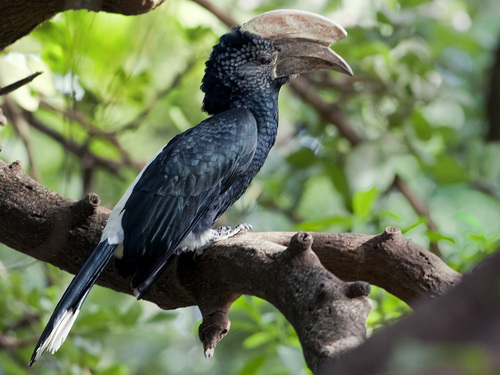
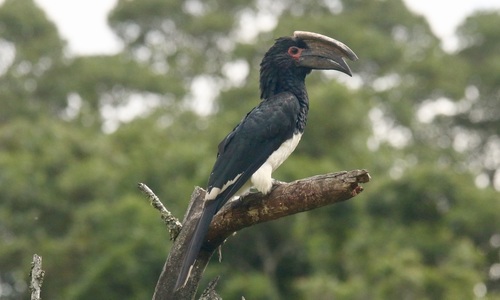
This species is identified by a large grey casque on its bill; the casque is smaller in female individuals.
Facial Features
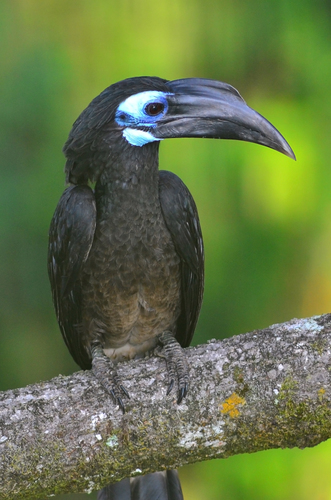
Its eyes are brown or red, and are surrounded by pink skin.
Plumage and Identification
It is similar in appearance to the silvery-cheeked hornbill, and can be distinguished by its all-black back, white belly, white underwing coverts that appear as white wingtips in flight, and red facial skin.
Social Behavior
Trumpeter hornbills are gregarious birds that typically live in groups of 2 to 5 individuals, though groups can sometimes reach as many as 50 members.
Geographic Distribution
This species is a locally common resident in tropical evergreen forests found in Burundi, Mozambique, Botswana, Congo, the North Pare Mountains of Tanzania, Kenya, the Caprivi strip of Namibia, and eastern South Africa.
Diet
It feeds on fruits and large insects.
Reproductive Behavior
Like other hornbill species, female trumpeter hornbills incubate four to five white eggs while sealed inside their nest compartment.