About Bathyergus suillus (Schreber, 1782)
Taxonomy and Classification
The Cape dune mole-rat, scientifically named Bathyergus suillus (Schreber, 1782), is the largest known blesmol species.
Body Length
Adults measure 27 to 35 centimeters (11 to 14 inches) in head-body length, with a short tail 3 to 4 centimeters (1.2 to 1.6 inches) long.
Weight and Sexual Dimorphism
Males are typically much heavier than females, ranging from 570 to 1,350 grams (20 to 48 ounces), while females usually weigh between 590 and 970 grams (21 to 34 ounces).
General Body Structure
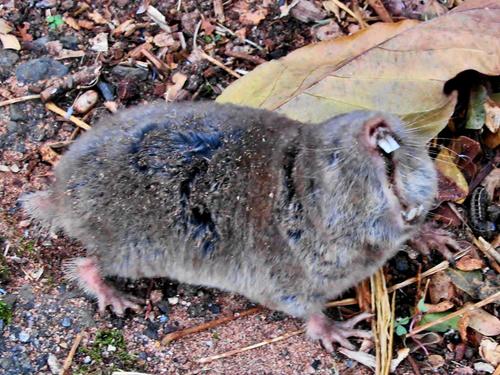
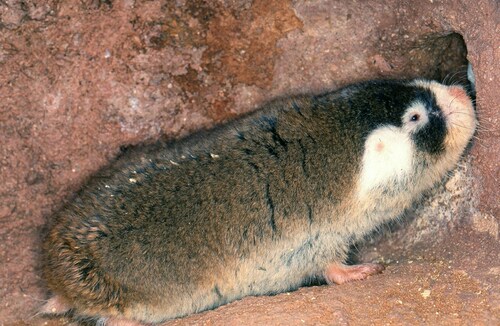
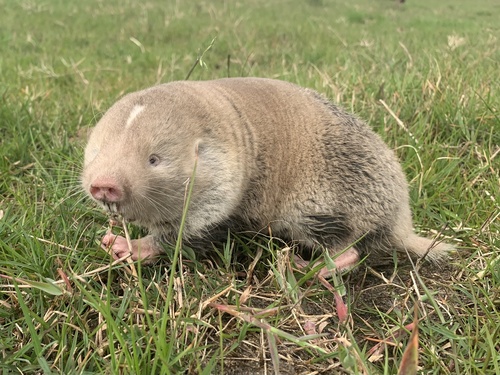
Both sexes are sturdy, large-bodied rodents with blunt snouts, cylindrical torsos, and short limbs.
Forefeet Adaptation
Their forefeet are heavily modified for digging, bearing powerful curved claws.
External Body Features
To move more quickly through tight tunnels, the body has very few visible external features: there are no external pinnae or scrotum, and the penis retracts into a concealed sheath.
Mouth Adaptation
Lip-like flaps of skin can close behind the incisors to keep soil from entering the mouth.
Eye Characteristics
The eyes are small, but not permanently closed.
Fur Coverage
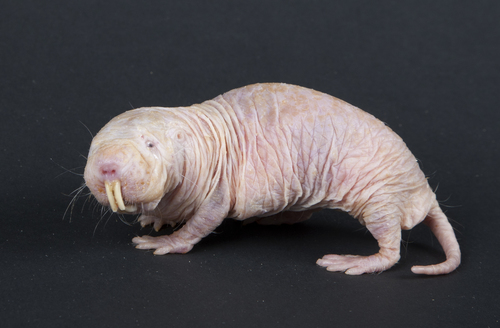
Unlike its relative the naked mole-rat, the Cape dune mole-rat has a thick pelt of soft fur covering its entire body.
Fur Coloration
Its fur is cinnamon-brown with greyish underparts, and has few or no distinct markings.
Physiology and Temperature Tolerance
Like other blesmols, the Cape dune mole-rat has a relatively low body temperature for its size, around 35 °C (95 °F), and cannot tolerate cold weather when above ground.
Geographic Range
This species is found only in South Africa, along the country's southern and western shores between roughly Vanrhynsdorp and Port Elizabeth.
Habitat
Its natural habitat consists of sandy shorelines and river banks dominated by veldt grassland, sedges, and herbs.