About Barleria cristata L.
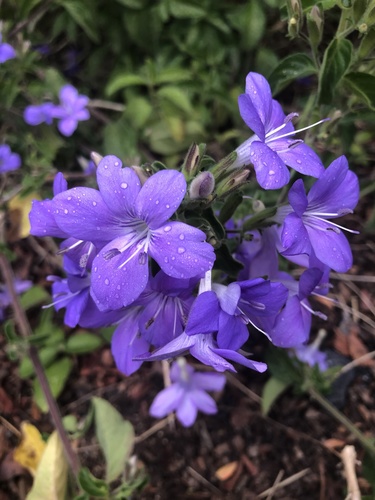
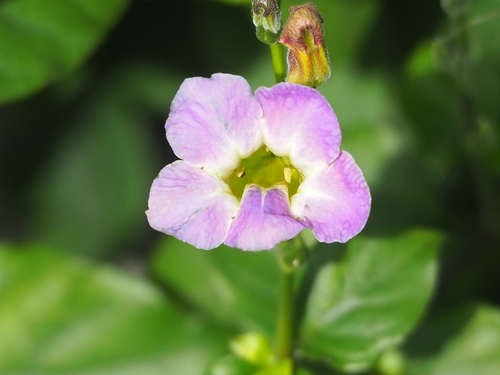
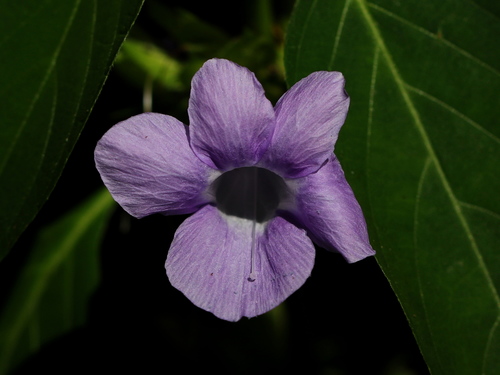
Barleria cristata L. grows as a shrub 60–100 cm tall. Its leaves are dark green on the upper surface and pale green on the lower surface, with a shape ranging from elliptic to narrowly ovate. The flowers are around 5 cm long, funnel-shaped, and can be violet, pink, or white. The fruits are ellipsoid capsules around 1.5 cm long, which become glabrous and glossy when they reach maturity. This species is native to a broad area stretching from Southern China to India and Myanmar. It is cultivated as an ornamental plant in villages and gardens, and has become naturalized in Hawaii, where it grows in dry habitats. On Fiji, where it is called "tombithi", and on Christmas Island (Indian Ocean), this shrub also grows as a ruderal species along roadsides and in disturbed areas, from near sea level up to around 100 m elevation. In Thailand, this plant is known as อังกาบ, and is used as a traditional herbal remedy. It is claimed to act as a tonic, diuretic, and blood purifier. To test whether intake of this plant for medicinal purposes is safe and nontoxic, studies were conducted on mice; no side effects or death were observed at a fixed dosage of 250 g/kg. In South India, it is called December Flower because it blooms in December. Its flowers are commonly strung into floral garlands for women to wear in their hair. In Telugu, the flowers are called Decembaralu (plural), and in Tamil, the plant is known as December Poo.